Unveiling Cappadocia Ancient History: A Journey From Hittites to Romans
Cappadocia's ancient history didn't stop with the Hittites, who controlled the region roughly between 1600 and 1200 BCE — it continued through local kingdoms, Persian Achaemenid rule, Hellenistic influence under Macedonian and Seleucid control, an independent Cappadocian kingdom allied with Rome, and finally direct incorporation as a Roman province in 17 CE. This guide moves through each period in order, showing how one power handed the region to the next.
The Dawn of Civilization: Cappadocia Under the Hittites (c. 1600-1200 BCE)
The earliest recorded history of Cappadocia is intertwined with the Hittites, an Indo-European people who established a mighty empire in Anatolia (modern-day Turkey) during the Bronze Age. Around the 16th century BCE, the Hittites extended their dominion over Cappadocia, leaving an indelible mark on the region’s cultural and political landscape.
During the Hittite period, Cappadocia was a vital part of the Hittite heartland. While direct archaeological evidence of major Hittite settlements within Cappadocia is somewhat limited compared to other regions of Anatolia, textual sources and scattered finds suggest that the area played a significant role in the Hittite kingdom’s economy and defense. Cappadocia likely served as a crucial agricultural zone, supplying the Hittite capital of Hattusa with vital resources.
The Hittites introduced their own language, law, and religious beliefs to Cappadocia, blending with the existing indigenous cultures. Their influence can be seen in the surviving rock carvings and pottery styles of the period. The Hittite cuneiform script, used for writing on clay tablets, provides invaluable insights into the political, social, and religious life of the era.
The collapse of the Hittite Empire around 1200 BCE, possibly due to internal strife and external invasions by the Sea Peoples, ushered in a period of instability and fragmentation in Anatolia, including Cappadocia. This marked the end of direct Hittite rule, but their legacy continued to resonate throughout the region.
The Post-Hittite Era: The Rise of Local Kingdoms
Following the demise of the Hittite Empire, Cappadocia transitioned into an era marked by the emergence of various independent kingdoms and principalities. These polities, often influenced by Phrygian and Syrian cultures, vied for control over the region.
One of the most prominent kingdoms that arose in the post-Hittite era was the Kingdom of Tabal. Located in the southern part of Cappadocia, Tabal maintained a degree of independence, resisting the influence of the growing Assyrian Empire to the southeast. Tabal and other smaller kingdoms played a complex game of alliances and rivalries, contributing to the political fragmentation of Anatolia.
The Phrygians, another Indo-European people, also exerted influence over Cappadocia during this period. Their capital, Gordion, located to the west, became a major cultural and economic center. Phrygian art, religion, and language left their mark on the region, further diversifying Cappadocia’s cultural tapestry.
The Persian Ascendancy: Cappadocia Under Achaemenid Rule (c. 550-330 BCE)
In the mid-6th century BCE, the Achaemenid Persian Empire, founded by Cyrus the Great, began its expansion westward, conquering much of Anatolia, including Cappadocia. Cappadocia became a satrapy, or province, of the Persian Empire, subject to Persian rule and taxation.
Under Persian rule, Cappadocia was administered by a local satrap, who was responsible for collecting taxes, maintaining order, and providing troops for the Persian army. The Persians generally allowed the local Cappadocian aristocracy to retain a degree of autonomy, as long as they remained loyal to the empire.
The Persian period brought significant changes to Cappadocia. The Persians introduced their own administrative system, legal code, and religious practices. Zoroastrianism, the Persian state religion, also gained some adherents in Cappadocia, although the majority of the population continued to practice their traditional Anatolian religions.
Cappadocia’s strategic location along the Royal Road, the main highway of the Persian Empire, brought increased trade and economic prosperity to the region. The Cappadocians traded with other parts of the empire, exchanging agricultural products, textiles, and other goods.
The Hellenistic Period: Cappadocia Under Macedonian and Seleucid Influence (c. 330-188 BCE)
The Achaemenid Persian Empire fell to Alexander the Great in the 4th century BCE. Following Alexander’s death in 323 BCE, his vast empire was divided among his generals, leading to the emergence of several Hellenistic kingdoms. Cappadocia became part of the Seleucid Empire, ruled by Seleucus I Nicator, one of Alexander’s successors.
The Seleucids sought to Hellenize Cappadocia, introducing Greek language, culture, and institutions. Greek cities were founded in the region, and Greek became the language of administration and commerce. The Cappadocian aristocracy adopted Greek customs and manners, further integrating the region into the Hellenistic world.
However, Seleucid control over Cappadocia was often tenuous, and the region was plagued by internal revolts and external threats. The Galatians, a Celtic people who migrated from Europe, invaded Cappadocia in the 3rd century BCE, establishing their own settlements in the region.
The Galatians posed a significant challenge to Seleucid authority, and the Seleucids were forced to recognize their autonomy. The Galatians maintained their distinct culture and language, coexisting with the Greek and indigenous populations of Cappadocia.
The Kingdom of Cappadocia: Independence and Roman Alliances (c. 188 BCE – 17 CE)
Taking advantage of the weakening Seleucid Empire, Cappadocia declared its independence in the late 3rd century BCE, establishing the Kingdom of Cappadocia. The kingdom was ruled by a series of local dynasties, who sought to maintain their independence by playing off against the competing powers in the region, including the Seleucids, the Galatians, and the Romans.
The Cappadocian kings cultivated close ties with Rome, recognizing the growing power of the Roman Republic. They provided Rome with military assistance and tribute, in exchange for Roman protection against their enemies. The kingdom served as a buffer state between Rome and the eastern powers.
During the Mithridatic Wars in the 1st century BCE, Cappadocia was drawn into the conflict between Rome and Mithridates VI of Pontus. The Cappadocian kings remained loyal to Rome, but the kingdom suffered greatly from the war.
In 17 CE, the last king of Cappadocia, Archelaus, died without an heir. The Roman Emperor Tiberius seized the opportunity to annex Cappadocia, turning it into a Roman province. This marked the end of Cappadocian independence and the beginning of Roman rule.
Roman Cappadocia: A Province of the Empire (17 CE – 395 CE)
As a Roman province, Cappadocia was governed by a Roman governor, who was responsible for maintaining order, collecting taxes, and administering justice. The Romans built roads, aqueducts, and other infrastructure projects in Cappadocia, improving the region’s economy and connectivity.
Cappadocia prospered under Roman rule. The region’s agricultural products, textiles, and minerals were traded throughout the Roman Empire. Roman cities, such as Caesarea (modern-day Kayseri), became important commercial and administrative centers.
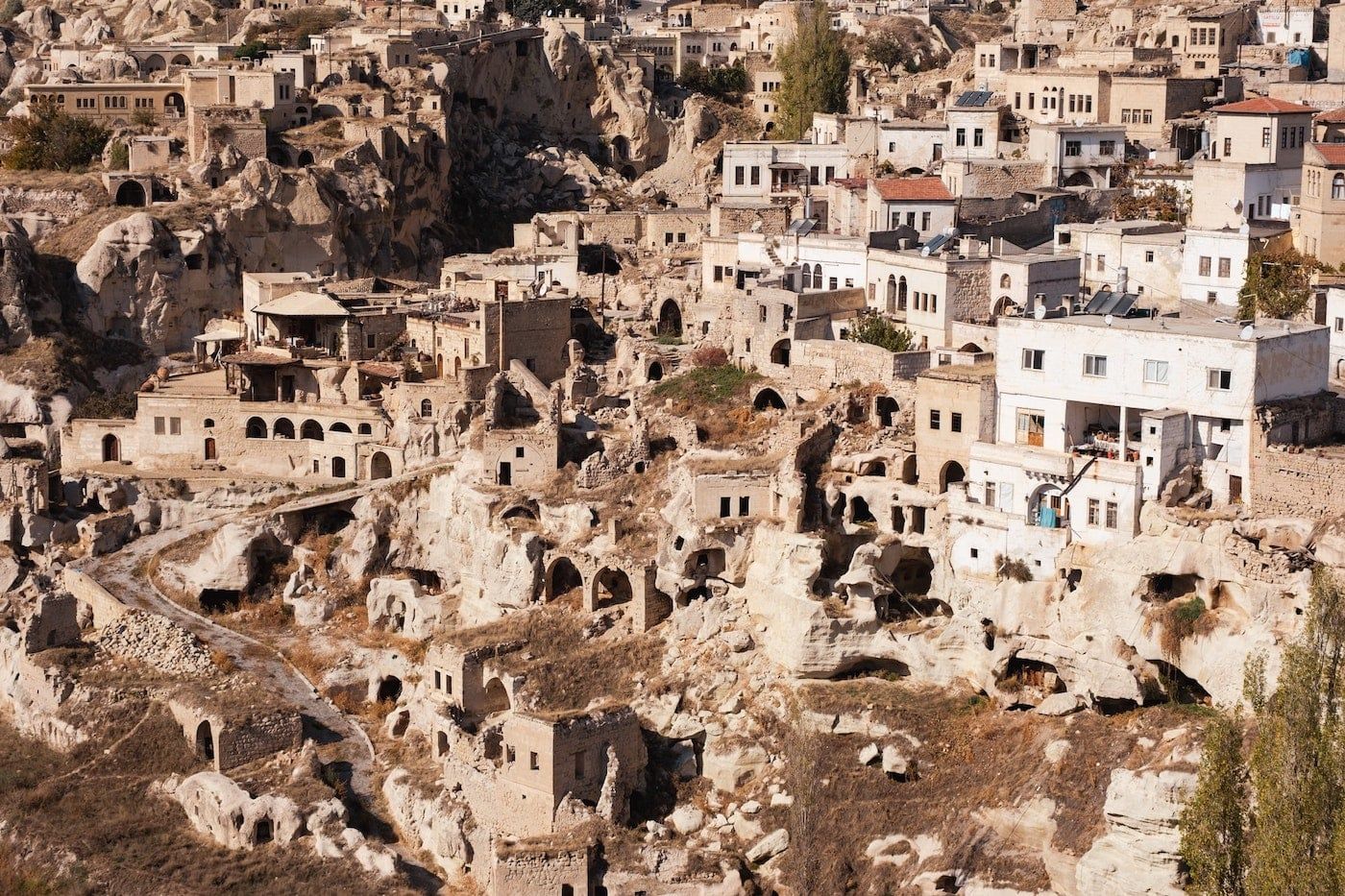
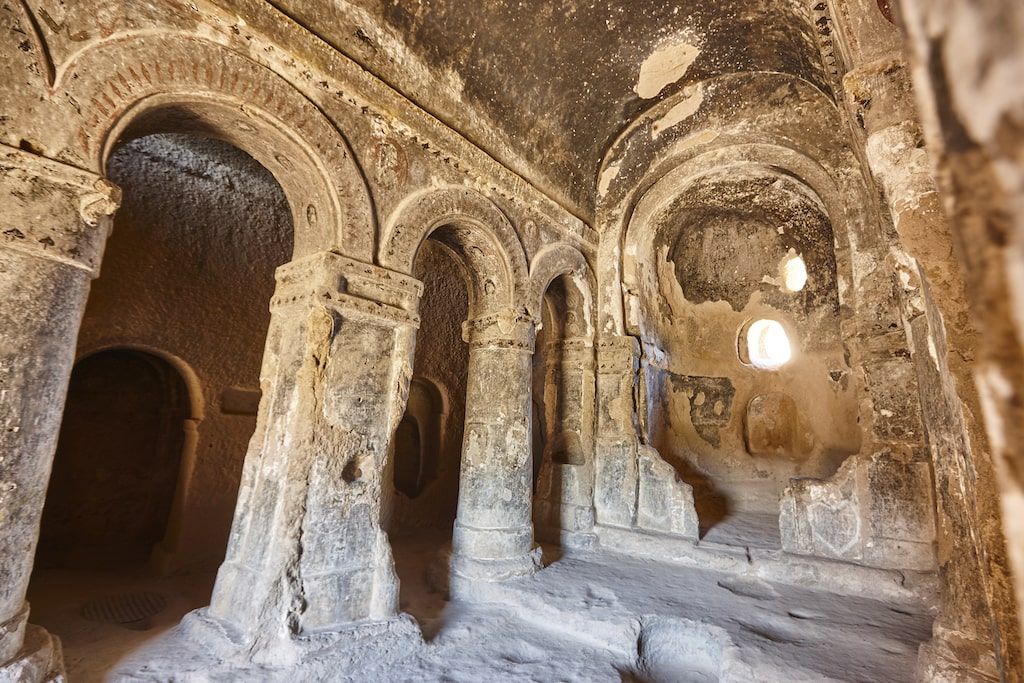
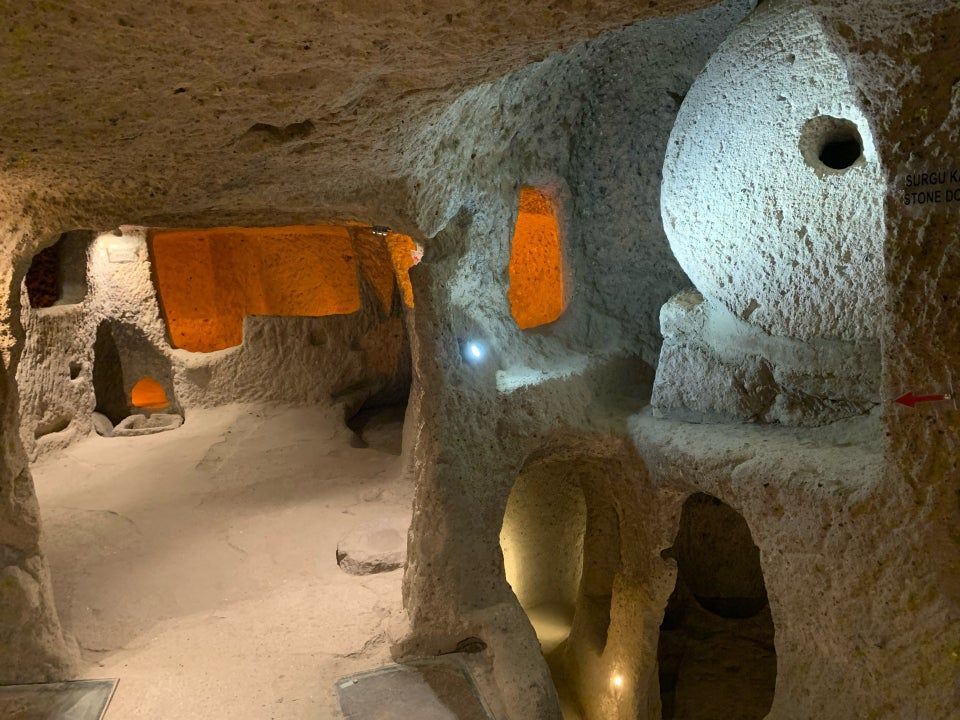
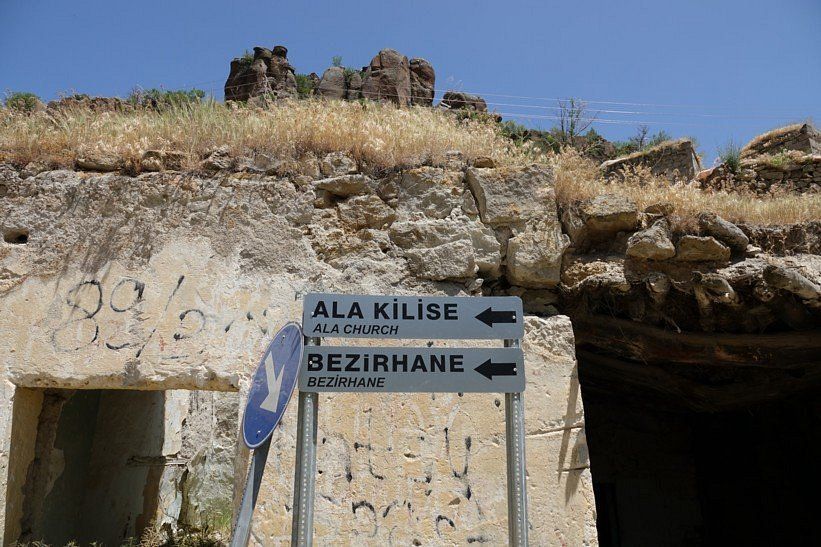
During the early centuries of the Common Era, Christianity began to spread throughout Cappadocia. The region became an important center of early Christian monasticism, with numerous monasteries and hermitages established in the isolated valleys and rock formations. The unique geological formations offered a refuge for Christians seeking to escape persecution. This is very evident in many of the cave churches and underground cities you can visit today.
The Cappadocian Fathers, including Basil of Caesarea, Gregory of Nazianzus, and Gregory of Nyssa, were prominent theologians who played a key role in shaping Christian doctrine. Their writings and teachings had a profound impact on the development of Christianity in the East.
The Roman Empire was divided into eastern and western halves in 395 CE. Cappadocia became part of the Eastern Roman Empire, later known as the Byzantine Empire.
Planning Your Historical Journey Through Cappadocia
Exploring Cappadocia’s ancient history is an integral part of experiencing this magical region. From the Hittite influences to the Roman legacy, the echoes of the past are palpable in the landscapes and the cultural fabric of the area. When planning your trip, be sure to include visits to:
- Kayseri Archaeological Museum: See artifacts from the Hittite, Roman, and Byzantine periods.
- The Underground Cities: Explore the intricate network of underground settlements used by early Christians to escape persecution.
- The Rock-Cut Churches of Goreme Open Air Museum: Marvel at the Byzantine frescoes adorning the walls of these ancient churches.
Consider enhancing your historical exploration with a hot air balloon ride over the valleys. From above, you’ll gain a unique perspective on the landscape and the historical layers etched into it.
Book Your Cappadocia Adventure Today!
Ready to embark on your own journey through the ancient history and stunning landscapes of Cappadocia? Plan your trip now and discover the wonders that await. Don’t miss out on this unforgettable experience!
Getting around Cappadocia is best done with reliable transportation. For professional, English-speaking drivers and comfortable airport taxi rides from Kayseri and Nevsehir airports, consider Cappadocia Taxi. They offer 24/7 service at competitive prices.
Enjoy a Delicious Coffee With a View
After a long day of exploring the historical sites, treat yourself to a relaxing coffee break in Goreme. You can enjoy excellent Turkish coffee and espresso drinks in a truly unique atmosphere. Both cafes provide a great atmosphere to unwind and reflect on the day’s adventures.