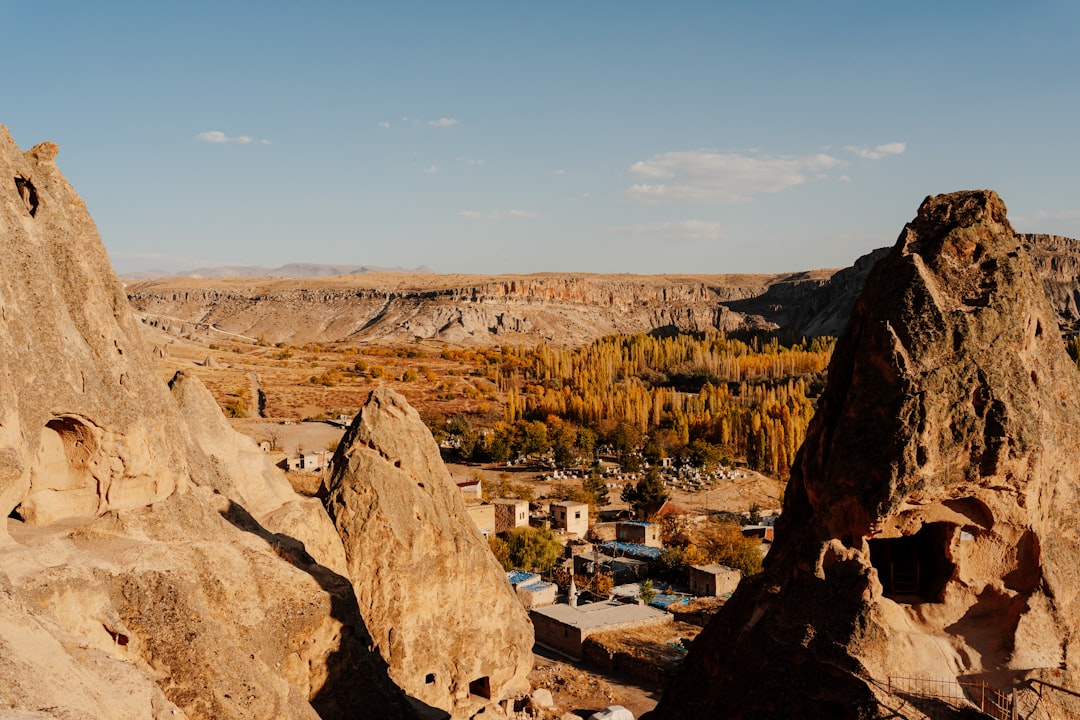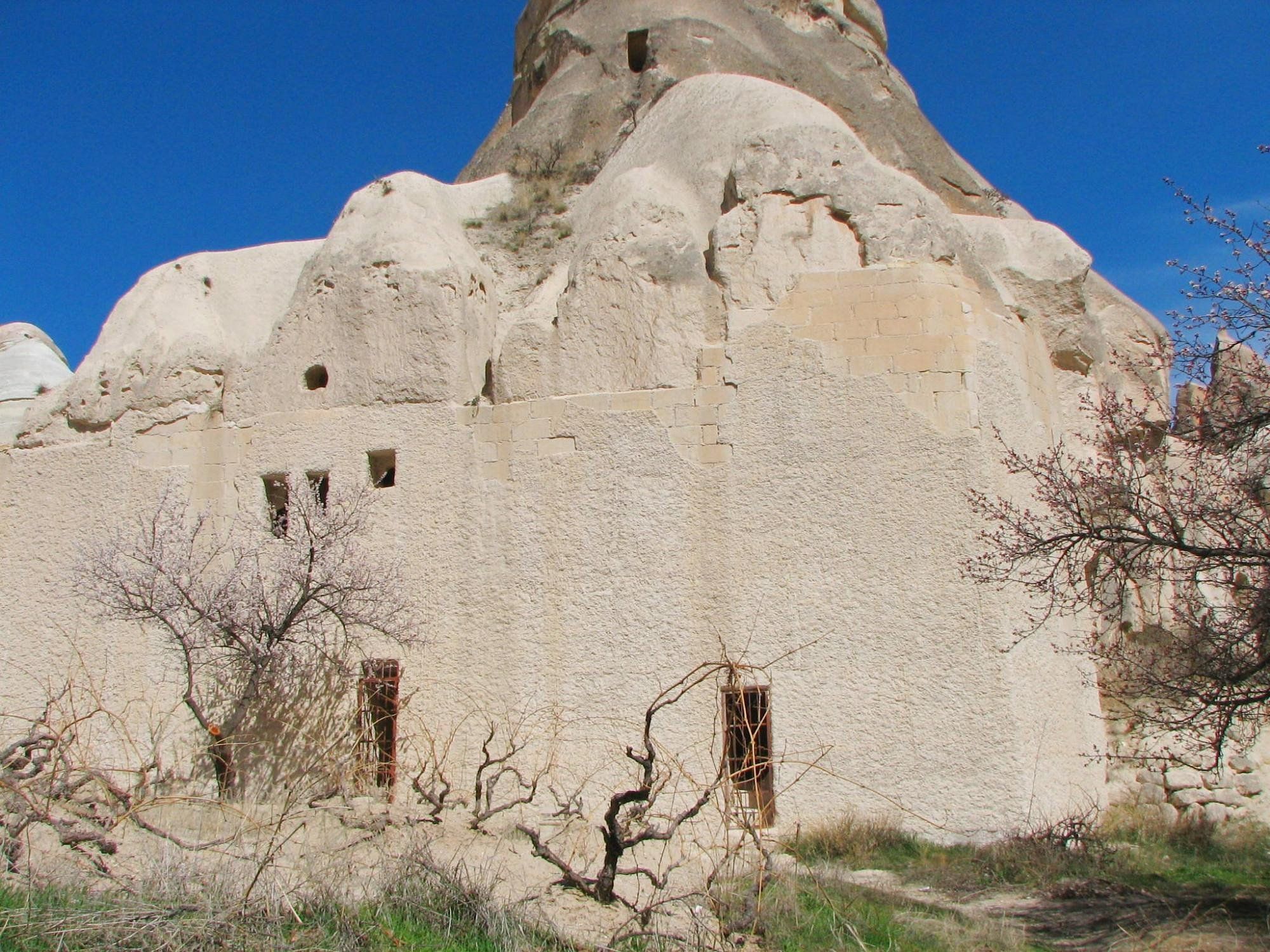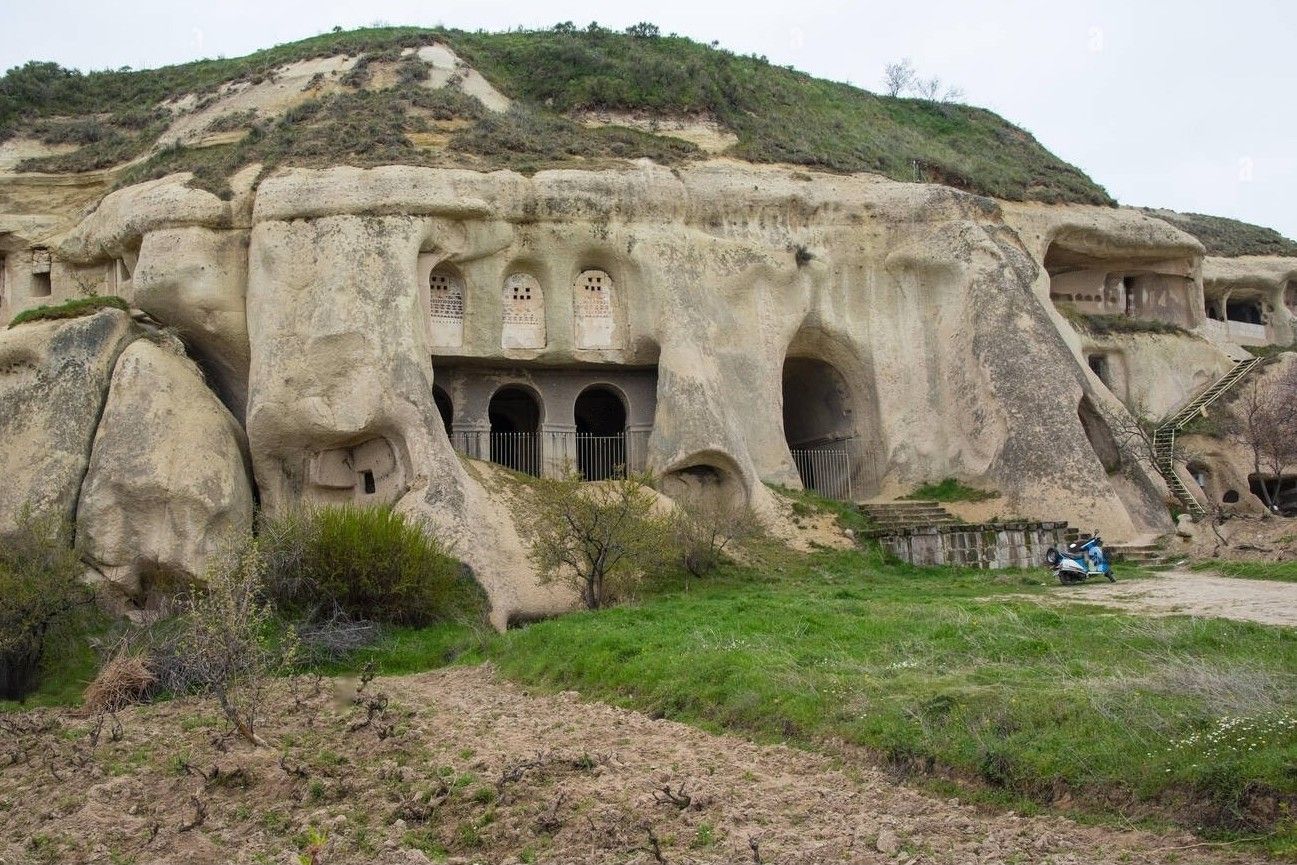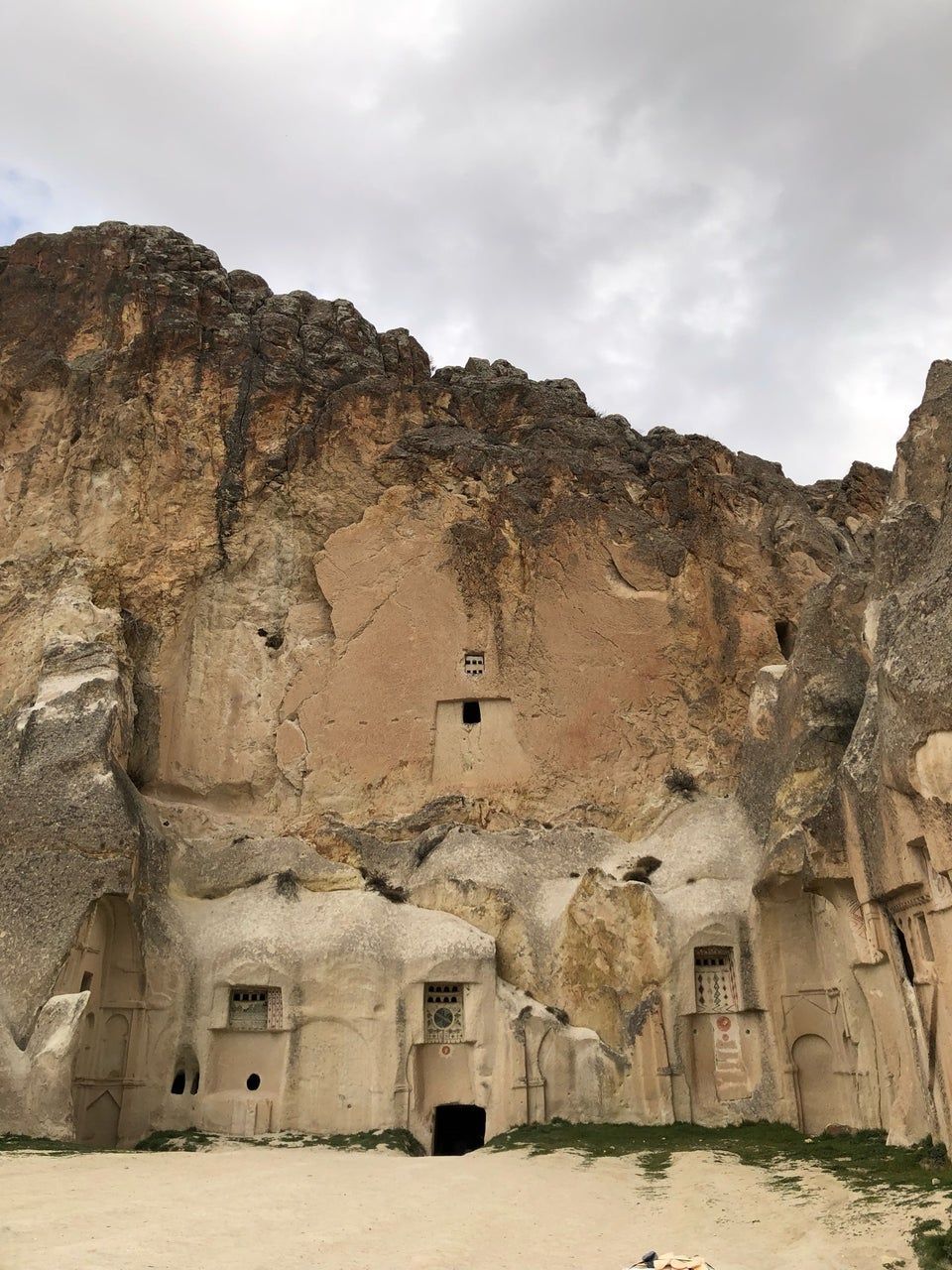
Byzantine Cappadocia was not merely a refuge for Christian hermits retreating from the world. It was also a living center of healing, scholarship, and charitable care. Amid the volcanic landscape of soft tufa rock — riddled with caves, pigeon-houses, and labyrinthine passages — communities of monks built institutions that fused the spiritual with the medical. The Hallac Monastery (also known as Hallac Manastırı or Hallac Hospital Monastery) stands as one of the most evocative surviving examples of this tradition: a carved complex that functioned simultaneously as a place of worship, a haven for the sick, and a home for religious communities living under Byzantine monastic rule.
What Was a Monastic Hospital in Cappadocia?
The idea of a monastic hospital — a charitable institution attached to a religious community — has deep roots in Cappadocian Christianity. In the 4th century, St. Basil the Great of Caesarea (modern Kayseri), one of the most influential theologians of the Byzantine world, pioneered a model of organized Christian charity centered on the xenodocheion and xenon: institutions that received the poor, the sick, and the stranger under the care of monastic communities. His Basiliad, built near Caesarea around 370 AD, was described by contemporaries as a new city dedicated to the healing of the body and soul.
This Basilian model spread across Cappadocia and the wider Byzantine world. Monasteries in the region frequently incorporated infirmaries, hospices, and prayer halls into a single architectural complex. The sick were welcomed not as burdens but as living images of Christ — care for them was an act of liturgical devotion. Monks who served as healers saw no contradiction between prayer and medicine: herbal remedies, rest, clean water from cisterns, and the liturgical calendar were equally part of the cure.
The Hallac Complex: Architecture and Rooms
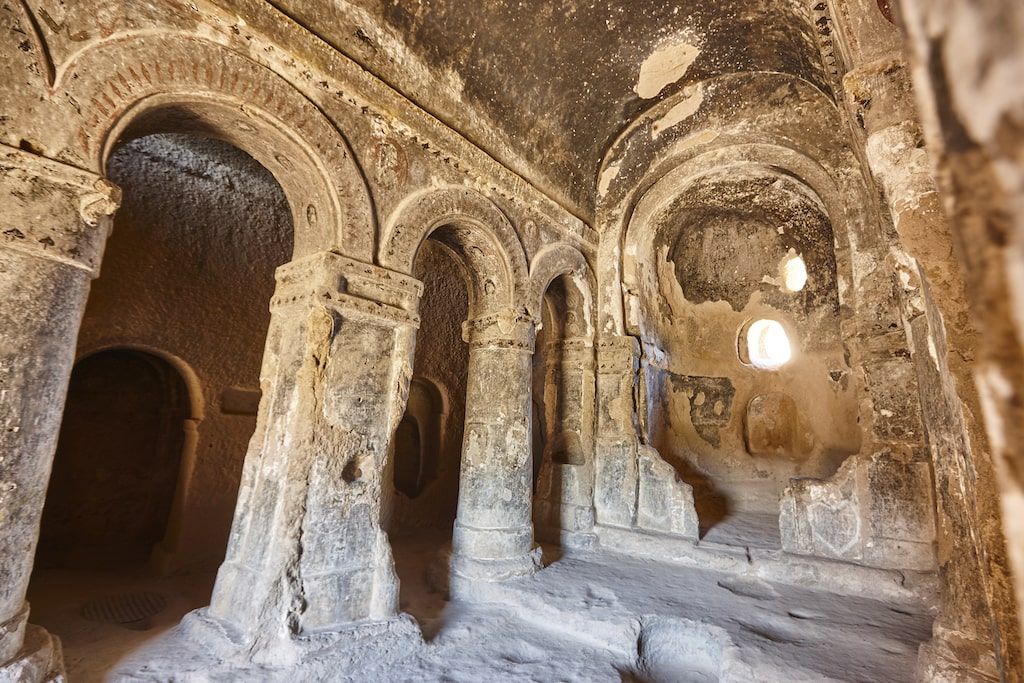
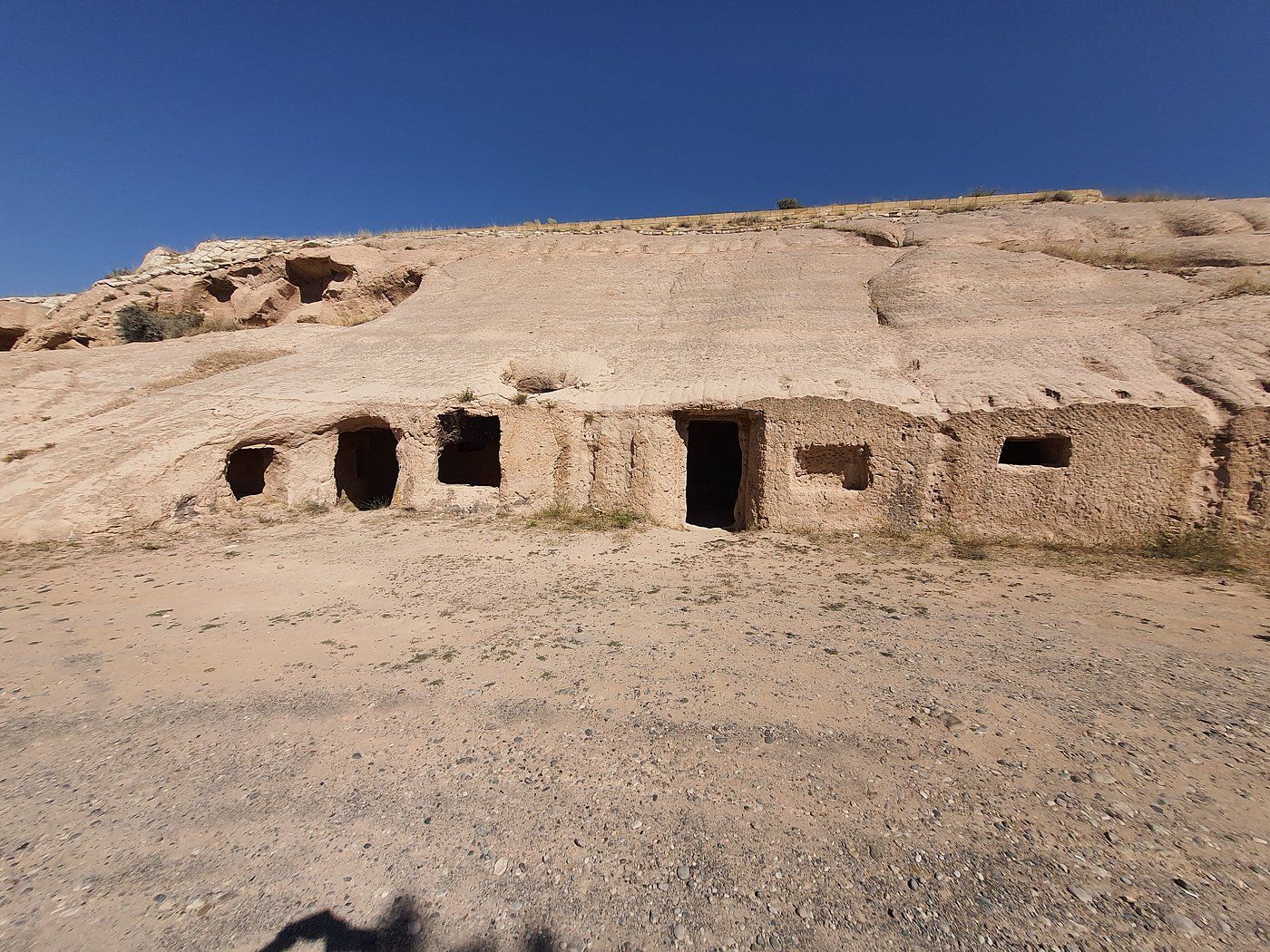
The Hallac complex is carved directly into the tufa cliffs, a technique that Cappadocian communities refined over centuries into a sophisticated architectural language. Rather than imposing stone onto the landscape, the builders subtracted — hollowing out chambers, arching doorways, and smoothing interior walls from the living rock. The result is a series of interconnected rooms that served distinct functions within the monastic-hospital community.
- Church and chapel: The liturgical heart of the complex, with carved apses and traces of painted decoration on the walls. Services here would have followed the Byzantine rite, marking the hours of the day for resident monks and patients alike.
- Refectory: A communal dining hall where monks gathered for meals following the austere dietary rules of Byzantine monastic life — a social and spiritual ritual as much as a practical one.
- Monks' cells: Small, carved sleeping chambers that gave individuals a private space for prayer and rest, consistent with the semi-eremitic traditions common in Cappadocian monasticism.
- Probable infirmary rooms: Larger chambers that scholars interpret as healing spaces — rooms wide enough to accommodate the sick, with the tufa walls providing natural temperature regulation that kept interiors cool in summer and surprisingly stable in winter.
- Cisterns: Water storage carved from the rock, essential for a healing institution. Clean water was central to Byzantine medical practice, and the cisterns at Hallac suggest a deliberate design for sustained occupation and care.
The tufa environment itself was an asset. The volcanic rock maintains a near-constant internal temperature regardless of the harsh Cappadocian climate — baking in summer, freezing in winter. For the sick and elderly, these carved chambers offered a naturally tempered environment that would have been difficult to achieve in a freestanding stone or timber building.
Religious Life at Hallac
The monks who inhabited Hallac lived according to the rhythms of the Byzantine liturgical calendar, which structured every hour, day, and season around a cycle of prayer, fasting, feast, and commemoration. Carved niches and painted frames within the cave complex mark the spots where icons would have been placed — physical anchors for a community whose spiritual life was inseparable from its physical surroundings.
Cappadocia produced some of the most revered figures in Byzantine Christianity — not only St. Basil the Great but also his brother St. Gregory of Nyssa and their close companion St. Gregory the Theologian (Gregory of Nazianzus). These three Cappadocian Fathers shaped Orthodox theology in ways that are still felt today. Communities like Hallac would have looked to these local saints as patrons and models, celebrating their feast days with particular solemnity. The connection between healing and prayer in Byzantine practice was not metaphorical: to pray was to participate in the divine energy that healed; to heal the body was to honor the image of God in the sick person.
Frescoes and Sacred Art
Like many rock-cut churches across Cappadocia, the Hallac complex preserves traces of painted decoration — frescoes executed in the iconographic programs typical of the 10th to 12th centuries. This period saw a flourishing of Byzantine artistic production in the region, as wealthy patrons and monastic communities commissioned elaborate painted cycles depicting saints, scenes from the life of Christ, and the Virgin Mary enthroned in the apse.
Painters working in Cappadocian cave churches used a distinctive technique: pigments were often mixed with tufa dust, binding color to the porous rock surface in a way that has, in some chambers, survived for nearly a millennium. Reds and ochres derived from iron-rich mineral earths; blues from lapis or copper compounds; whites from lime. Where the frescoes at Hallac survive, they offer a direct visual connection to the devotional world of Byzantine monasticism — faces of saints gazing steadily from the tufa walls as they have for a thousand years.
Location and Reaching the Site
The Hallac Monastery is located in one of Cappadocia's characteristic valleys, carved into the tufa formations that define the landscape between Göreme and the surrounding plateau. The site is accessible on foot via hiking trails that wind through the valley, passing rock-cut facades, old pigeon houses, and remnants of other monastic complexes along the way. The walk from Göreme typically takes between 30 and 60 minutes depending on the trail chosen and pace.
If you prefer not to hike, or want to combine the monastery visit with other sites across the valley network, a private taxi is the most convenient option. Reach Hallac by private taxi — use the Cappadocia taxi fare calculator to check current fares from Göreme or your hotel before you travel. Drivers familiar with Cappadocia can often point out trail access points and other nearby sites worth exploring.
Tips for Visiting
- Best time of day: Morning light enters many of the valley openings from the east, making early visits ideal for photography and for the cooler temperatures before midday heat builds in summer.
- Footwear: Wear sturdy, closed-toe shoes. Tufa floors inside cave complexes can be uneven, dusty, and occasionally slippery. Sandals or thin-soled shoes are not suitable.
- Lighting: Bring a torch or headlamp. Interior chambers can be very dark, and some of the most interesting carved details and fresco fragments are easy to miss without good light.
- Water: Carry more than you think you need, especially in summer. The valley trails offer no refreshment stops, and heat builds quickly in the open landscape.
- Photography: Natural light from the cave openings creates dramatic contrasts — shoot facing inward from the entrance for the best balance of interior detail and exterior landscape.
- Respectful behavior: Hallac is a heritage site with active religious and cultural significance for Orthodox Christian communities. Avoid touching frescoes or carved surfaces, and speak quietly inside the chambers.
- Combined visits: The valley walk to Hallac passes several other rock-cut churches and monastic remains. Allow a half-day rather than a quick stop to absorb the full depth of the landscape.
Frequently Asked Questions
What is a monastic hospital, and how is Hallac different from an ordinary Cappadocian church?
A monastic hospital (or xenon in Byzantine Greek) was a charitable institution attached to a religious community, providing care for the sick, the poor, and travelers. While many Cappadocian cave churches served purely liturgical functions, Hallac is believed to have included rooms specifically designed for housing and treating the ill — combining a functioning church and refectory with probable infirmary chambers. This makes it part of a tradition pioneered by St. Basil the Great of Caesarea in the 4th century, in which healing the body was understood as an extension of Christian worship.
Is it safe to explore the Hallac Monastery caves?
The site is generally accessible and visited regularly by hikers and heritage tourists. The main considerations are uneven tufa floors inside the carved chambers, low doorways in some sections, and poor interior lighting. Sturdy footwear and a torch are strongly recommended. As with all Cappadocian rock-cut sites, avoid touching walls or frescoes, and be cautious of loose tufa at entrances and ceilings. The outdoor trail approach is well-worn but can be slippery after rain.
How does Hallac compare to Derinkuyu underground city?
Derinkuyu is a vast underground city designed for mass refuge — multi-level, defensively engineered, and built to shelter entire communities during invasion. Hallac is something quite different: a carved monastic and healing complex set into the face of a valley cliff, designed for contemplative community life rather than emergency shelter. Where Derinkuyu impresses through sheer scale and engineering, Hallac offers intimacy — painted chambers, liturgical niches, and rooms shaped for daily religious and medical life. They represent two distinct aspects of Cappadocian ingenuity in tufa rock.