
Mustafapaşa, historically called Sinasos, is an old Greek village about 6 km south of Ürgüp in southern Cappadocia, famous for its carved 19th-century stone mansions and frescoed Greek Orthodox churches. Its Greek Orthodox community left during the 1923 Greece–Turkey population exchange, and the elaborate houses they built are exactly why the village is worth a half-day visit today.
It is one of the quietest, most atmospheric corners of the region: no crowds, no entry gate, just sun-bleached lanes of honey-coloured stone. Pair it with nearby valleys or an underground city for a full day away from the busy Göreme core. If you are deciding when to come, our best time to visit Cappadocia guide explains the seasons.
A short history: from Sinasos to Mustafapaşa
Until the early 20th century Sinasos was a prosperous Greek Orthodox town. Many of its men worked as caviar and fish merchants in Constantinople (Istanbul) and sent their wealth home, funding the ornately carved mansions, schools and churches that still stand. After the 1923 population exchange the Greek inhabitants were resettled in Greece (where many founded a 'Nea Sinasos' on Euboea), and Turkish families from Greece moved in. The village was renamed Mustafapaşa. This layered past is what gives the place its distinctive look — Greek stonemasonry weathering quietly in a Turkish village.
For more on the region's churches and Byzantine heritage, see our Cappadocia history and churches guide.
Best things to see in Mustafapaşa
The carved stone mansions
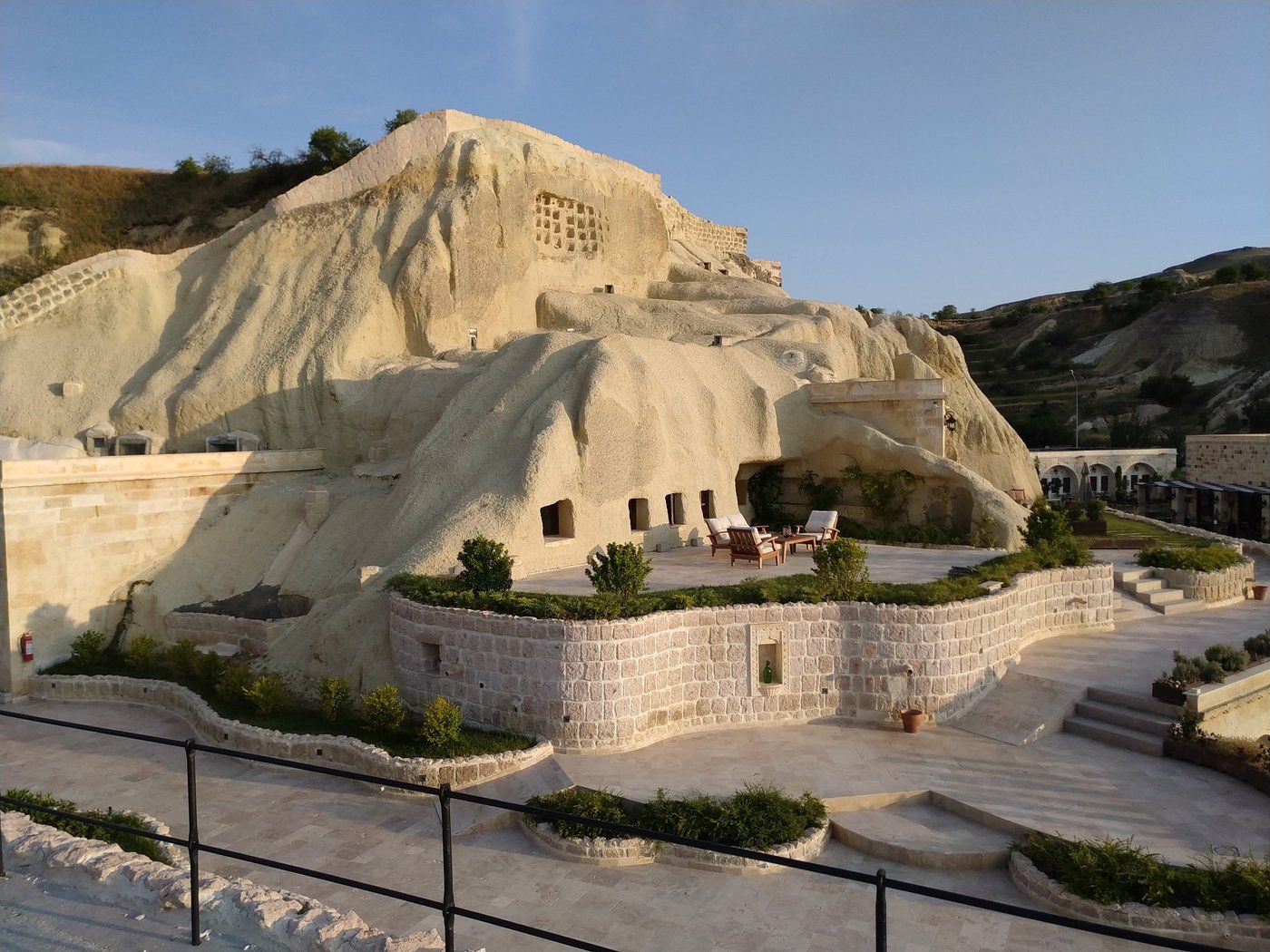
The single best thing to do is simply wander the lanes around the central square and look up. Doorways, lintels and window frames are covered in deeply carved floral and geometric reliefs, dated inscriptions and family crests. Several of the grandest konaks now operate as boutique cave-and-stone hotels, so you can step inside the courtyards or stay the night — see our best cave hotels in Cappadocia guide.
Church of Constantine and Helena
The largest church in the village, built in 1729 and rebuilt in 1850, sits just off the main square. Its stone facade is finely carved and the interior retains traces of frescoes and an iconostasis. It is usually open to visitors for a small, locally collected fee that changes year to year, so carry a little cash.
Church of Aios Vasilios and the rock-cut chapels
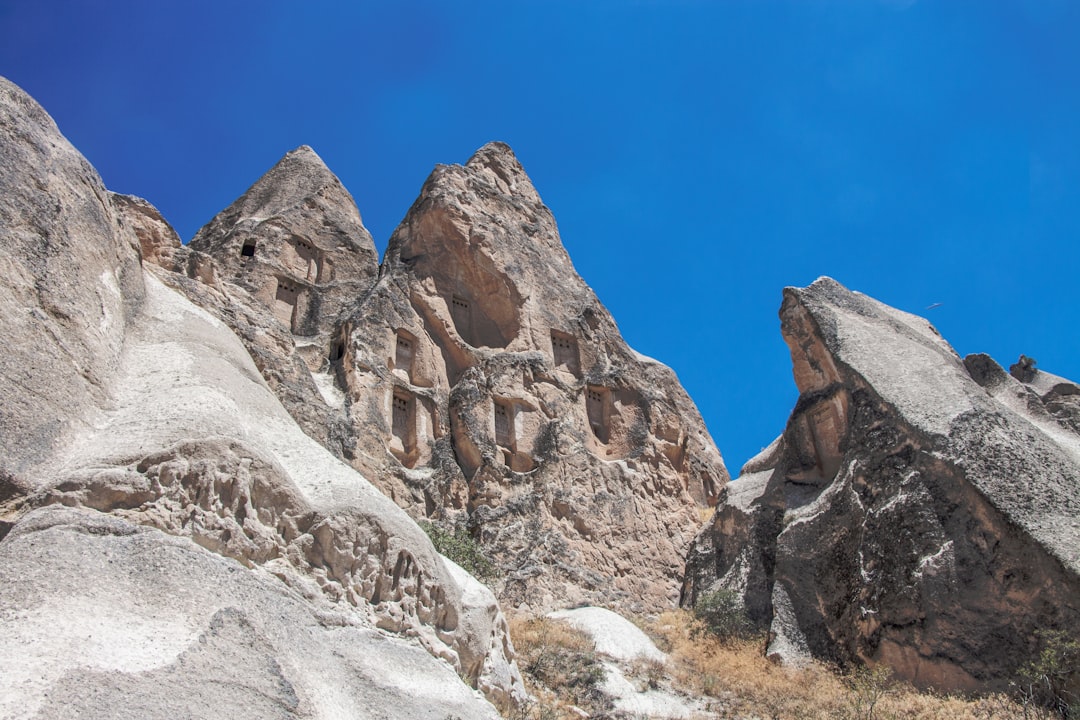
On the edge of the village, the rock-cut Church of Aios Vasilios (St Basil) is carved into the cliff and worth the short walk for its quiet setting. Smaller cave chapels are scattered around the surrounding slopes; if you love this kind of site, the painted churches at the Göreme Open-Air Museum (€20) are the regional highlight.
The Medrese and old square
The Şakir Paşa Medrese, an Ottoman-era theological school with a carved portal, frames the village square along with a couple of tea gardens. It is the natural place to pause, drink a çay and watch village life before exploring further.
How to get to Mustafapaşa
Mustafapaşa is about 6 km (a 10–15 minute drive) south of Ürgüp, roughly 20 minutes from Göreme. Your options:
- Car: the easiest choice — follow signs from Ürgüp toward Mustafapaşa; there is free parking near the square.
- Dolmuş (minibus): seasonal local minibuses run from Ürgüp's centre; ask at the otogar, as schedules are limited and sparse out of season.
- Taxi or transfer: a quick hop from Ürgüp or Göreme. For an up-to-date fare, check the live Cappadocia transfer price calculator rather than relying on a fixed quote.
- On a tour: Mustafapaşa often features on the 'Red' or south-Cappadocia tour routes alongside Ürgüp and the valleys.
For airport transfers and getting around the wider region, see our practical travel tips.
How to plan your visit
- Time needed: 1.5–2 hours to stroll the village and visit a church; half a day if you linger over lunch.
- Best combined with: Ürgüp town, Pancarlık Valley, or a southern underground city such as Kaymaklı (€13) or Derinkuyu (€13).
- What to bring: comfortable shoes for cobbled lanes, sun protection in summer, and small cash for the church and tea gardens.
- Quietest times: early morning and late afternoon, when the low sun lights up the carved stone.
If you only have a day or two, our day-trip combinations guide shows how to slot Mustafapaşa into a wider itinerary.
Frequently asked questions
Is Mustafapaşa worth visiting?
Yes, if you enjoy history, architecture and quiet villages. The carved Greek mansions and old churches are unlike anything in the busier centres, and you can see the highlights in under two hours, making it an easy add-on to an Ürgüp or southern-valleys day.
Is there an entrance fee to Mustafapaşa?
The village itself is free to walk around. Individual churches such as Constantine and Helena may charge a small, locally collected fee, so bring a little cash; amounts vary, so we don't quote a fixed price here.
How far is Mustafapaşa from Göreme and Ürgüp?
It is about 6 km (10–15 minutes) south of Ürgüp and roughly 20 minutes from Göreme by car or taxi.
Why is it called Sinasos?
Sinasos was the village's Greek name when it was a Greek Orthodox town. After the 1923 Greece–Turkey population exchange it was renamed Mustafapaşa; both names are still used interchangeably.
Mustafapaşa (Sinasos) rewards travellers who like to slow down — a place to read the stone, sip tea on the square, and feel a chapter of Cappadocia's past that most visitors never reach.