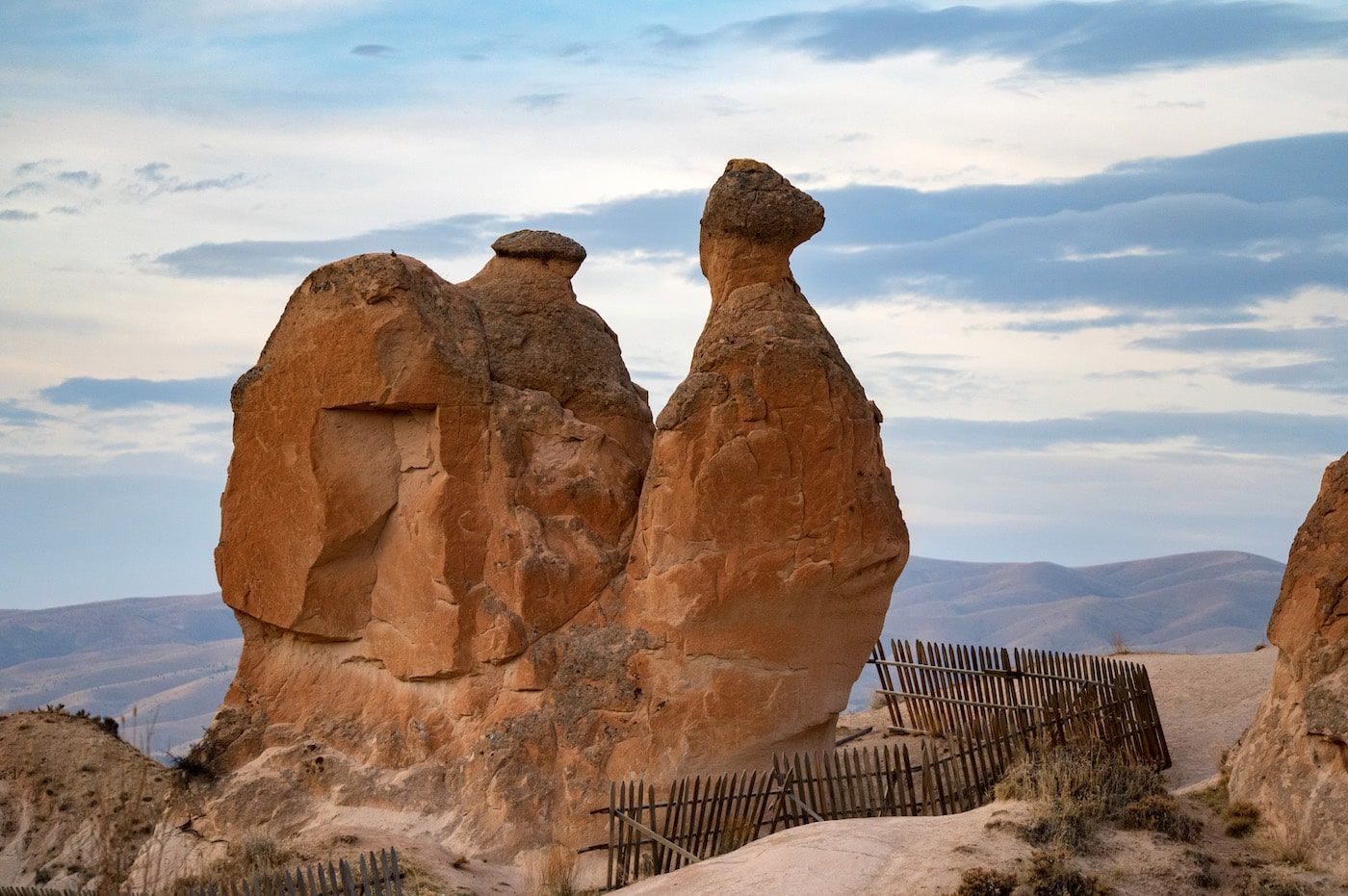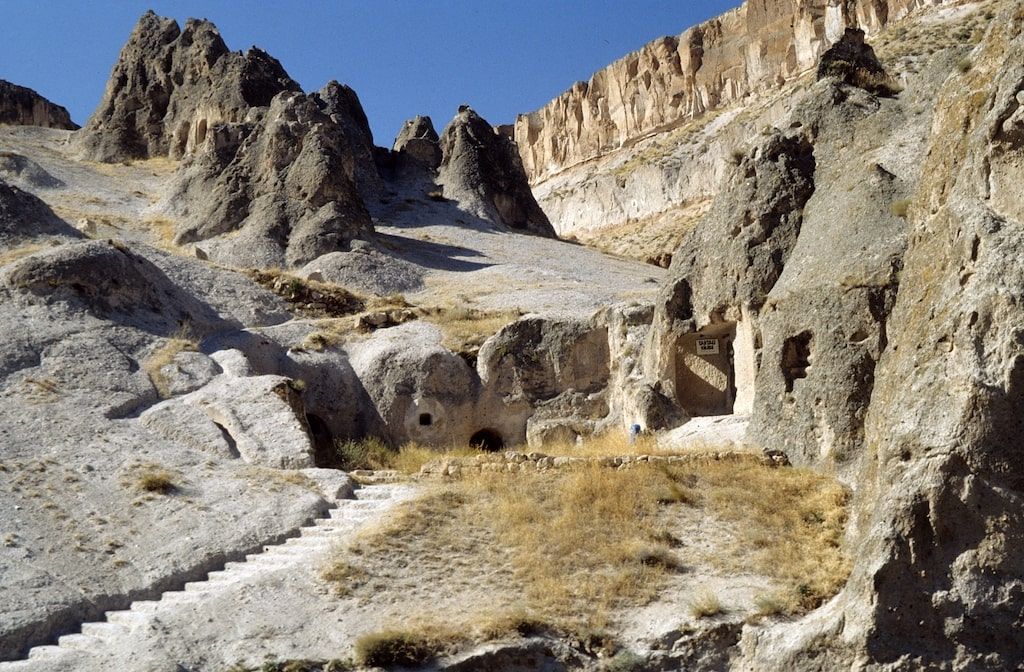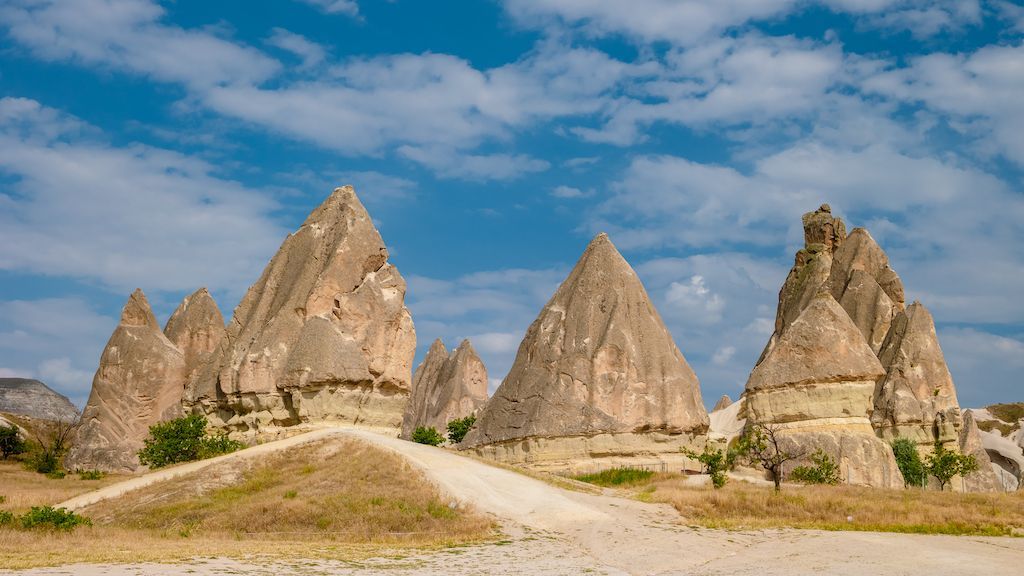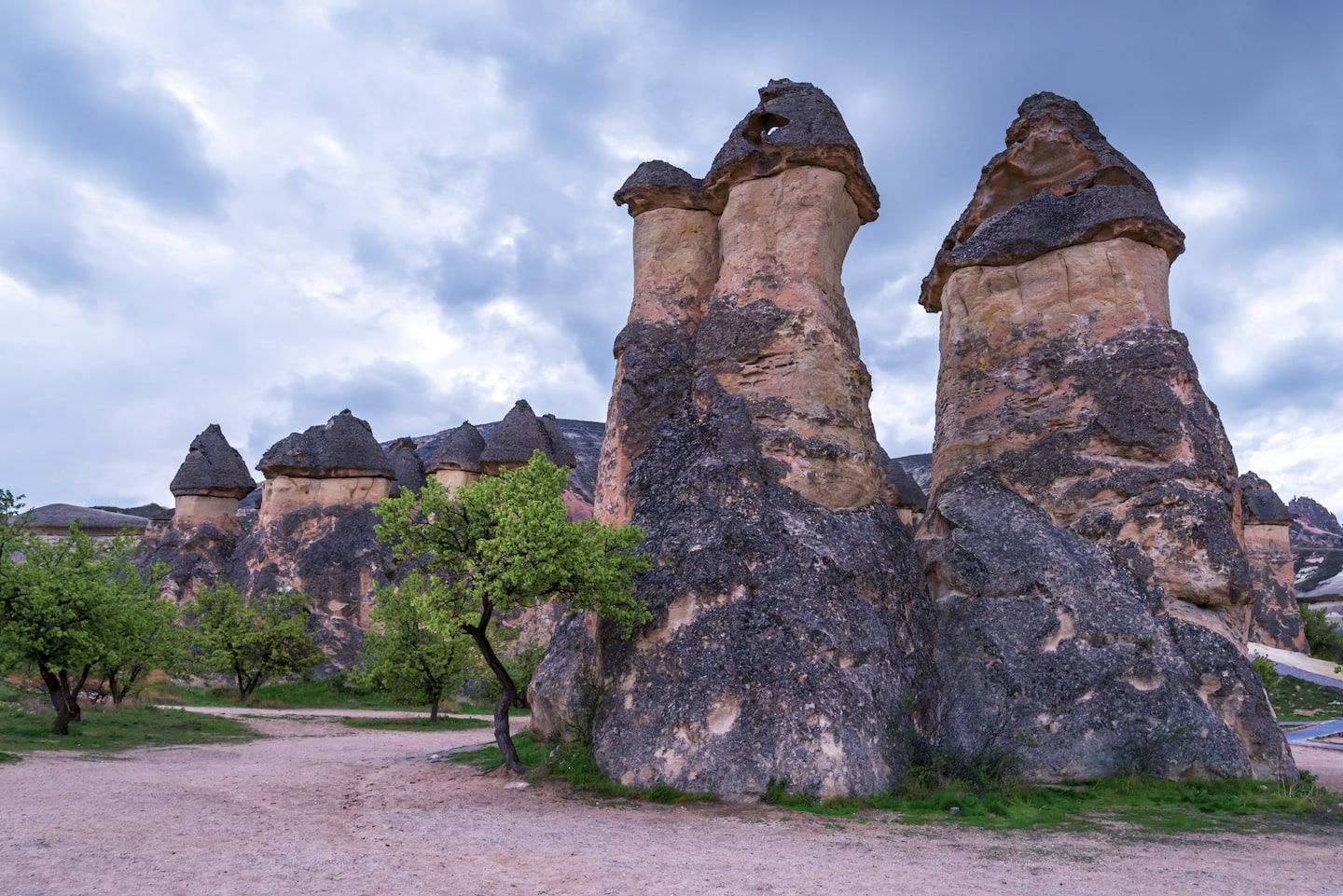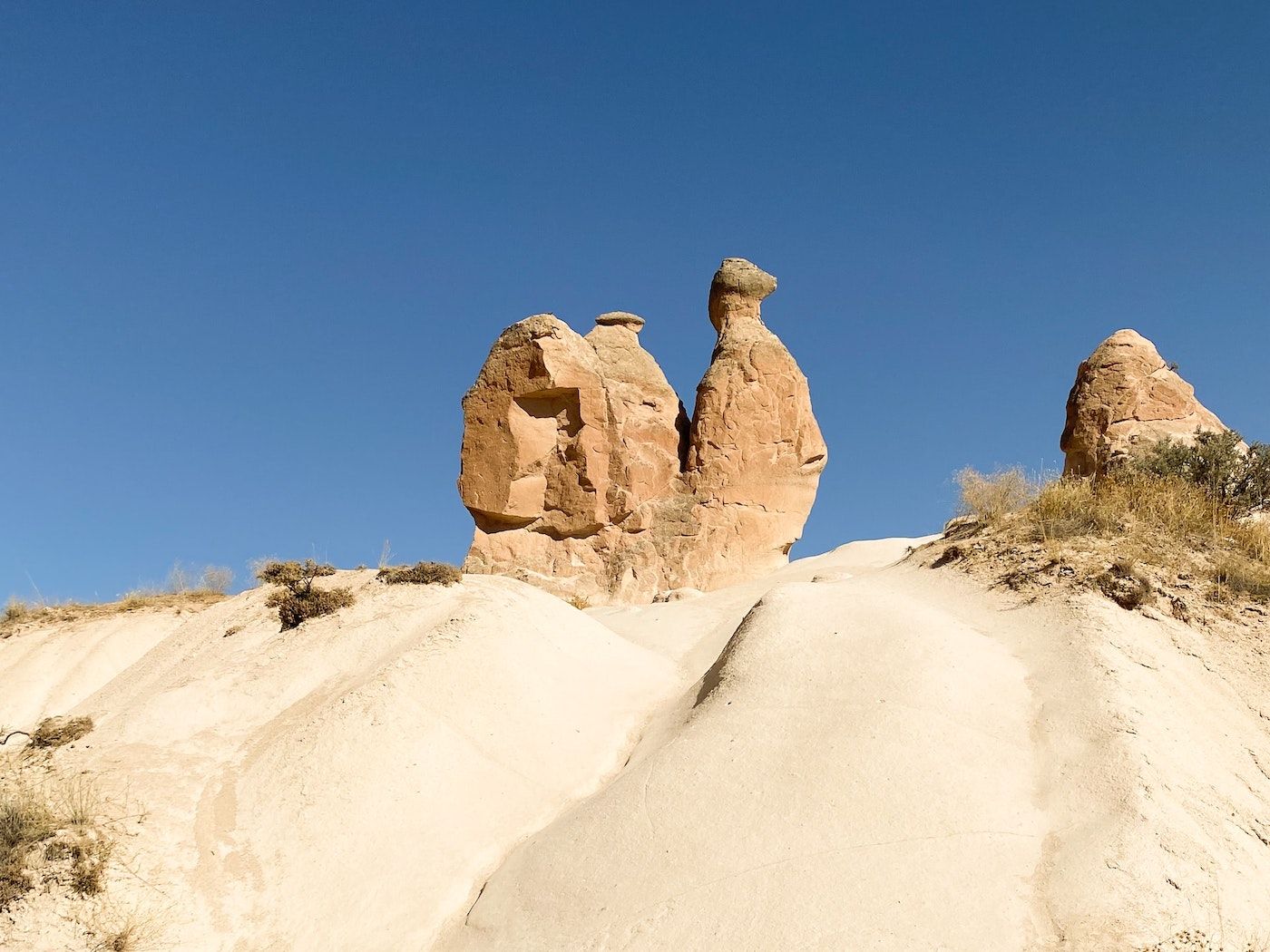

Camel Rock is a free-to-visit fairy chimney in Devrent Valley (Devrent Vadisi), about 3 km north-east of Göreme on the road towards Avanos. The soft volcanic tuff has eroded into a single hump-backed silhouette that looks uncannily like a camel kneeling on the valley floor — which is exactly why it has become one of Cappadocia's most photographed natural landmarks. There is no ticket office, gate or opening time: it sits beside a public layby and you can stop, photograph it and walk on whenever you like.
Where is Camel Rock?
Camel Rock stands at the entrance to Devrent Valley, also known as Imagination Valley (Hayal Vadisi), because so many of its rock formations resemble animals and figures. It lies roughly halfway between Göreme and the pottery town of Avanos, a short detour from the main road that links Cappadocia's central villages. Because it is right at the roadside, most visitors see it as part of a wider loop rather than a destination in its own right.
How to get to Camel Rock
The simplest base is Göreme, the most central village in the region. From there you have a few options:
- By car: it is a 5–10 minute drive from Göreme towards Avanos; follow signs for Devrent Valley and you will see Camel Rock at the roadside layby. There is space to pull over and park.
- By taxi: a quick metered hop from Göreme — for current fares and to compare a private taxi for the day, use the live Cappadocia taxi price calculator rather than relying on a fixed quote.
- On a trip: Camel Rock is a standard photo stop on the classic 'Red Route' (North Cappadocia), which usually also takes in Paşabag and the Devrent landscape.
- On foot or by bike: keen walkers can reach it along quiet back roads from Göreme, combining it with the surrounding valleys.
What to see and do
Camel Rock itself takes only a few minutes to admire, so it is best treated as one beat in a longer half-day. Stand to the side of the formation where the 'hump' and 'head' line up most clearly — most people walk straight to the obvious viewpoint, but moving 20–30 metres along the road often gives a cleaner profile. From the same spot you can wander a little way into Devrent Valley, where erosion has sculpted dozens of other shapes that locals nickname after animals, a snake, even a kissing couple, hence the 'Imagination Valley' name.
- Photograph the camel profile from the road-side angle and again from slightly uphill.
- Take a short stroll into Devrent Valley to spot other figurative rock formations — entry is free and there are no formal trails.
- Combine it with nearby Paşabag (Monks Valley), a few minutes away, where multi-headed fairy chimneys hide a rock-cut hermitage.
- Read up on how these shapes form in our guide to Cappadocia's fairy chimneys.
Best time to visit
The light is kindest at sunrise and in the last hour before sunset, when the low sun warms the tuff to a soft gold and the camel's outline casts a clear shadow. Midday is the harshest time for photos but the easiest for parking and crowds. Spring (April–June) and autumn (September–October) bring the most comfortable temperatures; for a fuller seasonal breakdown see our best time to visit Cappadocia guide.
Tips for visiting
- There is no entrance fee and no facilities at the rock itself — bring water, especially in summer.
- Wear sturdy shoes if you plan to step off the road into the valley; the tuff is loose underfoot.
- Allow 10–20 minutes for Camel Rock alone, or a half-day if you link it with Paşabag and Avanos.
- Don't confuse Camel Rock with Love Valley near Göreme — they are different sites in different valleys.
- If you are pairing several nearby stops, plan it as part of a wider loop using our day-trip combinations guide.
How was Camel Rock formed?
Like the rest of Cappadocia's fairy chimneys, Camel Rock was shaped over millions of years. Ancient volcanic eruptions blanketed the region in soft tuff topped by a harder basalt cap; wind, water and frost then eroded the softer rock unevenly, leaving the resistant cap to protect a slender column beneath. In Camel Rock's case the weathering happened to leave a hump-and-head silhouette — a happy accident of geology rather than anything carved by hand.
Frequently asked questions
Is there an entrance fee for Camel Rock?
No. Camel Rock sits at a roadside layby in Devrent Valley and is free to visit at any time, with no ticket office or gate.
How long do you need at Camel Rock?
The rock itself takes 10–20 minutes. Most visitors fold it into a half-day loop through Devrent Valley, Paşabag and Avanos.
What is the best way to get to Camel Rock from Göreme?
It is a 5–10 minute drive towards Avanos. You can self-drive, take a short taxi, or visit it as a stop on a North (Red) Route. For current taxi fares use the live taxi price calculator.