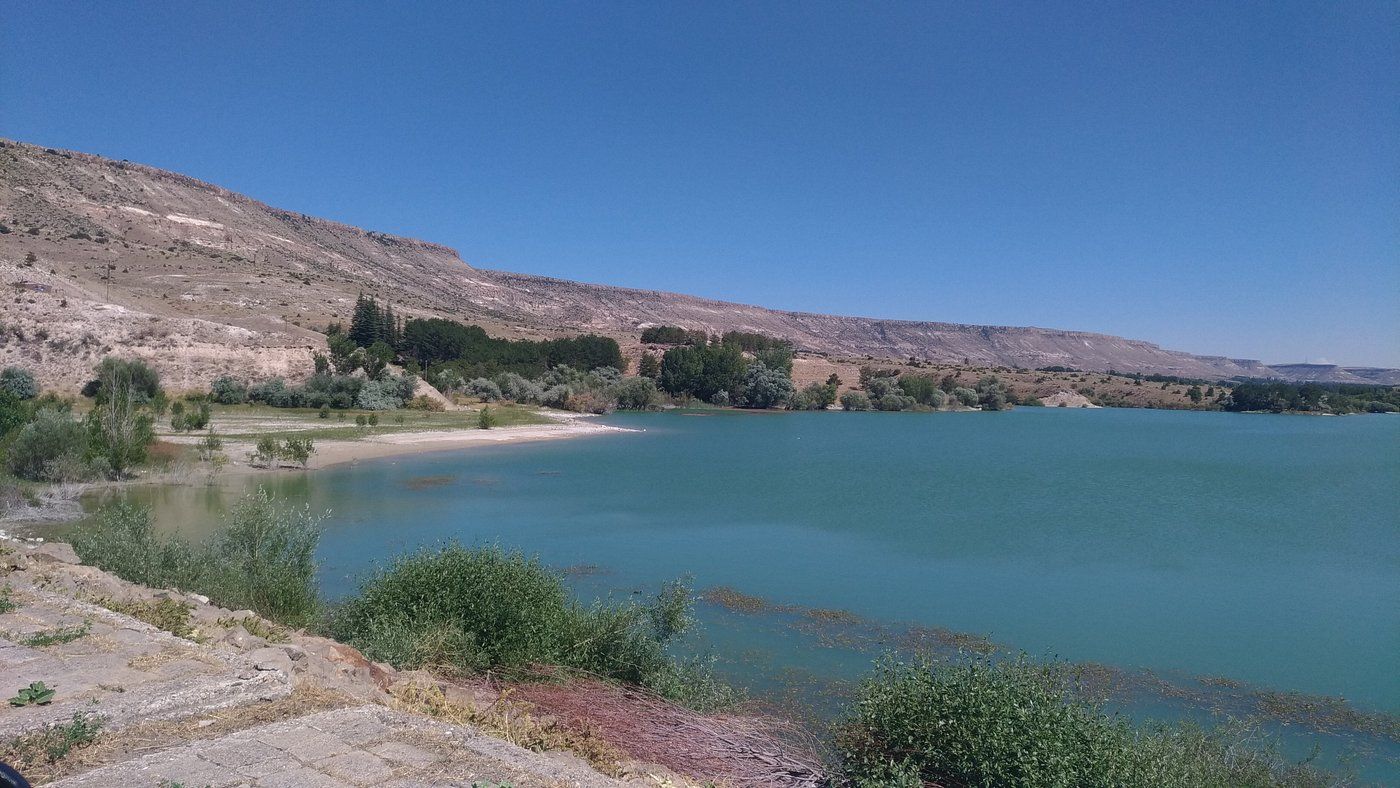

Damsa Dam (Damsa Barajı) is a quiet reservoir on the Damsa Stream in Nevşehir province, a short drive south-east of Ürgüp and the historic village of Mustafapaşa. It is not a museum or a ticketed sight – there is no entrance fee – but it is one of Cappadocia's most peaceful spots, where calm water mirrors the surrounding hills and you can walk, fish or watch the sunset well away from the balloon crowds.
What is Damsa Dam?
The dam was built across the Damsa Stream, a tributary that feeds into the wider Kızılırmak (Red River) basin, primarily to store water for irrigating the farmland and orchards around Ürgüp, Mustafapaşa and the Damsa valley. Over the years the reservoir behind it has become a low-key local escape: a broad sheet of water ringed by softly eroded slopes and patches of pale tuff rock that hint at the fairy-chimney landscape Cappadocia is famous for.
Because it sits off the main tourist circuit, Damsa Dam stays remarkably quiet. You are far more likely to share it with a local angler or a farmer than a shuttle bus, which is exactly why photographers and slow-travellers seek it out.
What to see and do
- Photography & reflections – on still mornings and evenings the water becomes a mirror; for more ideas on golden-hour spots see our Cappadocia photography guide.
- Easy walks – informal tracks follow parts of the shoreline and the surrounding hills, perfect for a gentle stroll rather than a hard hike.
- Fishing & birdwatching – the reservoir is a popular local fishing spot, and the reedy margins attract waterbirds, so bring binoculars if you enjoy spotting herons and ducks.
- A picnic with a view – bring your own food and water; there are no shops or cafes at the dam itself.
Damsa pairs well with a half-day exploring the nearby Greek-era streets of Mustafapaşa, or a wider loop of the region's countryside – see our Cappadocia day trips & combinations for ideas on stitching it into a longer itinerary.
How to get to Damsa Dam
The dam lies in the countryside between Ürgüp and Mustafapaşa, roughly a 10–15 minute drive from Ürgüp town centre. The easiest way to visit is by car or taxi, as public transport does not run directly to the reservoir. If you are driving, head south from Ürgüp towards Mustafapaşa and follow signs for the Damsa valley; a rental car gives you the freedom to combine it with other rural stops.
Without your own vehicle, a taxi is the simplest option. Rather than quoting a figure that changes, check the live Cappadocia taxi price calculator for an up-to-date fare, and ask the driver to wait or arrange a pickup, as you will not easily flag a taxi back from the dam. For getting around the region in general, our Cappadocia practical travel tips cover transport, timing and what to pack.
Tips for visiting
- Go early or late: sunrise and sunset give the softest light and the calmest, most reflective water.
- There are no facilities – no entrance gate, toilets, shops or cafes – so bring water, snacks and sun protection.
- Wear sturdy shoes; shoreline tracks can be uneven, muddy after rain and exposed to the sun.
- It combines naturally with a visit to Mustafapaşa, the Soganli or other quiet valleys, making a relaxed alternative to the busier central sights.
- Respect the working landscape: this is farmland and a water source, so take all litter away with you.
Frequently asked questions
Is there an entrance fee for Damsa Dam?
No. Damsa Dam is an open countryside reservoir, not a managed attraction, so there is no ticket office or entrance fee. If you are budgeting for the region's paid sights instead, classics like the Göreme Open-Air Museum cost €20.
Is Damsa Dam worth visiting?
If you want a quiet, scenic spot away from the crowds – for photography, a picnic, a gentle walk or some fishing – then yes. It is best treated as a peaceful add-on to nearby Ürgüp and Mustafapaşa rather than a headline sight in its own right.
When is the best time to visit?
Spring and autumn are ideal, when temperatures are mild and the countryside is green or golden. Summer can be hot and exposed, while winter is atmospheric but cold. See our guide to the best time to visit Cappadocia to plan around the weather and crowds.