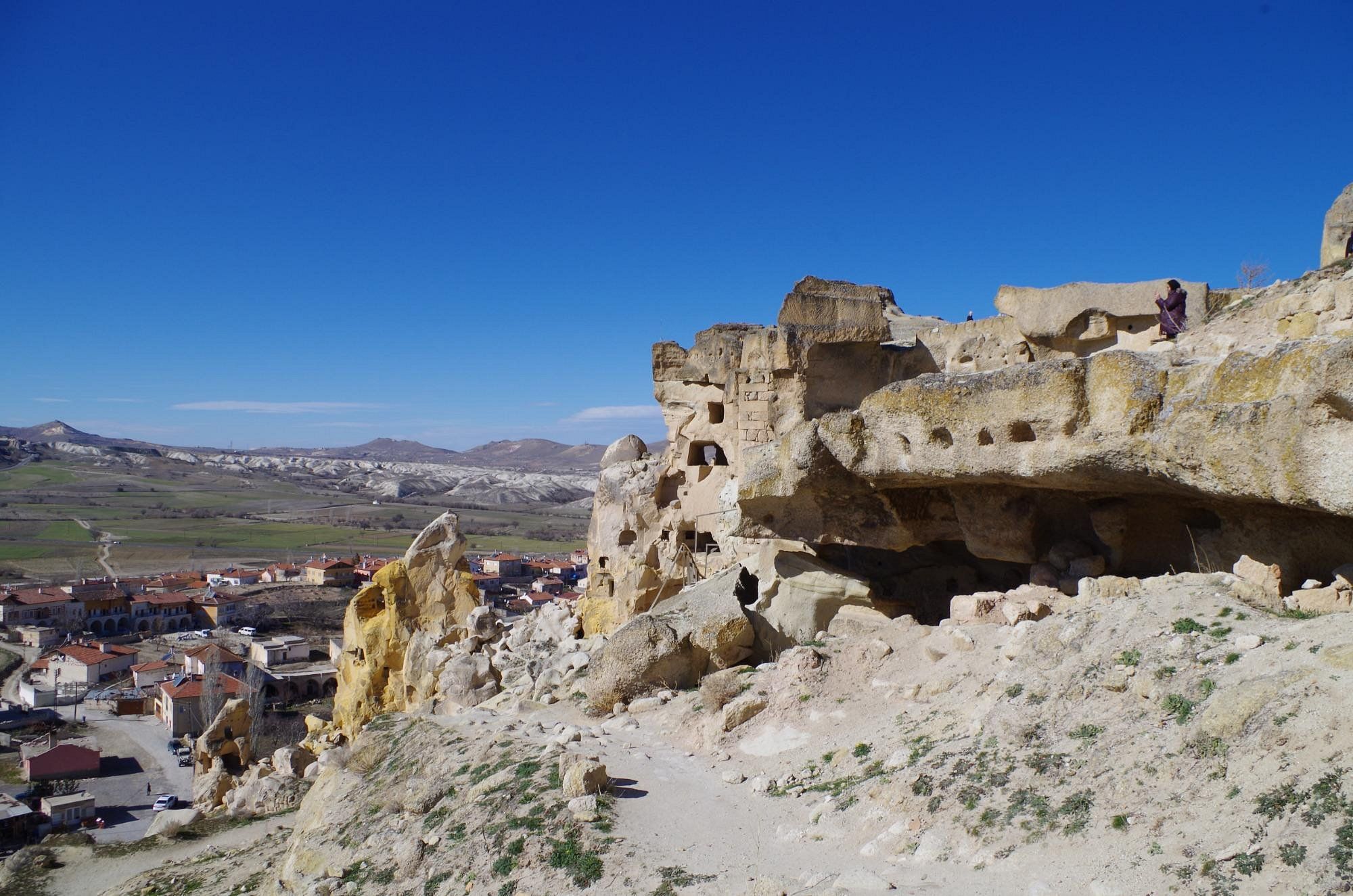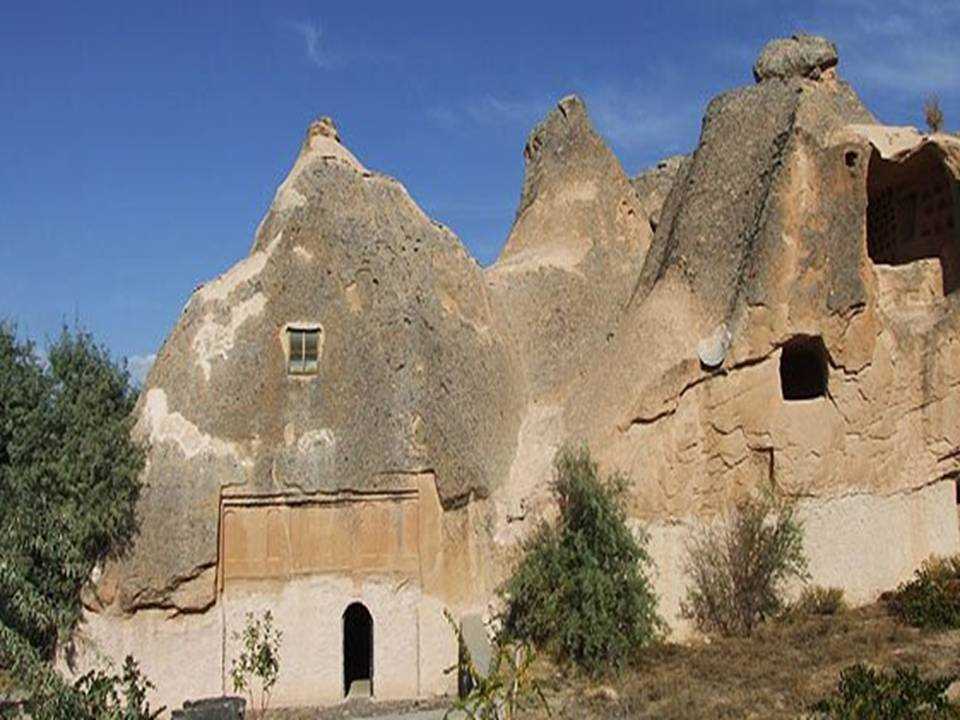
Among Cappadocia's hundreds of Byzantine rock-cut churches, St. Jean Church — locally known as Karşı Kilise, "the Church Opposite" — stands apart. At the entrance to Gülşehir, 20 kilometres north of Nevşehir, it holds two rare distinctions: one of the only surviving Last Judgment fresco cycles in the region, and a dated inscription from 1212 — making it one of the few churches in Cappadocia whose construction year is known with certainty. Its dedication to Saint John the Baptist is clear in the apse, where the forerunner of Christ still watches over the space, scroll in hand.
The Byzantine Veneration of Saint John
In Byzantine Christianity, Saint John occupied a singular position. As the forerunner who baptised Christ in the Jordan River, John the Baptist was regarded as the greatest of the prophets — the hinge point between the Old Testament and the New. Alongside John the Evangelist, author of the Fourth Gospel and the Book of Revelation, the two Johns were among the most venerated figures in the Eastern Church, surpassed only by the Virgin Mary herself.
Cappadocia reflected this devotion across its landscape. Churches dedicated to one or both Johns appear throughout the region — from the famous Church of St. John the Baptist at Çavuşin, which dates to the fifth century and once drew imperial pilgrimages, to smaller oratories tucked into cliff faces along hiking trails. The Gülşehir church belongs to this tradition: a community church built in the medieval period, when Byzantine religious life in Anatolia remained vibrant despite growing Seljuk pressure.
Architecture: Two Floors of Living Rock
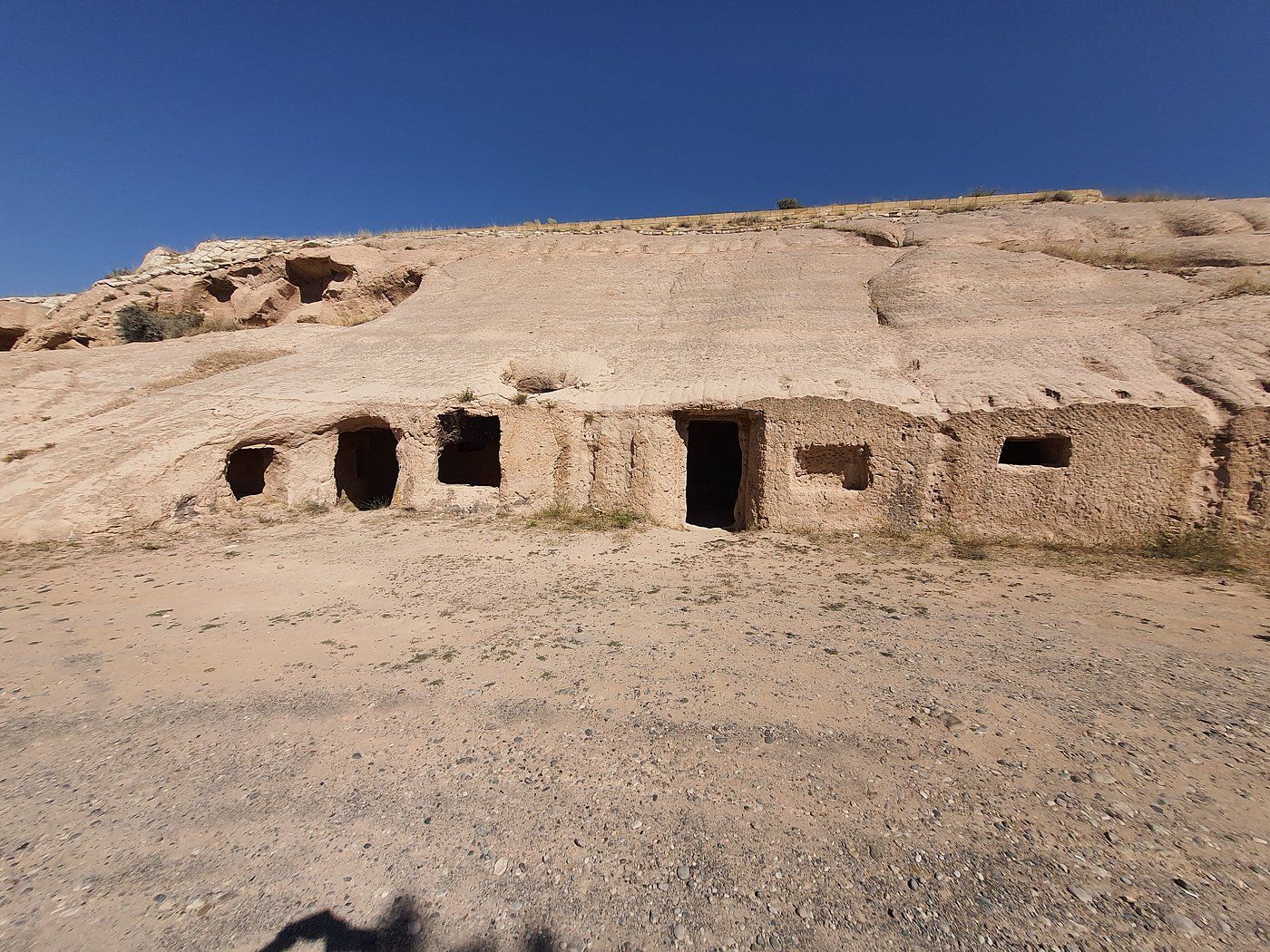
St. Jean Church is a two-storey rock-cut structure excavated directly from the soft tufa cliff. The lower level served practical purposes: a wine cellar, water channel, and burial chambers. Cappadocian communities typically integrated storage and funerary space into the ground floor of larger churches, and Gülşehir follows this pattern faithfully. A carved staircase connects the levels, and the transition from the dim lower floor to the painted upper church remains a quietly dramatic experience.
The upper church is a single-aisled nave with a barrel-vaulted ceiling and a semicircular apse at the east end. Carved niches line the walls, their vaults adorned with floral and geometric motifs. Light filters through small openings, giving the interior a candlelit quality even at midday. Pilasters, blind arches, and decorative friezes show the skill of craftsmen who achieved the feel of a built stone church using only chisel and tufa.
Frescoes: The Last Judgment and the Baptist's Scroll
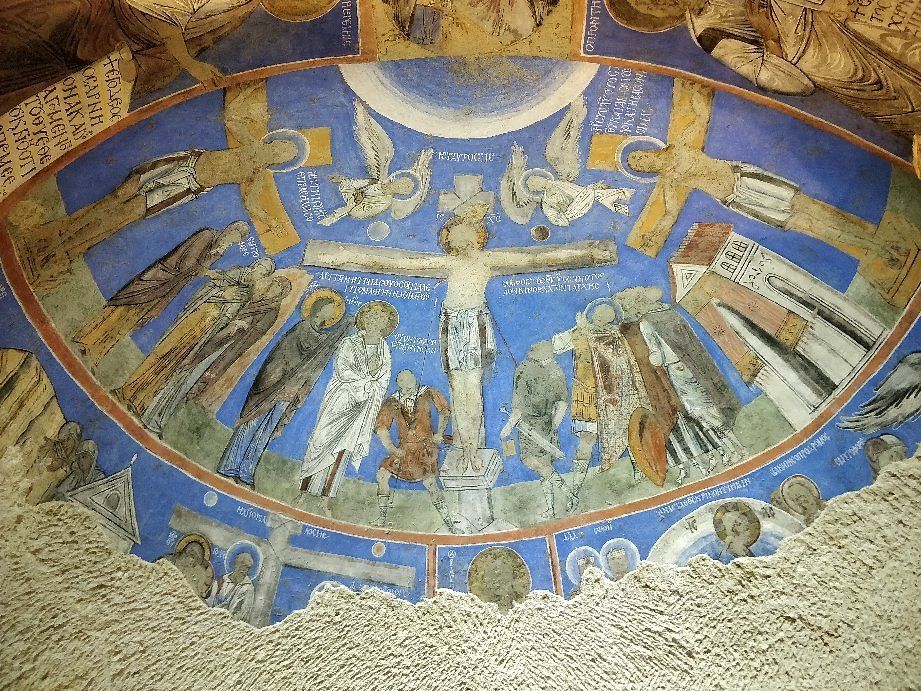
The frescoes are the reason to make the journey. Painted on a dark ground in ochre yellows, warm browns, and traces of red, they cover the upper walls and vault in a comprehensive Byzantine programme. Biblical scenes from the life of Christ — the Nativity, the Baptism, the Crucifixion — unfold in sequential registers, following the established iconographic order that Byzantine painters inherited from Constantinople.
At the apse, the dedicatee himself appears: Saint John the Baptist holds an unrolled scroll inscribed with the words "Ecce Agnus Dei" — "Behold the Lamb of God" — the phrase he spoke when he identified Christ at the Jordan. This image, painted with expressive Byzantine economy, is one of the more powerful single figures in Cappadocian church art.
The masterpiece, however, is the Last Judgment. Scenes of this theme — Christ enthroned, the resurrection of the dead, the righteous ascending to paradise, sinners cast into flames — are unusually rare in Cappadocia. Most surviving fresco programmes focus on narrative cycles; eschatological visions of this scope are exceptional. The Gülşehir rendering, restored in 1995, remains the finest and best-preserved example of its kind in the region.
Location in Cappadocia's Rock Church Network
St. Jean Church sits at the northern edge of Cappadocia's church cluster, beyond the busy Göreme–Ürgüp corridor. The Göreme Open-Air Museum () lies roughly 20 kilometres south and provides the natural point of comparison: similar Byzantine fresco programmes, similar rock-cut techniques, but far larger crowds. Gülşehir is usually quiet. The surrounding landscape — pale cliffs, pigeon houses, orchards — has a pastoral character distinct from the fairy-chimney valleys, and Çavuşin (15 minutes south) adds the oldest dated church in Cappadocia to any northern circuit.
How to Visit
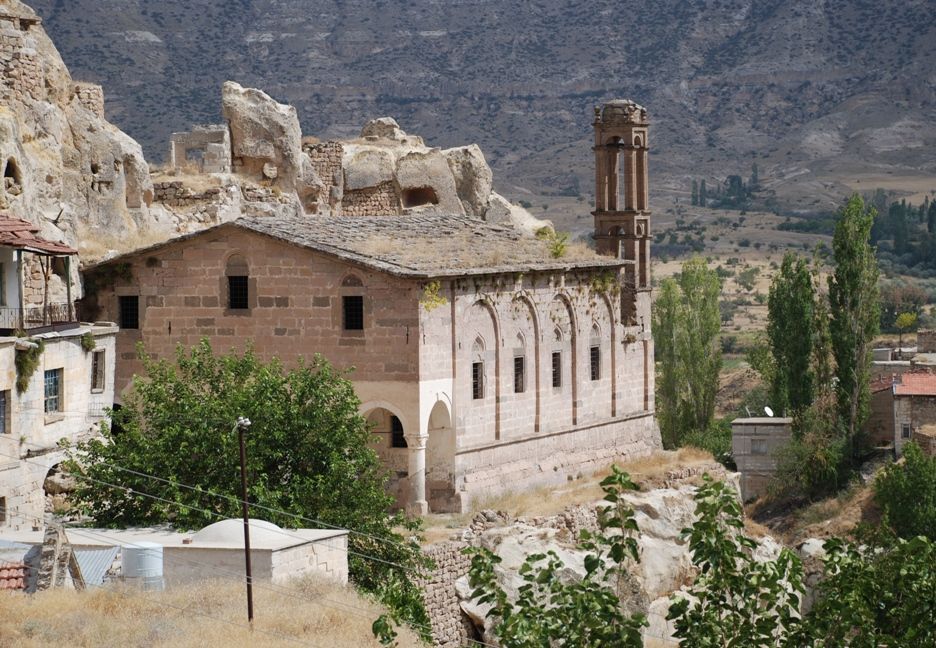
St. Jean Church stands at the edge of Gülşehir, clearly visible from the road as you enter town. The site is managed and charges a small entrance fee; check locally for current prices, as fees at minor Cappadocian sites change seasonally. The church is typically open during daylight hours throughout the year.
From Göreme, the drive takes 25 to 30 minutes via the D300 road through Avanos. Public minibuses connect Nevşehir with Gülşehir, but schedules are infrequent and the stops are not always convenient for the church itself. To reach outlying rock churches without a car, check the Cappadocia taxi fare calculator for a live taxi price — a shared or private taxi ride from Göreme is the most reliable option and allows you to combine Gülşehir with Çavuşin and Avanos in a single morning loop.
Tips for Visiting Rock Churches
- Bring a small torch: Even sites with some electric lighting have shadowed corners where a pocket torch reveals fresco detail invisible to the naked eye.
- Wear sturdy shoes: The carved stone floors can be uneven and slippery, especially near the lower-level staircase.
- Never touch the frescoes: The pigment is fragile and the oils from skin cause irreversible damage. Keep a respectful distance.
- Visit in the morning: East-facing openings bring the best light to the upper church in the first hours after sunrise.
- Combine with Çavuşin: The two St. John churches span eight centuries of Byzantine dedication and make a natural pairing.
- Give yourself time: The frescoes reward slow looking — plan at least 45 minutes rather than a quick walk-through.
Frequently Asked Questions
Is St. Jean Church in Gülşehir the same as the Church of St. John the Baptist in Çavuşin?
No — they are two separate sites. The Çavuşin church dates to the fifth century and sits atop a cliff above the village. The Gülşehir church (Karşı Kilise) was built in 1212 and stands at the entrance to town. Both are dedicated to Saint John the Baptist and can be combined on a single northern Cappadocia circuit.
Is there an entry fee for St. Jean Church in Gülşehir?
Yes, a small admission fee is charged. Current prices are best confirmed locally, as minor site fees in Turkey are updated periodically.
What are the frescoes in St. Jean Church about?
The frescoes cover the life of Christ from Nativity to Crucifixion, with John the Baptist — holding a scroll inscribed 'Ecce Agnus Dei' — prominent in the apse. The standout is the Last Judgment cycle, one of very few surviving in Cappadocia, showing the Second Coming, the resurrection of the dead, and the fates of the righteous and damned. An inscription dates the paintings to 1212.