
Tatlarin Underground City is a quieter rock-cut complex on the slope of the hill known locally as Kale in Tatlarin town, about 10 km north of Acıgöl in Nevşehir Province. Its combination of large underground rooms and a frescoed church makes it different from the better-known multi-level visitor routes at Derinkuyu and Kaymaklı.
Tatlarin is most rewarding when you visit for its unusual layout and church paintings, not because it is a smaller copy of Derinkuyu.
What makes Tatlarin different
The Ministry of Culture and Tourism's site guide notes that the size of the halls, the relative scarcity of living rooms and the presence of storage areas suggest a military garrison or monastic complex rather than a densely occupied underground settlement. That interpretation is more cautious than calling it a complete underground city built for thousands of residents.
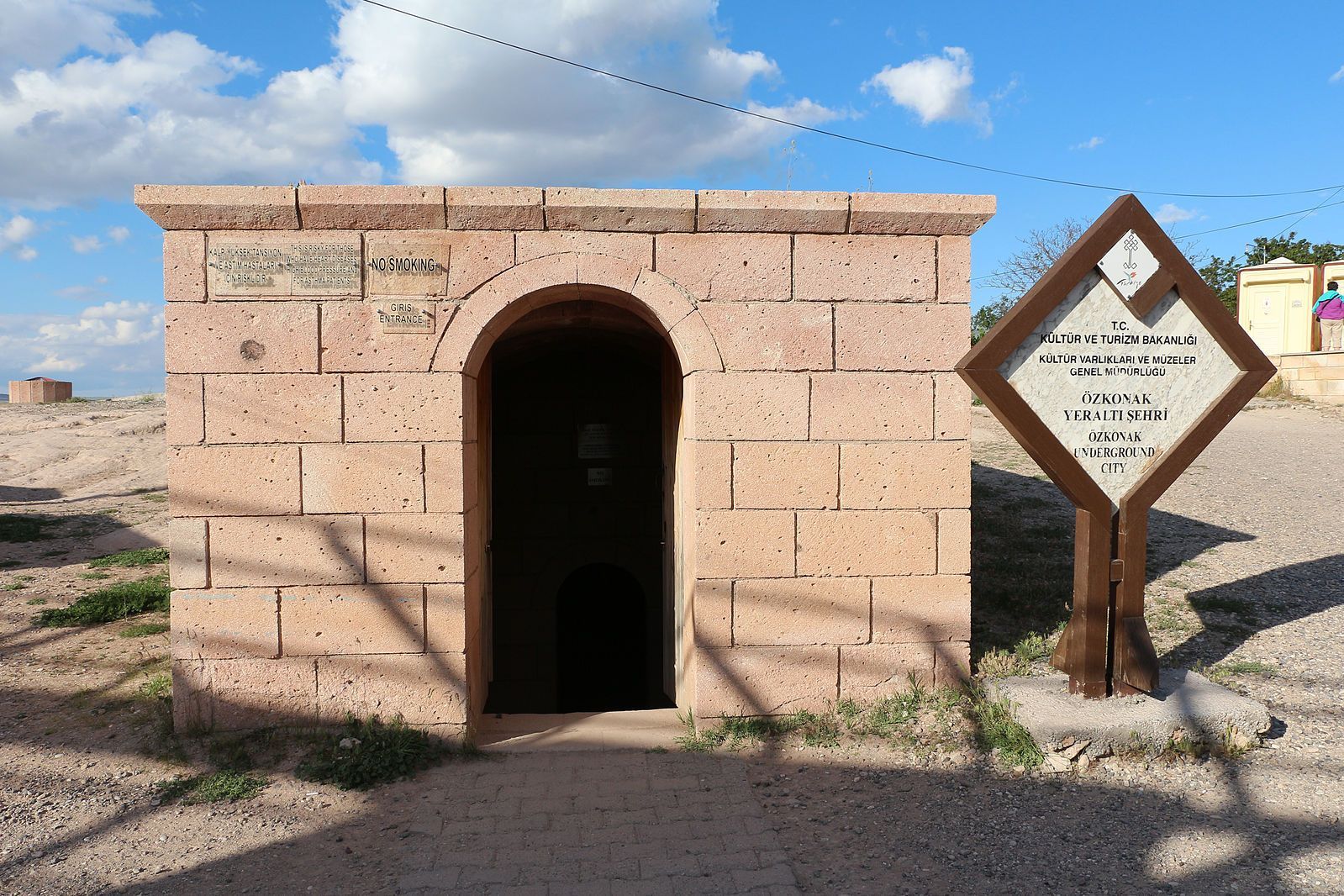
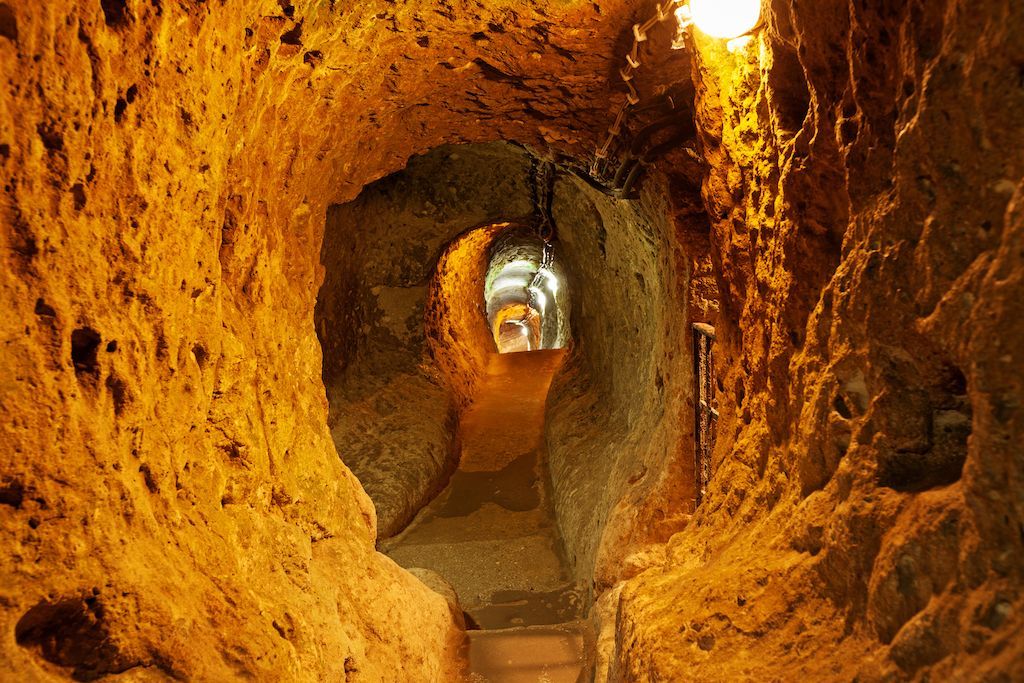
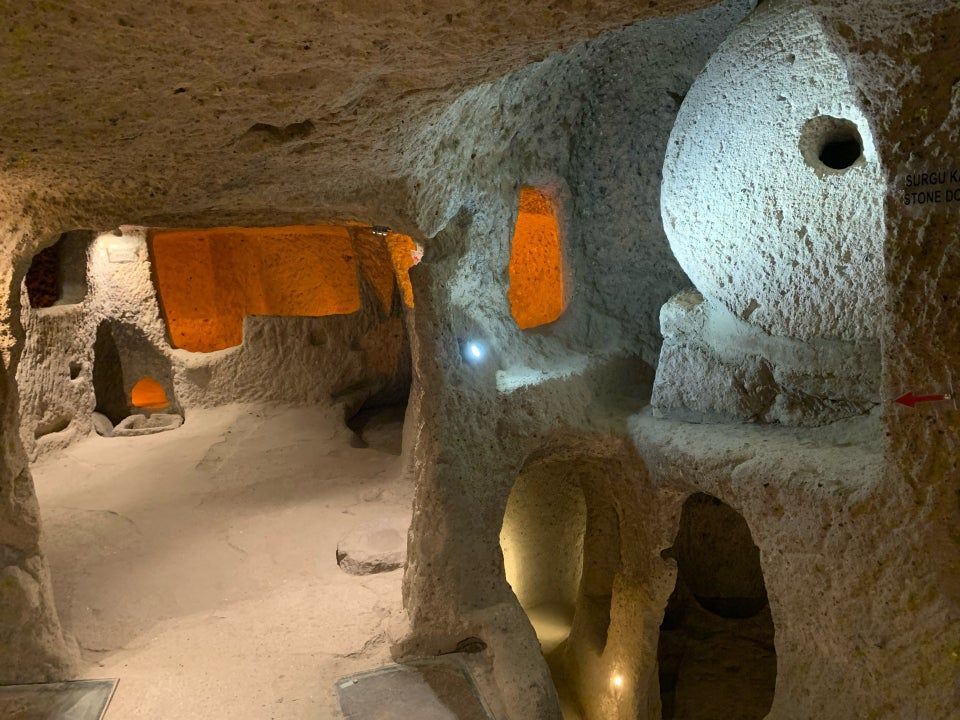
A long entrance passage leads toward broad chambers protected by rolling stone doors. Storage spaces, ventilation shafts and internal connections show how the complex controlled access and supported organised use below ground. Only the officially opened visitor route should be entered; closed passages are not an invitation to explore.
How to read the underground spaces
Rather than rushing from room to room, notice the relationship between entrances, door stones, ventilation and storage. Defensive control mattered: narrow connections could be watched or blocked, while larger chambers supported collective activity. The absence of extensive domestic quarters is one reason official interpretation avoids presenting Tatlarin as a conventional subterranean town.
Tool marks and irregular surfaces are part of the evidence. Rock-cut architecture was created by removing volcanic tuff, so walls and ceilings do not follow the perfect geometry of a constructed building. Later reuse may also have changed the function of individual rooms.
The rock-cut church and frescoes
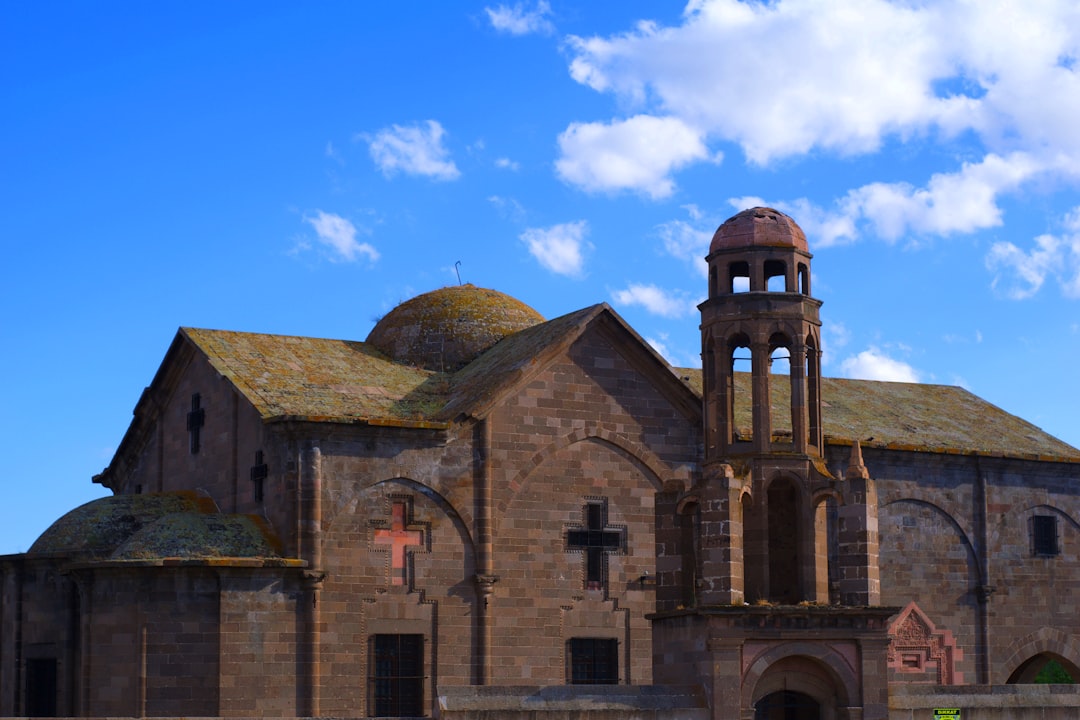
The church beside the underground complex is a major reason to visit. Official descriptions identify two naves, two apses and a barrel-vaulted structure whose narthex has collapsed. The surviving fresco scenes are separated into panels, with dark grey backgrounds and purple, mustard and red tones in the figures.
Look without touching. Rock-cut paintings are vulnerable to moisture, abrasion and flash-heavy close contact. Give other visitors space and avoid leaning on decorated surfaces while taking photographs.
How Tatlarin compares with other underground sites
- Derinkuyu: the strongest first choice for scale, depth and a clearly developed visitor route.
- Kaymaklı: a broad network of rooms and tunnels with extensive visitor infrastructure.
- Özkonak: another smaller alternative with distinctive defensive features.
- Tatlarin: quieter, less extensive for visitors and especially interesting for its large halls and adjoining frescoed church.
If this is your first and only underground-city visit, a larger developed site may provide more context. Tatlarin suits travellers who have time for a less crowded place and are comfortable with simpler visitor infrastructure.
Its quieter setting is an advantage only when expectations are realistic. Signage, lighting and staffing may not match the major sites, and conditions should be checked rather than inferred from an older trip report.
Planning your visit
- Check the official museum listing before travelling; opening conditions can change.
- Wear shoes with strong grip because stone steps and floors may be uneven or damp.
- Carry a light layer: underground spaces remain cool even when the surface is warm.
- Do not enter blocked passages or rely on a phone signal underground.
- Visitors with claustrophobia, balance concerns or limited mobility should assess the entrance and route before continuing.
- Allow enough daylight to see the church exterior and village setting after leaving the underground section.
Getting to Tatlarin
Tatlarin is outside the central Göreme–Ürgüp visitor circuit and requires advance transport planning. A private vehicle may be practical, but do not assume an on-demand return taxi will be available in the town. For route logistics and the service-area limitations of a pre-arranged driver, use the separate Tatlarin transport guide.
The town can also fit into a wider Nevşehir or Acıgöl route, but opening hours should be confirmed before building the day around the site. Avoid combining too many distant stops simply because they appear close on a regional map.
Frequently asked questions
Where is Tatlarin Underground City?
It is in Tatlarin town in Nevşehir Province, on the slope of the hill called Kale and roughly 10 km north of Acıgöl.
Is Tatlarin the same type of site as Derinkuyu?
Not exactly. Official interpretation points toward a garrison or monastic complex, and the currently visitable experience is smaller and quieter than Derinkuyu.
Does Tatlarin have a church?
Yes. The adjoining rock-cut church preserves panelled fresco scenes and is one of the site's most important features.
How much does entry cost?
Do not rely on an old blog price. Check the current official museum listing before travelling; access and ticket conditions may change.
Sources and editorial note
Historical and architectural details were checked against the Ministry of Culture and Tourism's Tatlarin site guide and the official GoTürkiye Cappadocia guide. Claims about future openings or guaranteed access were removed because they cannot be verified as permanent.