Turkey is one of the few countries where you can walk through a Urartian citadel in the morning, photograph a Seljuk sea fortress in the afternoon, and watch the sun sink behind an Ottoman rampart by evening. With civilisations layered atop one another for millennia — Galatian, Roman, Byzantine, Seljuk, Ottoman — almost every Turkish hilltop hides fortified walls that tell a different chapter of the same long story. If you are already visiting Cappadocia, you have an outstanding head start: Uçhisar Castle sits at the heart of the region and makes the ideal anchor for a broader castle-hunting itinerary across the country.
1. Uçhisar Castle, Cappadocia
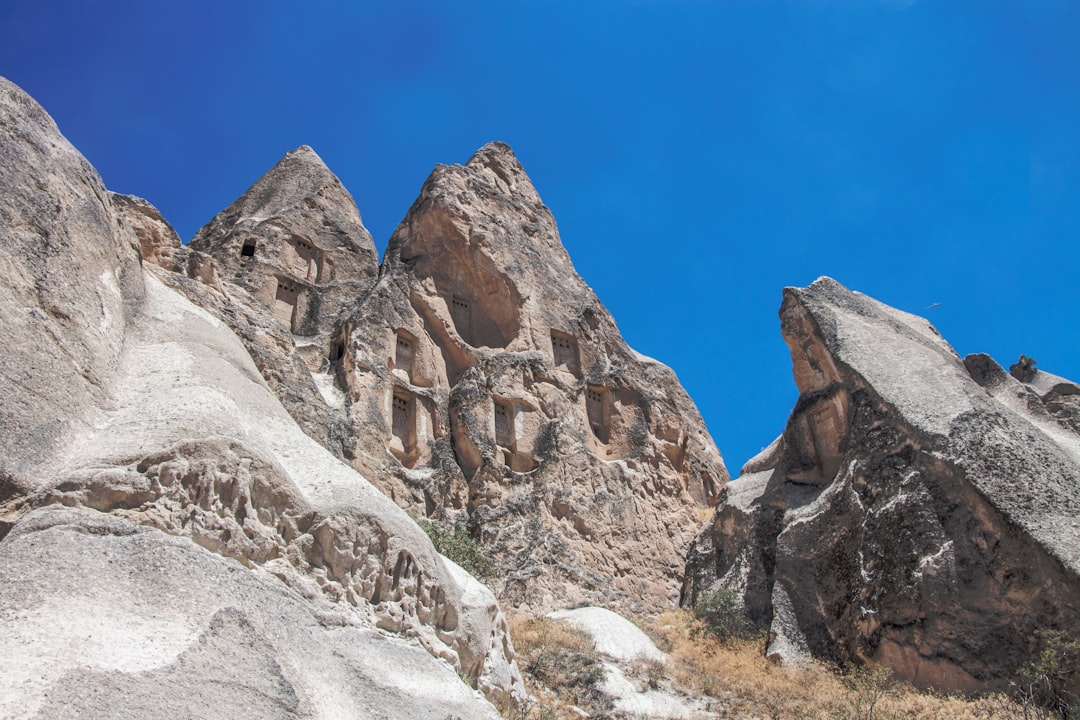
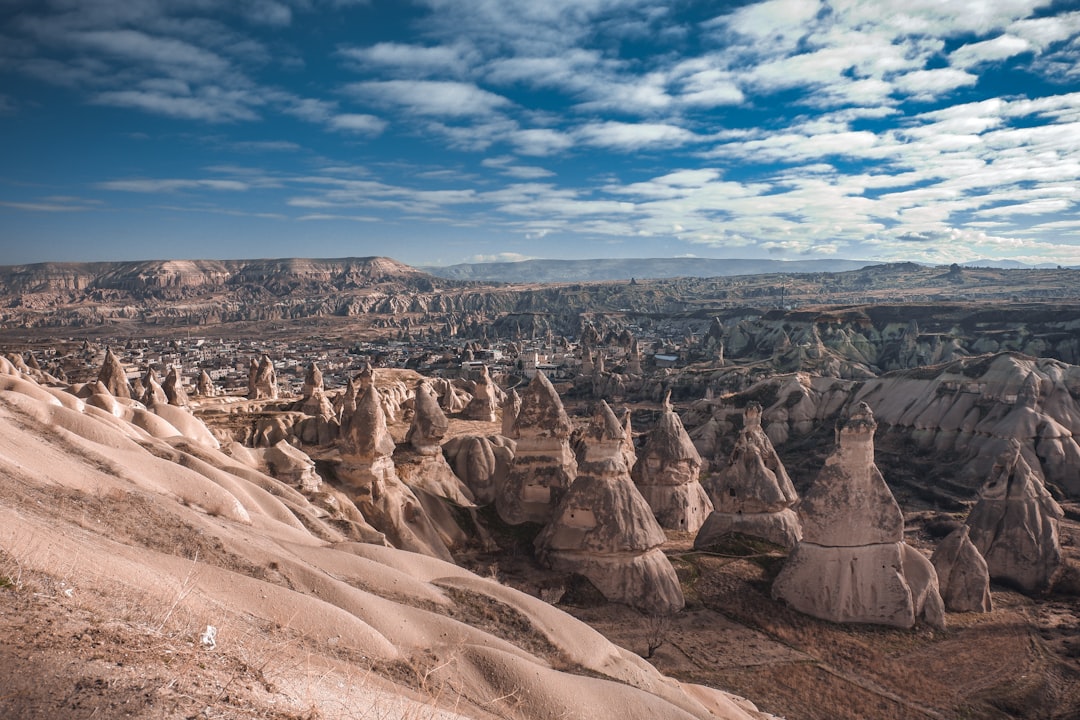
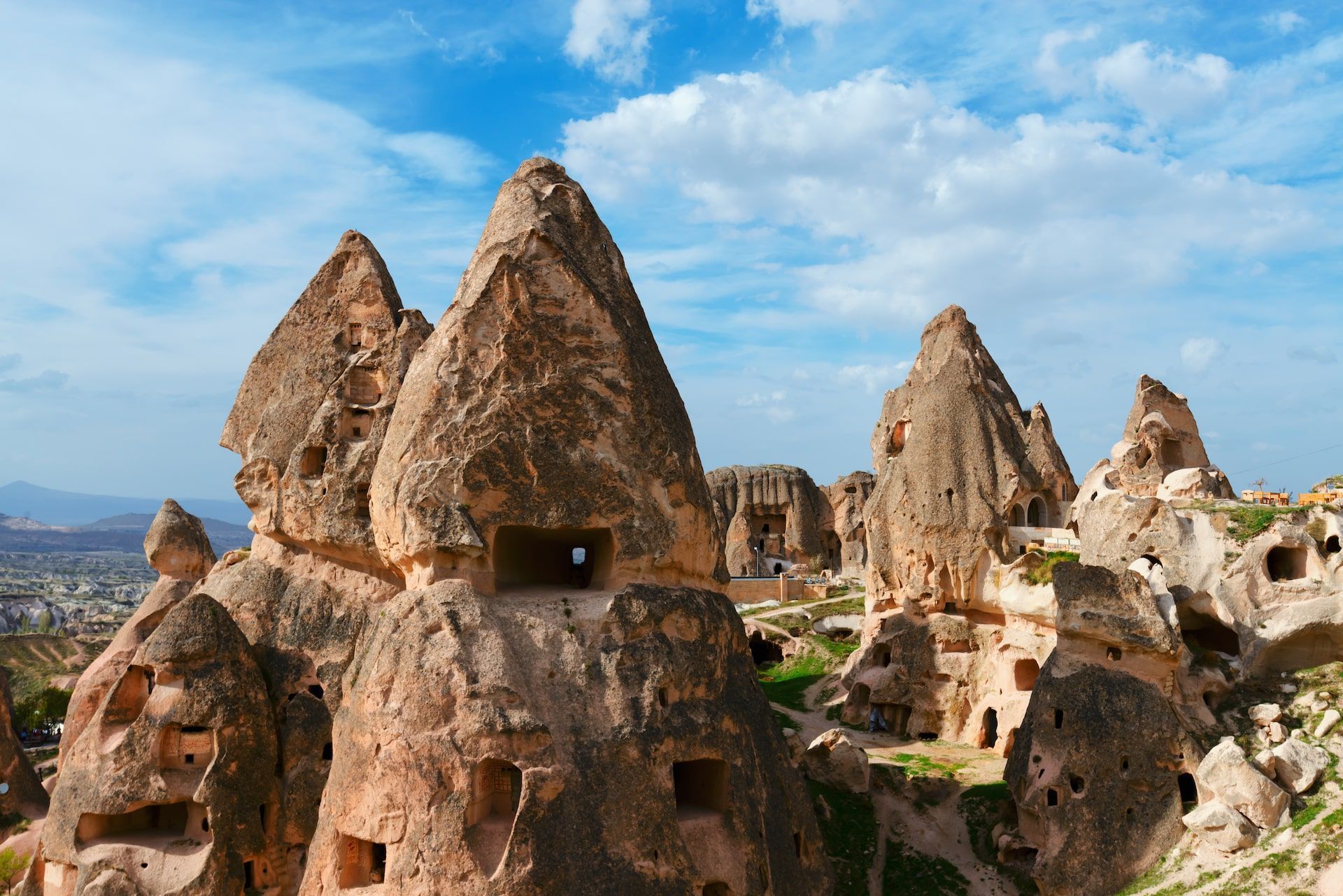
Uçhisar Castle is not built from cut stone — it IS the stone. The entire volcanic rock pinnacle rising above the village of Uçhisar was carved by ancient inhabitants into a six-storey fortress riddled with rooms, tunnels, and ventilation shafts. Standing at the highest point in all of Cappadocia, the summit delivers a 360-degree panorama over fairy chimneys, rose-tinted valleys, and distant snowcapped peaks that no other vantage point in the region can match. The surrounding landscape sits within Turkey's UNESCO World Heritage Göreme Open-Air Museum zone, meaning history is literally underfoot in every direction.
From Göreme it is an easy 90-minute walk along well-marked trails through Pigeon Valley, or a short taxi ride for those saving energy for the climb itself. The entry fee applies for the surrounding park area, and the castle interior is open daily. Exploring Uçhisar and nearby valleys from Göreme is simple by taxi — use the Cappadocia taxi price calculator for current fares.
- Best for: Photographers, sunrise chasers, and anyone wanting a bird's-eye view of Cappadocia's surreal landscape
- Nearest base: Göreme (3 km) or Uçhisar village itself
- Tip: Arrive just before opening time to beat visitor groups to the summit
2. Bodrum Castle (Castle of St. Peter), Aegean Coast
Rising from a rocky peninsula that divides Bodrum harbour into two perfect bays, the Castle of St. Peter was built from 1402 by the Knights Hospitaller using stones quarried from the nearby Mausoleum of Halicarnassus — one of the Seven Wonders of the Ancient World. The five towers each represent one of the nationalities of the knights who built them: French, German, Italian, English, and Spanish. Today the castle houses the internationally acclaimed Museum of Underwater Archaeology, where Bronze Age shipwrecks and Byzantine glass are displayed inside medieval halls overlooking the shimmering Aegean.
3. Alanya Castle, Mediterranean Coast
Alanya Castle is a masterpiece of Seljuk military engineering, constructed in the 13th century under Sultan Alaeddin Keykubad I on a dramatic 250-metre promontory jutting into the Mediterranean. Seven kilometres of walls still encircle the headland, enclosing an entire ruined city of Byzantine churches, a Seljuk arsenal, and a 33-room arsenal known as the Tersane — one of the best-preserved medieval shipyards in the world. The iconic Red Tower (Kızıl Kule) at the harbour's edge was built in 1226 and remains remarkably intact, its five-storey octagonal silhouette reflected in the turquoise sea below.
4. Rumeli Fortress (Rumelihisarı), Istanbul
Built by Sultan Mehmed II in just four months in 1452 — an astonishing feat of military logistics — Rumeli Fortress was erected on the European shore of the Bosphorus specifically to control the strait ahead of the conquest of Constantinople the following year. Together with the older Anadolu Hisarı on the opposite bank, it formed an impenetrable chokepoint. Today the fortress functions as an open-air museum where you can walk the full circuit of walls, peer into the three massive towers, and enjoy unobstructed views of the Bosphorus with tankers and fishing boats threading between the ramparts below.
5. Van Castle (Van Kalesi), Eastern Turkey
Van Castle clings to a sheer basalt cliff above the shores of Lake Van, and its origins stretch back to the 9th century BC when it served as the royal citadel of the Urartian kingdom — making it one of the oldest fortifications in Turkey. Cuneiform inscriptions carved directly into the rock face by Urartian kings still survive, and a ruined mosque added during the Ottoman period stands as evidence of the site's unbroken use across three millennia. The backdrop of Lake Van — Turkey's largest lake, a vivid deep blue at an altitude of 1,640 metres — makes this one of the most visually arresting castle settings in the country.
6. Anadolu Hisarı (Anatolian Fortress), Istanbul
Smaller and older than its counterpart Rumeli Fortress across the water, Anadolu Hisarı was built in 1393 by Sultan Bayezid I on the Asian shore of the Bosphorus, marking the first Ottoman fortification on European waterway territory. The compact tower and curtain walls are beautifully photogenic, particularly when framed against the suspension cables of the Fatih Sultan Mehmet Bridge that now soars overhead. The surrounding neighbourhood retains the feel of a 19th-century Ottoman village, and the combination of medieval stonework and Bosphorus water traffic makes for one of Istanbul's most underrated photo spots.
7. Erzurum Castle & Çifte Minareli Medrese, Eastern Anatolia
Erzurum in eastern Turkey is one of the most rewarding detours for travellers interested in Seljuk architecture away from the crowds. The city's citadel dates to Byzantine foundations but was substantially expanded by Seljuk sultans in the 12th and 13th centuries, and a single clock tower from the fortifications still stands sentinel over the city. A short walk away, the Çifte Minareli Medrese — the Twin Minaret Seminary, built in 1253 — showcases some of the finest stone carving of the Seljuk period, its intricately decorated portal rivalling anything you will find at more famous sites. Erzurum rewards visitors who take the time to venture east.
8. Ankara Castle (Ankara Kalesi)
Ankara Castle is a living palimpsest of conquest: its foundations are Galatian, its inner walls were raised by the Romans, Byzantine emperors reinforced the circuit, and the Ottomans gave it its final form. Perched on a volcanic outcrop in the heart of the Turkish capital, the castle district — known as Hisar — is a maze of cobblestone lanes lined with restored Ottoman mansions, carpet workshops, and small restaurants. The views from the ramparts sweep across a city of five million people, a remarkable juxtaposition of ancient stone and modern skyline. The neighbourhood inside the walls also houses a vibrant bazaar where quality carpets and copperware can be found without the tourist mark-ups of Istanbul's Grand Bazaar.
9. Safranbolu Fortress & Old Town
Safranbolu earned its place on the UNESCO World Heritage List not for a single monument but for the extraordinary completeness of its Ottoman urban fabric, and the fortress ruins that crown the hill above the bazaar quarter are the geographical anchor of the entire townscape. The fortress controlled a vital caravan route between Istanbul and the Black Sea, and the prosperity that trade generated is still visible in the 200-year-old mansions of saffron-trading merchants below. Visiting the fortress ruins gives you a vantage point over terracotta rooftiles, minarets, and the wooded valley that makes Safranbolu one of Turkey's most atmospheric small towns.
10. Sinop Fortress, Black Sea
Sinop Fortress holds a distinction almost no other fortification in Turkey can claim: it has been continuously inhabited and in use since the Hellenistic period, making it arguably the longest-occupied fortress in the country. The walls that encircle Turkey's northernmost city were first raised by Pontiac kings in the 3rd century BC, expanded by Rome, reinforced by Byzantium, and incorporated into the Ottoman naval defence network. Unlike many Turkish castles that stand apart from modern life as ruins, Sinop's walls are woven into the fabric of the city — residential streets run alongside ancient towers, and locals go about daily life in the shadow of ramparts that have stood for more than 2,000 years.
Frequently Asked Questions
Is Uçhisar Castle free to enter?
The castle itself charges a small admission fee. Entry fee also applies for the surrounding park area, which includes access to the lookout platform and the interior rock-cut rooms. The walk from Göreme through Pigeon Valley to reach Uçhisar is free and highly recommended as part of the experience.
Which Turkish castle is best for photography?
Uçhisar Castle in Cappadocia offers the most dramatic photography opportunities, combining the castle itself with a sweeping foreground of fairy chimneys — especially at golden hour or sunrise. Rumeli Fortress in Istanbul is a close second for those wanting Bosphorus backdrops, while Alanya Castle's Red Tower reflected in the Mediterranean is a classic coastal shot.
Which castles on this list are easiest to combine with a Cappadocia trip?
Uçhisar Castle is of course built into any Cappadocia itinerary. Beyond Cappadocia, Van Castle in eastern Turkey is reachable by a short domestic flight from Kayseri or Nevşehir airports. Ankara Castle makes an excellent addition if you are travelling by bus or train between Cappadocia and Istanbul, as Ankara is a natural midpoint stopover on that route.