Sarihan Caravanserai: Avanos Silk Road Guide
Sarihan Caravanserai is a beautifully preserved 13th-century Seljuk roadside inn 6 km east of Avanos, built in 1249 on the Silk Road and best known today for its nightly whirling-dervish (sema) ceremony. This guide covers what to see, how to get there, opening times, the entrance fee, and whether the evening show is worth it.
Often called the "Yellow Caravanserai" after the warm honey-coloured stone it was cut from, Sarihan (Saruhan) is the largest and best-restored caravanserai in the Cappadocia region. Restored in 1991, it is an easy add-on to a day around Avanos and the pottery workshops of Avanos, and a calmer, less-crowded stop than the headline museums.
What is a caravanserai?
Caravanserais were fortified roadside inns built roughly a day's camel-march apart (around 30–40 km) along the Silk Road and other Anatolian trade routes. Under the Seljuk Sultanate of Rum in the 12th and 13th centuries, the state built dozens of them so that merchant caravans, their animals and their goods had a safe, free place to rest. Travellers typically received up to three days of lodging, food, water and even basic medical care at no charge — a remarkable medieval system that kept long-distance trade flowing.
Architecturally a Seljuk caravanserai usually pairs a large open summer courtyard with a covered, hall-like winter section, all enclosed behind high walls and a single fortified gate to keep bandits out. Sarihan follows exactly this plan and is one of the clearest examples you can visit in central Turkey.
What to see at Sarihan
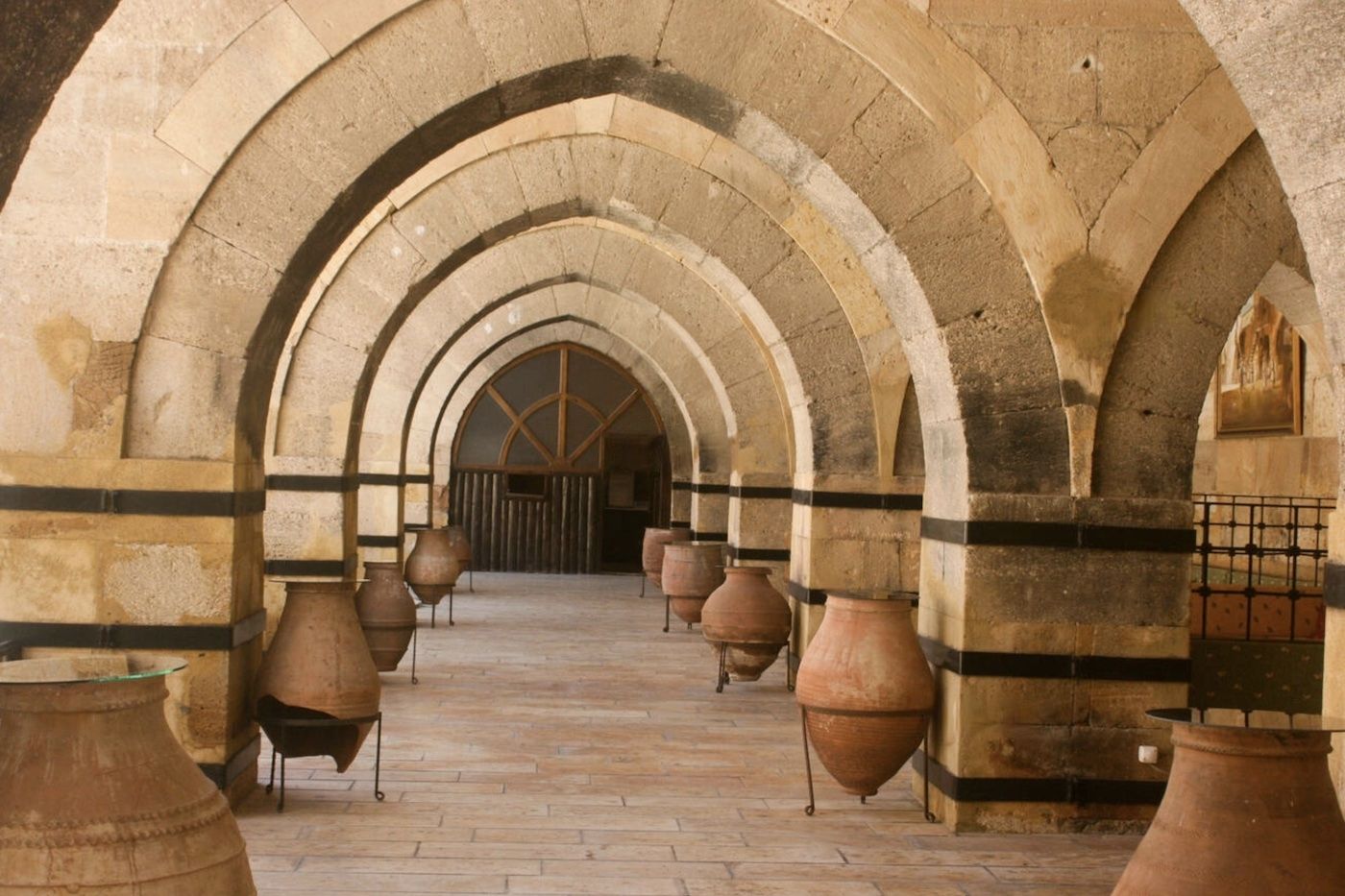
The building's most distinctive feature is the small mosque (mescit) raised directly over the main gateway — an unusual touch among regional caravanserais. The grand entrance portal is richly carved with geometric and floral Seljuk stonework, and a band of decoration frames the doorway. Inside, a central courtyard is lined with vaulted open bays where animals and goods were kept in summer, while a separate covered hall provided shelter in winter.
- The ornate main portal and the mosque set above the gate — the signature view for photographers.
- Hand-carved Seljuk stone details around the door frames and the second inner portal opposite the entrance.
- The open courtyard with its arcaded vaulted bays, ideal in soft morning or late-afternoon light.
- The covered winter hall, with its cool, cathedral-like stone interior.
- The nightly whirling-dervish (sema) ceremony staged inside the caravanserai after dark.
The whirling-dervish ceremony
Sarihan is one of the most atmospheric places in Cappadocia to watch a sema — the meditative spinning ceremony of the Mevlevi (Sufi) order founded in nearby Konya. The ritual is a form of worship, not a stage cabaret: dervishes move slowly to live ney (reed flute) and percussion, right palm raised to receive divine grace and left palm facing down to pass it to the earth. The candle-lit stone hall makes it especially moving. Shows usually run after sunset and last around an hour; times shift with the season, and tickets are sold separately from daytime entry, so confirm the current schedule locally or with your hotel before you go. Photography rules are strict — follow the staff's guidance and never use flash.
Hours, entrance fee and practical tips
Sarihan is open to visitors daily and charges a modest entrance fee, paid at the gate; the evening dervish performance is ticketed separately. As fees and show times change seasonally, treat any figure you see online with caution and check on arrival. The site is privately managed rather than part of the Müzekart museum-pass network, so the Cappadocia museum card does not cover it.
- When to go: daytime for the architecture and quiet courtyard photos; evening if you want to combine your visit with the sema ceremony.
- How long: 30–45 minutes for the building itself; allow about 1.5 hours including a dervish show.
- What to bring: flat shoes for the uneven stone, a light layer (the covered hall stays cool), and cash for the gate.
- Accessibility: mostly ground-level but with worn, uneven flagstones — sturdy footwear helps.
- Best light: the honey-coloured stone glows at golden hour, just before the evening ceremony.
How to get to Sarihan from Avanos
Sarihan sits about 6 km east of central Avanos on the road toward Kayseri; the drive takes roughly 10–15 minutes. The easiest options are a taxi or private taxi from Avanos or Göreme, or joining a guided visit that bundles Sarihan with other Avanos sights. There is no convenient public bus to the door, so most independent travellers come by car or taxi. For a current, all-in fare to Avanos or Sarihan rather than a guessed number, use the live Cappadocia taxi price calculator.
Because it lies on the quieter eastern edge of the region, Sarihan pairs naturally with Avanos pottery, the Red and Rose valleys, or a sunset stop on the way back from Kayseri — see our Cappadocia day-trip combinations for ideas, and the history of Cappadocia and its fairy chimneys for the wider Seljuk context.
Is Sarihan worth visiting?
If your time is tight and you have never seen a caravanserai, yes — Sarihan is the best-preserved example in the area and the dervish ceremony is a genuine highlight rather than a tourist trap. If you have already visited several Seljuk han elsewhere in Turkey, the daytime visit is pleasant but brief, and the real reason to come is the evening sema. Either way it slots easily into an Avanos afternoon.
Frequently asked questions
How much is the entrance fee to Sarihan Caravanserai?
There is a modest gate fee for daytime entry, paid in cash on arrival, and the evening whirling-dervish ceremony is ticketed separately. Prices change seasonally and the site is not on the Müzekart pass, so confirm the current amount at the gate or with your hotel rather than relying on older online figures.
How do I get from Avanos to Sarihan Caravanserai?
It is about 6 km — a 10–15 minute drive — east of Avanos toward Kayseri. Take a taxi, a private taxi, or join a guided visit; there is no direct public bus. Check the live Cappadocia taxi price calculator for an up-to-date fare.
When is the whirling-dervish show at Sarihan?
The sema ceremony is staged after sunset and lasts around an hour, but the exact start time varies by season. Because seats are limited and the show is candle-lit and ticketed separately, it is worth confirming the schedule and reserving in advance through your hotel or local operator.
How old is Sarihan Caravanserai?
It was built in 1249 during the Seljuk era and restored in 1991, making it nearly 800 years old. It once served Silk Road caravans travelling between the Mediterranean and Central Asia.
Can I combine Sarihan with other sights?
Yes — it pairs well with the Avanos pottery workshops, the Red and Rose valleys, and Zelve. See our Avanos pottery guide and top things to do in Cappadocia to build a full day.