Turkish street food is a world unto itself — not fast food, but living culinary tradition, sold fresh from carts and small storefronts in every bazaar and town square. Cappadocia's towns — Göreme, Avanos, Ürgüp, Nevşehir — each have their own street food culture. Walk through any market on a cool morning and you will find smoke rising from a saç griddle, the smell of sesame and charcoal in the air, and vendors who have been at the same spot since before dawn. This is how locals eat, and it is one of the most direct ways to feel genuinely part of a place.
Simit — Turkey's Beloved Sesame Ring
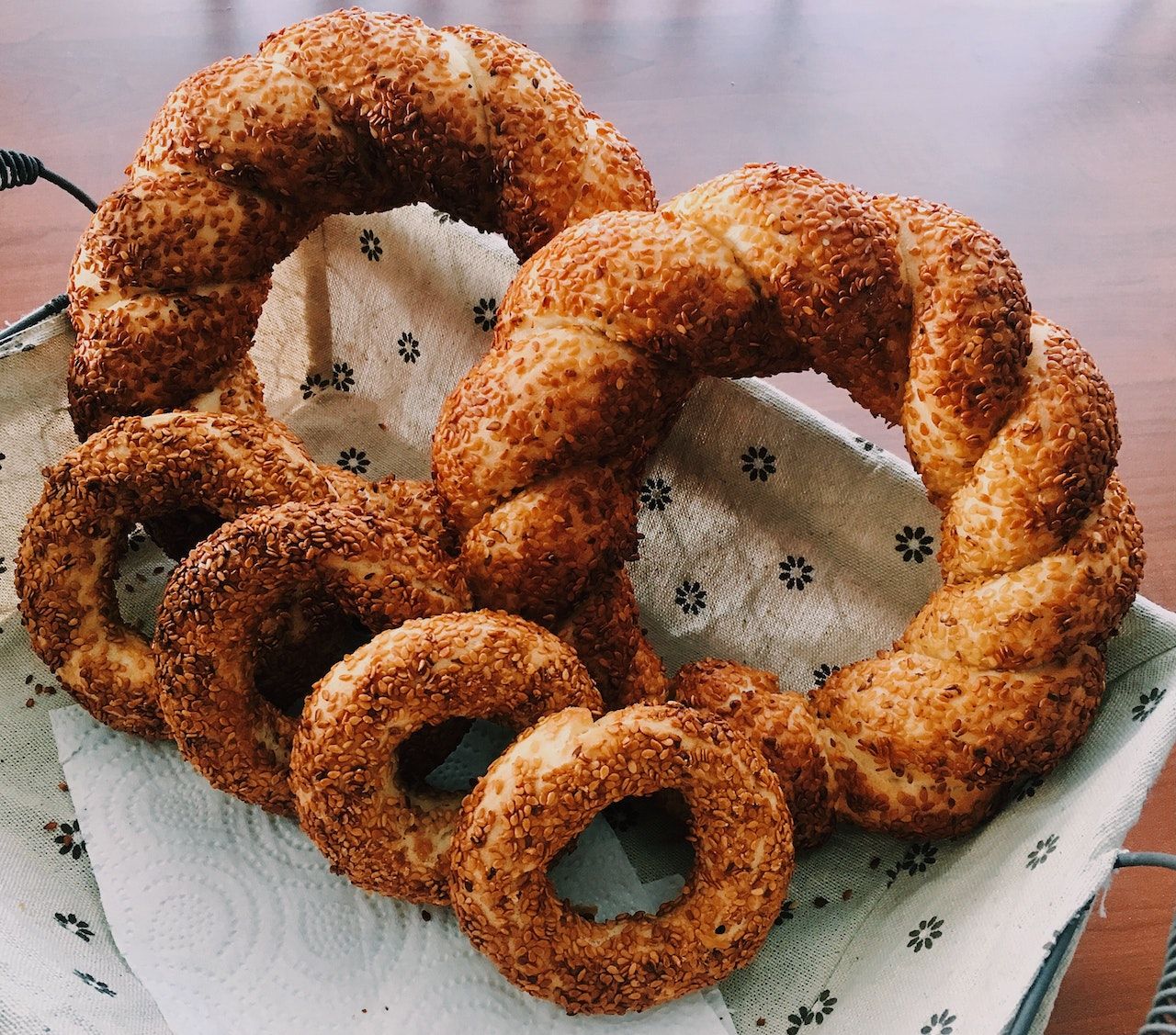
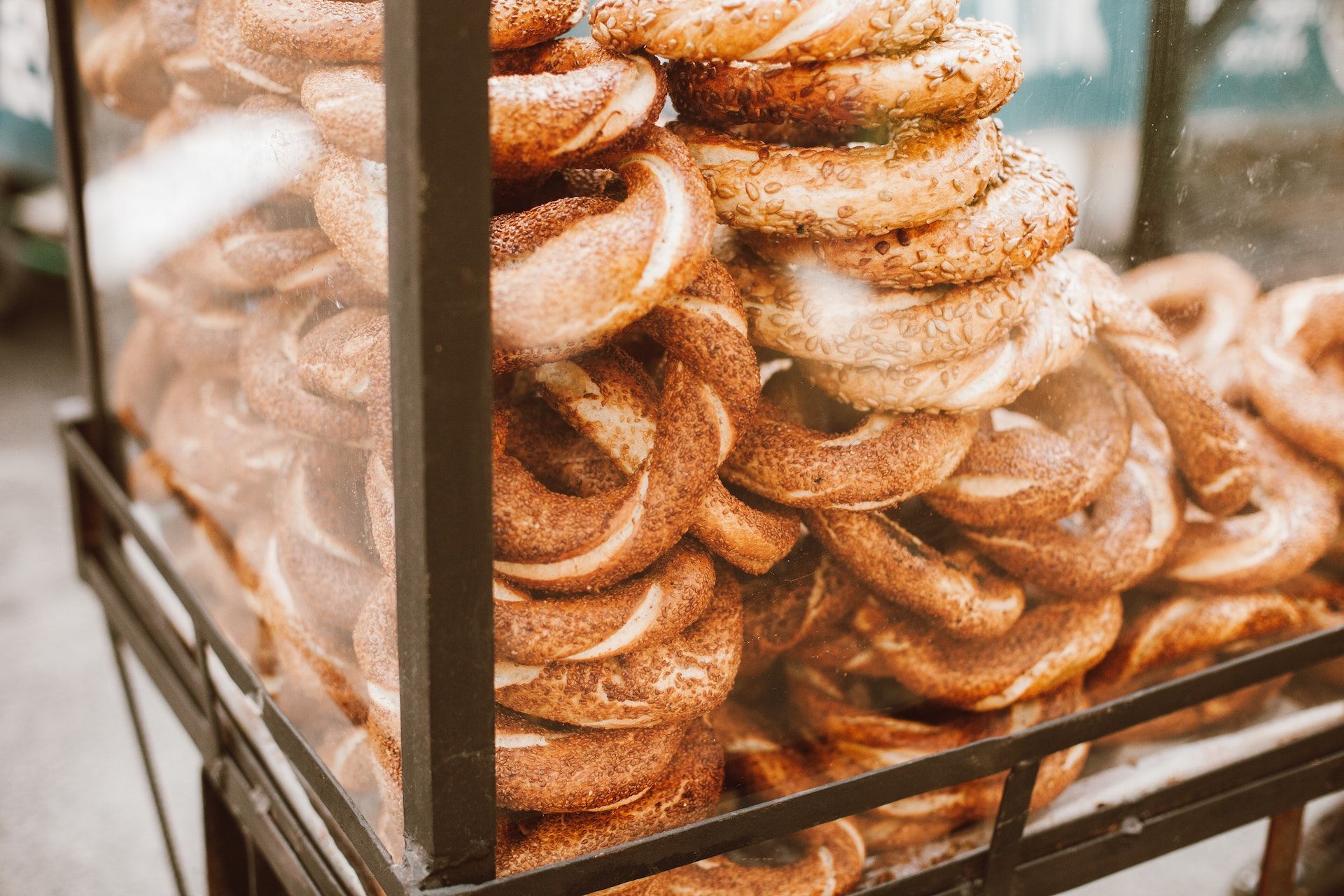
Before the coffee shops open and before the tourist vans start their engines, the simenci is already on the street. His glass-case trolley — bright red, neatly stacked — sits at the corner as if it has always been there, because in most Turkish towns, it has. Simit is the most democratic food in the country: circular, golden, coated in a thick crust of sesame seeds, and sold for almost nothing. The making of a proper simit is more involved than it looks. The rings are dipped twice in water mixed with molasses, then rolled through a tray of sesame seeds, then slid into a hot oven until the outside cracks and the inside stays soft. Eaten warm — which is the only way worth eating them — they have a satisfying chew and a subtle sweetness under the sesame. In Cappadocia, the traditional pairing is with beyaz peynir, the mild crumbly white cheese, and a glass of çay. You can find a simit cart in Göreme, Ürgüp and Avanos from early morning, and the ritual of buying one at the start of the day is a small but genuine pleasure.
Gözleme — Village Flatbread Made by Hand
At the Ürgüp Saturday market, the gözleme women arrive early. They set up low wooden tables, bring out their rolling pins, and begin working through balls of soft dough with the calm efficiency of people who have been doing this their whole lives. The dough is rolled until it is almost translucent, then filled — cheese and spinach, or minced meat, or potato with dried mint — folded over, and pressed onto a saç griddle sitting directly above a live flame. The heat is fast and unforgiving; the cook adjusts the flatbread with her hands, browning one side then the other until the edges blister and the filling melts together inside. Watching it made is half the pleasure. The other half is eating it, still warm, torn into sections with a glass of cold ayran beside you. Gözleme is the kind of food that is deeply simple and deeply satisfying in equal measure, and the Ürgüp Saturday market remains the best place in the region to find it made properly — by hand, to order, with real ingredients.
Lahmacun — The Original Turkish Pizza
Lahmacun is not from a market stall — it comes from a fırın, a bakery oven, and the difference matters. The base is rolled paper-thin, covered in a paste of finely minced lamb, tomato, onion, garlic, and a mixture of herbs and spices, then slid into a very hot oven for a few minutes until the edges crisp and the meat is cooked through. It arrives on your table flat, with a plate of fresh flat-leaf parsley, a wedge of lemon, and often a pinch of sumac. You squeeze the lemon over the top, scatter the parsley, roll the whole thing into a rough cylinder, and eat it. The combination of the crispy base, the sharp lemon, and the herbed meat is very good. In Avanos and Nevşehir you will find lahmacun restaurants that have been making the same thing for decades. It is filling, inexpensive, and honest — the kind of meal that reminds you that Turkish food at its best does not need embellishment.
Taze Mısır and Kestane — Corn and Chestnuts
Cappadocia's street food follows the seasons, and nothing marks that rhythm more clearly than corn and chestnuts. From August through October, taze mısır vendors appear in the town squares of Ürgüp and Nevşehir — ears of corn either boiled in large churns of salted water or grilled directly on a charcoal grate, the outer leaves charring and pulling back while the kernels caramelise. You take yours in a paper wrapping, salt it yourself, and eat it while walking. Then, as October arrives and the air sharpens, the chestnut sellers take over. Their small drum braziers sit on street corners, filled with glowing charcoal, the chestnuts scored and turning slowly until they split and the flesh inside becomes soft and sweet. The smell of roasting chestnuts is one of those sensory cues that is instantly, unmistakably Turkish autumn — warm and slightly smoky and rich. Eating them hot from a paper bag while wandering through the bazaar in Ürgüp on a cool afternoon is one of those small experiences that stays with you well after the trip is over.
Street Dondurma — The Performer's Ice Cream
On the main street in Göreme during summer, the dondurma seller is impossible to miss. He wears a traditional Ottoman-style uniform and works a long metal paddle with the confidence of someone who knows he has an audience. The ice cream stretches. He offers you the cone, pulls it back. He inverts the paddle, makes it disappear, appears to offer it again. The crowd around the cart is laughing; children look slightly bewildered. Eventually you get your cone. The reason the ice cream behaves this way is real: traditional Turkish dondurma is made with mastic gum — damla sakızı — and salep flour, a starchy powder from orchid tubers. These two ingredients give the ice cream a dense, chewy, elastic quality that has nothing in common with commercial soft-serve. Flavours worth trying include antep fıstığı (pistachio), kaymaklı (clotted cream), and çikolata. The theatrical performance around the selling of it is not a gimmick layered on top — it is genuinely part of what dondurma is, a piece of Turkish street culture that has been passed down through generations of vendors.
Salep and Boza — Winter Street Drinks
When the temperature drops in Cappadocia — which it does decisively from late October onward — the street food shifts again, and two drinks appear that are found almost nowhere else in the world. Salep is made from the ground root of a wild orchid, dissolved in hot milk, thickened until it coats the back of a spoon, and poured into a ceramic cup with a generous dusting of cinnamon on top. It is warming in a way that goes beyond temperature — it is starchy, faintly floral, genuinely comforting in cold weather. The vendor carries it in a large copper semaver, ladles it fresh, and the steam rises in the cold air. Boza is older still — a fermented millet drink from Ottoman times, thick and slightly sour, sold from metal canisters by vendors who walk the streets calling it out. Both drinks are available roughly from late October to March, marking the seasonal change as clearly as any calendar. Drinking salep from a ceramic cup outside on a winter morning in Ürgüp, watching the valley fill with mist, is the kind of experience that is easy to remember long after the photographs have faded.
Where to Find Street Food in Cappadocia
- Göreme main bazaar street: Simit carts from early morning; dondurma stalls in summer; small snack shops open late.
- Ürgüp Saturday market: The best gözleme in the region, made by local women; also seasonal produce and olives.
- Avanos Wednesday morning market: Lahmacun shops nearby; the market itself has fresh produce and village cheese.
- Nevşehir city center: Most variety — lahmacun, dürüm, kestane in autumn, salep in winter.
- Mustafapaşa village square: Traditional gözleme women near the old Greek church; quieter, more authentic atmosphere.
Get between Göreme, Avanos, Ürgüp and Nevşehir for street food exploration — use the Cappadocia taxi price calculator.
Street Food Etiquette in Turkey
A few practical things worth knowing before you head out: market vendors almost always prefer cash, so keep small notes handy. If there is a language barrier, pointing at what you want is perfectly fine and nobody will be offended. Street food in Turkey is genuinely inexpensive, and bargaining over food prices is not appropriate — just pay what is asked. Eating while walking is completely normal and expected; you will see locals doing it constantly. Most markets have a tap or hand-gel station nearby, and washing your hands before eating is a reasonable habit. Beyond that, the main thing is to slow down, be curious, and say yes to things you have not tried before. Turkish street food rewards that approach.
Frequently Asked Questions
What is the most popular Turkish street food?
Simit is the undisputed king — the sesame-coated bread ring found on every street corner in Turkey. In Cappadocia it's usually the first thing you encounter in the morning at any market or town square.
Where can I find gözleme in Cappadocia?
The Ürgüp Saturday market is the best spot — local women make it fresh on a saç griddle in front of you. You can also find it at Avanos Wednesday market and occasionally at small stalls in Göreme. Always ask for it made to order; pre-made gözleme loses its texture quickly.
Is Turkish street food safe to eat?
Yes — Turkish street food is generally very safe. Simit, gözleme, lahmacun and corn are cooked fresh to order. Stick to busy stalls with high turnover, which is easy to do in Cappadocia's popular market spots. Tap water in Turkey is technically drinkable but most visitors prefer bottled water; the food itself is fine.