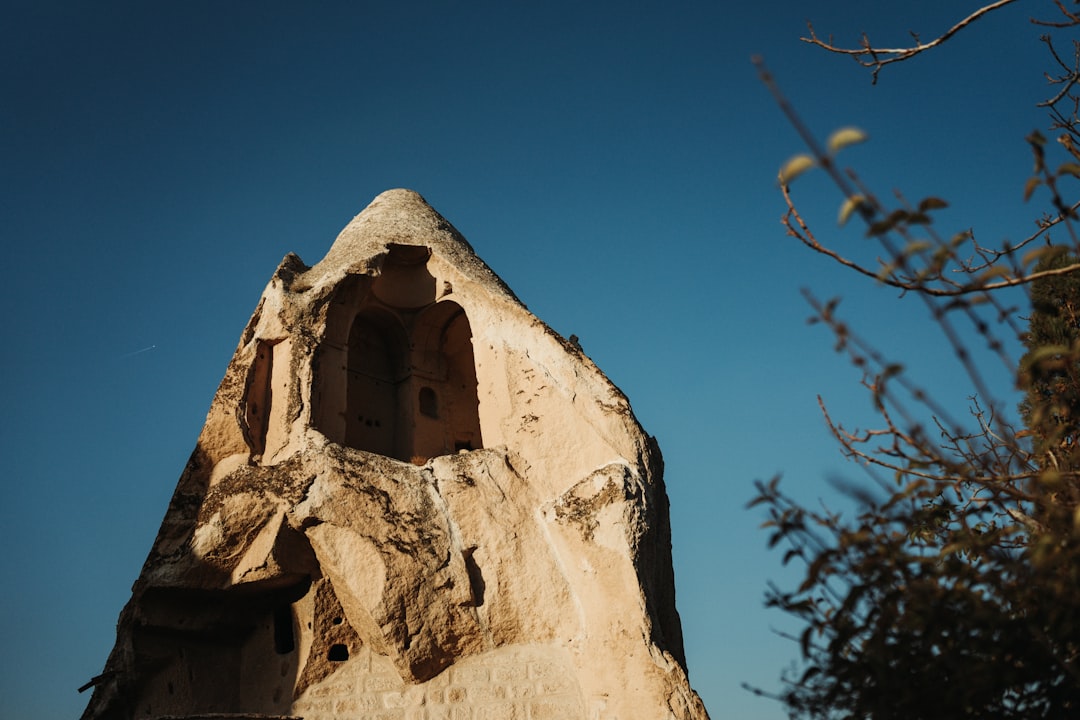
History of Göreme & Its Cave Dwellings
Göreme is a small town in central Cappadocia, Turkey, where homes, churches and entire monasteries were carved directly into soft volcanic rock. Its history stretches back more than 2,000 years: early settlers sheltered in the tuff, and from the 4th century onwards it grew into one of the most important monastic centres of Byzantine Christianity, leaving behind the painted rock-cut churches you can still visit today.
The whole story rests on geology. Millions of years ago, eruptions from nearby volcanoes blanketed the region in ash that hardened into a soft, porous stone called tuff. It is easy to dig with simple hand tools yet sets firm once exposed to air — perfect for hollowing out caves. Wind and water then sculpted the surrounding landscape into the famous "fairy chimneys", the tapering rock cones that crown the valleys around Göreme.
A timeline: who carved Göreme, and when
Rather than a single founding moment, Göreme is the product of successive cultures that each adapted the same workable rock. The broad chapters look like this:
- Hittites and early settlers (c. 1800–1200 BC): the earliest peoples of the region first cut shelters and storage spaces into the tuff, establishing the tradition of living underground.
- Persian and Hellenistic eras (c. 6th–1st century BC): Cappadocia became a strategic frontier; rural communities expanded cave dwellings and the first deep refuge tunnels.
- Roman and early Christian period (1st–4th century AD): Christians fleeing persecution found the hidden valleys and underground passages an ideal place to worship and hide.
- Byzantine golden age (4th–11th century): Göreme became a monastic settlement; hermits lived ascetic lives in the caves and carved dozens of churches and chapels.
- Seljuk and Ottoman eras onward: Christian and Muslim communities lived side by side; many caves stayed in use as homes, stables and pigeon houses into the 20th century.
- 1985: Göreme National Park and the rock sites of Cappadocia were inscribed as a UNESCO World Heritage Site.
The cave dwellings: homes carved from rock
The cave dwellings were first cut by early inhabitants and then steadily enlarged by Christian communities who used them as houses, churches and monasteries. Because the tuff is such a natural insulator, the interiors stay cool through Cappadocia's hot summers and hold warmth in the cold winters — a practical comfort that kept these homes in use for centuries.
Defence shaped the design as much as comfort. Narrow entrances, concealed passages and rolling stone doors made it difficult for outsiders to find or force their way in. In times of raids, whole villages retreated into multi-level networks that connected up to the vast underground cities nearby. The same instinct that hollowed Göreme's hillsides produced the deeper refuges at Derinkuyu and Kaymaklı, which could shelter thousands of people, livestock and food stores.
Rock-cut churches and Byzantine frescoes
Göreme's lasting fame comes from its churches. From the 4th century, monks carved chapels into the cliffs, and over time these grew more elaborate — complete with columns, domes and vaulted ceilings imitated entirely in stone. Their walls were covered in frescoes depicting scenes from the Bible, and some of the best-preserved examples, with their deep reds and blues still visible, survive in the open-air museum at the heart of the town.
The richest concentration is in the Göreme Open-Air Museum, a former monastic complex of churches and refectories. Entry is around €20 (the painted Dark Church usually carries a small separate ticket). Nearby, the Zelve Open-Air Museum (€12) preserves a later valley settlement that stayed inhabited until the 1950s, giving a vivid sense of everyday cave life.
How to explore Göreme's history today
Göreme is compact and walkable, and most historic sites sit within a short distance of the town centre. A sensible plan combines the open-air museum with one of the valley walks, where you can step inside unsigned cave chapels for free.
- Start early: the Open-Air Museum opens in the morning and is busiest mid-morning when tour groups arrive; arrive at opening for quieter churches and better light on the frescoes.
- Pair it with a valley: the surrounding hiking trails through Pigeon, Rose and Red valleys pass dozens of abandoned cave dwellings and rock churches.
- Go underground too: a half-day trip to Derinkuyu or Kaymaklı shows the defensive scale of the same rock-cutting tradition.
- Stay in the rock: sleeping in one of Göreme's cave hotels is the simplest way to experience tuff-carved living for yourself.
- Bring: sturdy shoes for uneven steps, water, and a light layer — cave interiors are noticeably cooler than outside.
Göreme is roughly an hour's drive from both Nevşehir (NAV) and Kayseri (ASR) airports. For an up-to-date door-to-door fare rather than a guessed figure, check the live Cappadocia transfer price calculator.
Frequently asked questions
How old are Göreme's cave dwellings?
The earliest shelters date back over 2,000 years to the region's first settlers, but the famous churches and monasteries were mostly carved between the 4th and 11th centuries during the Byzantine era. Many caves stayed in use as homes right into the 20th century.
Why did people build homes inside the rock?
The soft volcanic tuff is easy to carve yet hardens when exposed to air, and it insulates naturally — keeping interiors cool in summer and warm in winter. Hidden, easily defended entrances also made cave dwellings safe during raids and persecution.
Is Göreme a UNESCO World Heritage Site?
Yes. Göreme National Park and the rock sites of Cappadocia were added to the UNESCO World Heritage list in 1985, recognised for both their natural fairy-chimney landscape and their Byzantine rock-cut churches.
What is the best way to see Göreme's history in one day?
Visit the Göreme Open-Air Museum first thing, then walk one of the nearby valleys to find quieter cave churches, and finish with an underground city such as Kaymaklı or Derinkuyu in the afternoon. For more ideas, see our guide to the history, churches and heritage of Cappadocia.
Today Göreme draws visitors from all over the world who come to admire its fairy chimneys, painted churches and the remarkable ingenuity of people who, for more than two thousand years, made a home inside the rock.