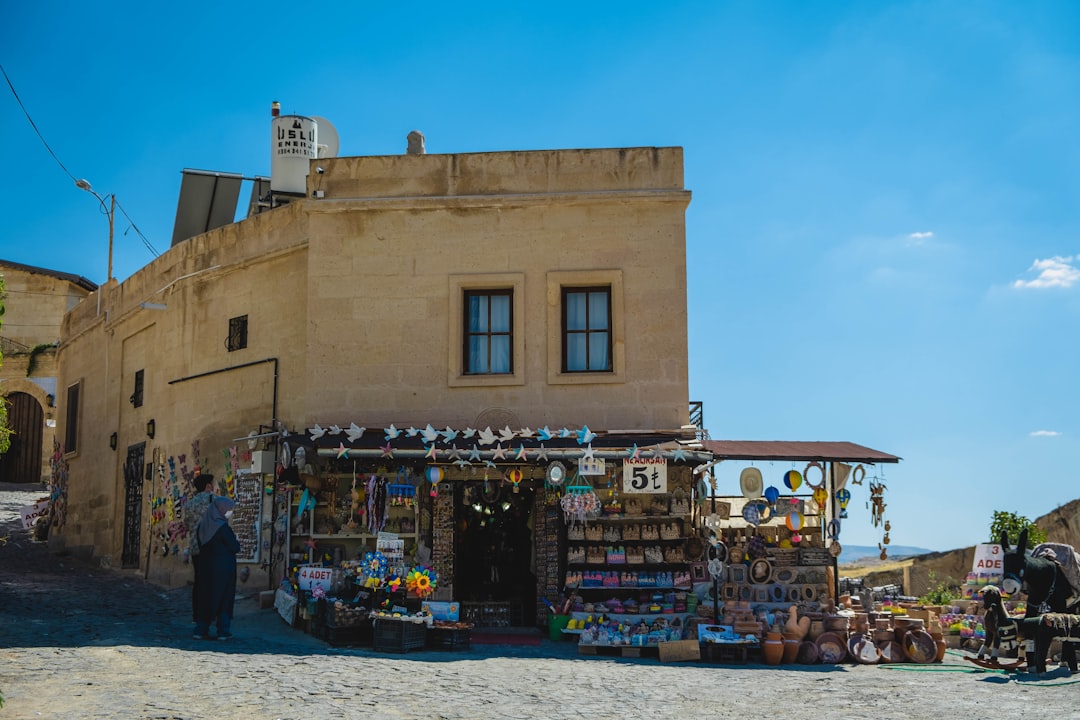
Most visitors arrive in Ürgüp for the wine trails and the fairy chimney panoramas. They leave with something else: a hand-painted ceramic bowl wrapped in a sweater, a rolled kilim tucked under one arm, a jar of rose jam that somehow survived the carry-on. Beneath its photogenic exterior, Ürgüp is a living craft town — one of the few places in Turkey where the full spectrum of Anatolian handicraft traditions still intersects in a single bazaar street. Pottery, weaving, stone carving, embroidery, and local food products all have deep roots here, and the culture is genuine enough that a curious shopper can still find pieces made by local hands. This guide walks you through each tradition, what to look for, where to shop, and how to bring it home.
Pottery and Ceramics
The town of Avanos sits eight kilometres from Ürgüp on the Kızılırmak River and has been Turkey's pottery capital for millennia. The river's red clay remains the raw material for most Cappadocian ceramics, and many Avanos workshops sell through Ürgüp galleries — so you do not need to travel far to find quality pieces.
The key distinction is hand-thrown versus slip-cast. Hand-thrown pieces show subtle asymmetry, gentle finger marks on the interior, and a slightly uneven base — the marks of a potter working at a wheel. Slip-cast pieces, poured into moulds in batches, are perfectly symmetrical. Both can be beautiful, but hand-thrown pieces are the genuine craft item. Look for Cappadocian motifs: the nazar (evil eye), stylised tulips, geometric bands, and the Hittite sun disc. Glazes range from deep cobalt blue and turquoise to warm terracotta that lets the natural clay show through. Ask whether the piece is food-safe and dishwasher-safe before buying.
Turkish Rugs and Kilims
Cappadocia sits at the heart of one of Turkey's oldest rug-weaving regions, and Ürgüp's carpet bazaar is one of the most accessible places in the country to learn the difference between a hand-knotted rug and a kilim flatweave. A hand-knotted wool rug is built knot by knot — a single square metre can take months to complete, with tens of thousands of individual knots giving the pile its depth and softness. A kilim is a flatweave: weft threads woven through the warp without any pile, creating a lighter, reversible textile with a more geometric pattern vocabulary.
To assess quality, flip the rug over. On a hand-knotted piece, the back mirrors the pattern of the front, slightly less crisp. Knot density — knots per square centimetre — is a rough proxy for the time invested. On a kilim, look for tight, even weaving and no loose threads. Ask about fibre: wool-on-wool or wool-on-cotton is traditional and ages well; synthetics are cheaper and do not. Most reputable Ürgüp rug shops handle international shipping, including customs paperwork. Expect to spend at least an hour — good rug shopping in Turkey involves tea, conversation, and unhurried negotiation.
Onyx Jewelry and Stone Carving
The same volcanic geology that produced Cappadocia's fairy chimneys created onyx deposits in the surrounding hills. Local onyx — technically banded calcite — comes in honey, cream, green, and brown varieties and has been carved here for centuries. The most important thing to know: much of what is sold as 'onyx' in Turkish tourist markets is dyed marble. Genuine Cappadocian onyx is translucent when held to a light source — you can see the banding glow from within. Dyed marble stays opaque. If a seller will not let you test this, walk on.
Rings and bracelets are the most portable onyx pieces and make distinctive gifts. Decorative bowls, eggs, and lamp bases are heavier but striking. Look for clean edges, consistent banding, and a smooth polish with no visible tool marks.
Embroidery and Textiles
Cappadocian embroidery has a distinct visual vocabulary: densely worked geometric patterns in deep reds, blues, and blacks on cream linen, incorporating motifs passed down through village women's traditions. Table runners, cushion covers, and small decorative panels are the most common items. Several village women's cooperatives around Ürgüp produce genuinely hand-worked pieces, typically sold through galleries rather than the busiest tourist stalls. Ask directly who made the piece and where — a legitimate seller will answer specifically.
To distinguish hand embroidery from machine-made: flip it over. Hand embroidery shows a neat but imperfect back, stitch by stitch. Machine embroidery has a uniform, almost-too-tidy looped backing. The slight irregularity of hand-worked thread also catches the light differently — you can see it if you look.
Local Food Souvenirs
Ürgüp has produced wine grapes since antiquity, and grape-derived products are the most distinctive local food souvenirs. Pekmez (grape molasses) is a thick, iron-rich syrup eaten with tahini at breakfast — it packs well and keeps indefinitely. Dried apricots and figs from the region are sold by weight in the bazaar. Local wine made from ancient Emir or Öküzgözü grape varieties is worth a bottle if your luggage allows. Rose Valley, just outside town, produces rose jam, rose water, and rose-scented soap — compact, fragrant, and excellent gifts.
- Pekmez (grape molasses): long-lasting, pairs with tahini, fits any bag
- Local wine: Cappadocian Emir or Öküzgözü — genuinely region-specific
- Rose jam and rose water: from Rose Valley producers, small and fragrant
- Dried apricots and figs: regional harvest, sold by weight
- Rose lokum: Turkish delight with real rose water, travel-ready boxes
Packing note: pekmez and wine must go in checked luggage. Small rose jam jars under 100ml can travel in hand luggage within EU rules — check your airline for connecting flights. Dried fruit and lokum travel in either hold.
Where to Shop in Ürgüp
The main bazaar street concentrates pottery, textiles, jewelry, and food shops within easy walking distance. Shops that have traded for decades are noticeably better than newer stalls targeting day-trippers.
- Saturday morning market: where locals shop — produce, textiles, and housewares at real prices
- Galleries near the old caravanserai: higher-end ceramics, kilims, and onyx with better provenance
- Cooperative workshops: ask locally for current addresses — they shift seasonally
- Avoid: the cluster of shops around the main tourist square selling mass-produced trinkets at inflated prices
Reach Ürgüp from Göreme in about 20 minutes — check fares with the Cappadocia taxi price calculator.
Practical Shopping Tips
- Bargaining is expected for rugs, kilims, jewelry, and stone carvings — not for food or fixed-price shops. Open with genuine interest, not a low-ball offer.
- Time your visit: the best prices and conversations happen late afternoon, after day-trip buses have left
- Bring small bills: card machines exist but are not universal
- Measure first: if considering a rug or kilim for a specific space at home, bring the dimensions
- Ask about provenance: where was this made, by whom, from what materials — a confident answer is a good sign
Frequently Asked Questions
Is bargaining expected when buying handicrafts in Ürgüp?
Yes — for rugs, kilims, ceramics, jewelry, and stone carvings, negotiation is a normal part of the transaction. Fixed-price shops do exist and are usually marked as such. Food products at the market are generally not bargained. Treat it as a conversation rather than a confrontation and it tends to go well.
Can you ship pottery home from Ürgüp?
Yes. Most established ceramic and pottery shops in Ürgüp and nearby Avanos offer international shipping with professional packing and customs documentation. This is worth considering for fragile or bulky pieces rather than attempting to carry them as luggage. Ask the shop for shipping costs and insurance options before you commit to buying.
What is the most unique souvenir you can buy in Ürgüp?
Cappadocian volcanic onyx — carved locally into rings, bowls, or decorative objects — is the most distinctive choice. Unlike ceramics, which are produced across Turkey, the onyx-carving tradition is tied directly to this region's geology. A piece that glows when held to light and shows clean craftsmanship is both a genuinely local object and a lasting memory of Cappadocia.