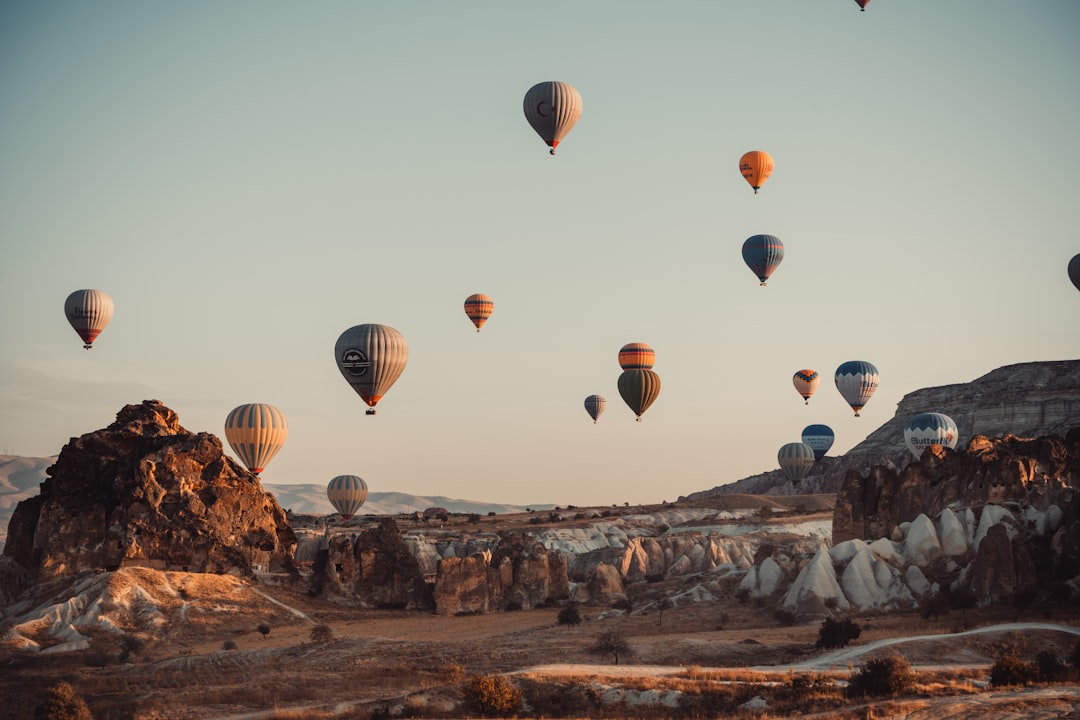
Avcılar Valley doesn't appear on most visitor itineraries. It won't come up in the top ten lists, and the signposts don't point to it the way they do to Rose Valley or Pigeon Valley. Yet walk its floor on a weekday morning and you will understand exactly why the people who know it keep coming back. The fairy chimneys rise just as dramatically, the tufa colours burn just as warm, and the canyon sections feel genuinely remote — even though Göreme is barely a kilometre away.
Named for the hunters who once worked these volcanic cliffs, Avcılar is one of Cappadocia's most rewarding half-day walks for anyone willing to step a few paces off the well-worn trail. This is the valley experience without the weekend crowds.
The Name and Its History
Avcılar (pronounced ahv-juh-LAR) means hunters in Turkish, and the name reflects something real: the valley's canyon geography made it a natural channel for game moving between the plateau and lower ground. Hunters followed those same routes, and over time the carved chambers you see in the cliff faces served double duty — shelter, tool storage, a place to process and carry meat back to the villages above.
This pattern of Turkish place names encoding ancient economic functions runs throughout Cappadocia. Villages and valleys are named for their crafts, their crops, their trades — and Avcılar sits in that tradition. The canyon wasn't simply a dramatic landscape; it was a working environment, shaped over centuries by people who understood its topography precisely because they depended on it. The cave openings you walk past weren't carved for decoration. They were cut for a purpose, and the valley kept them.
The Fairy Chimney Landscape
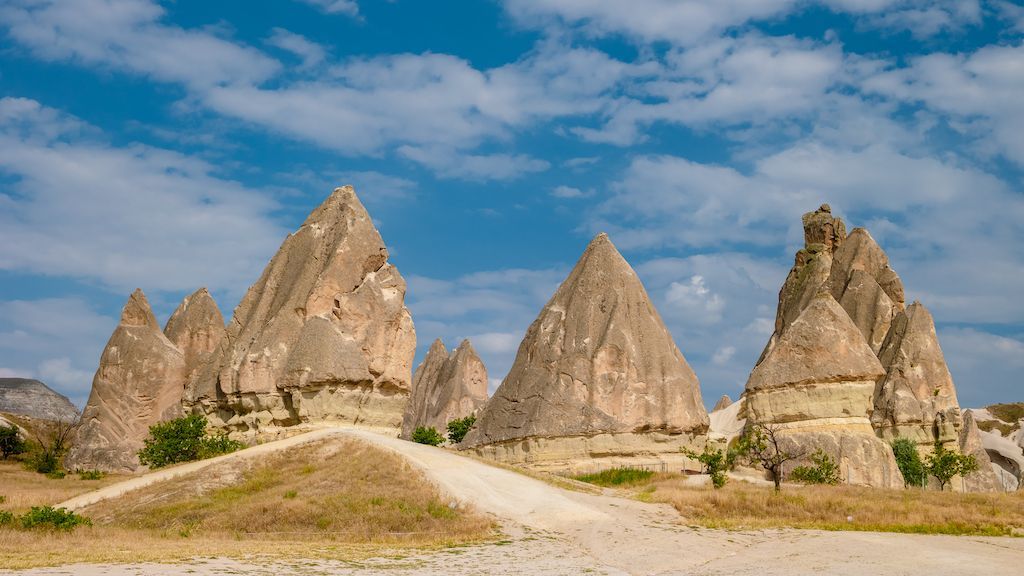
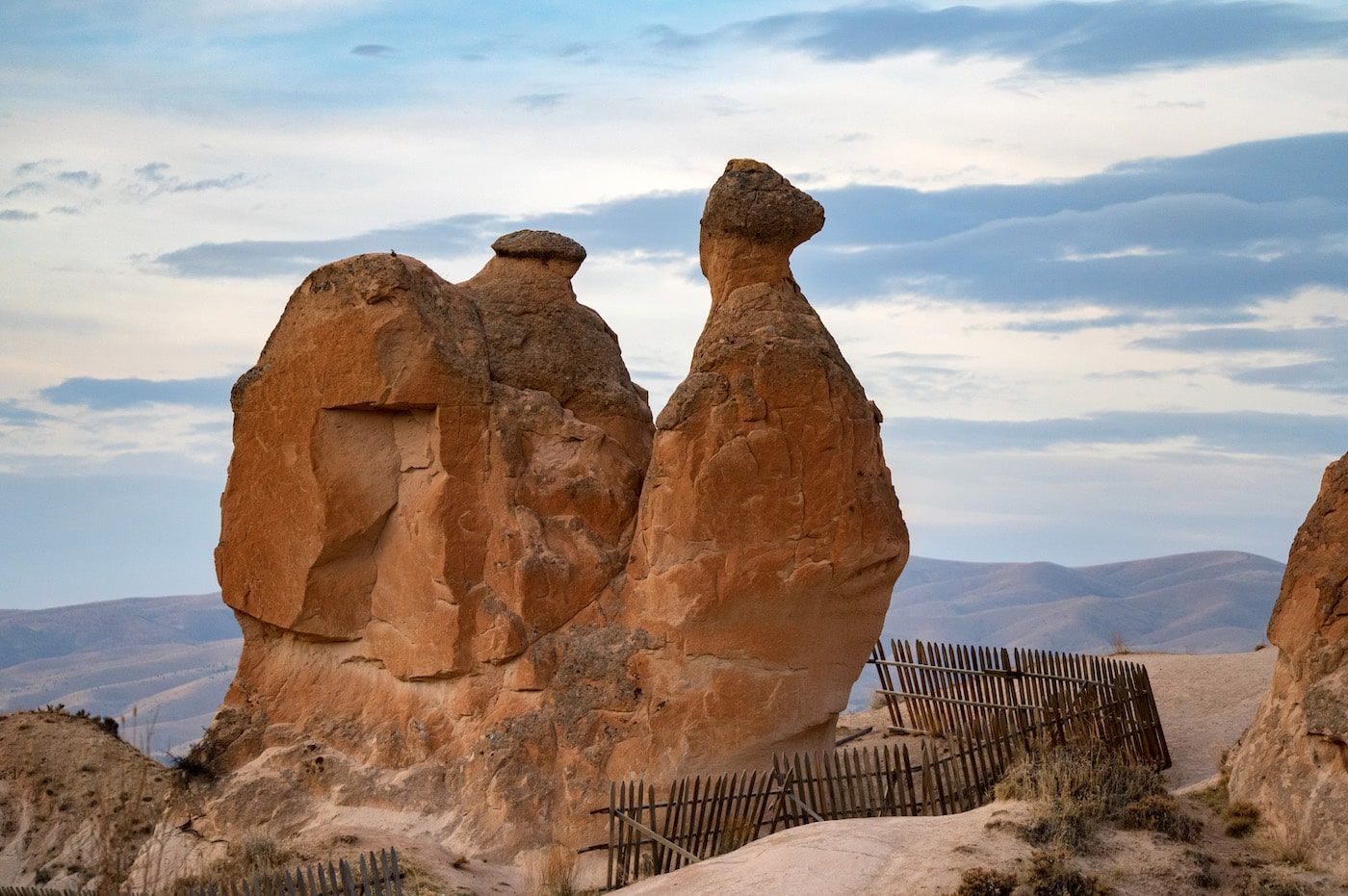
Cappadocia's fairy chimneys form wherever a hard basalt cap sits above softer tufa and the surrounding material erodes faster than what's beneath the cap. Avcılar Valley produces the full range — tall cones with dark pointed caps, squat mushroom shapes where erosion is more advanced, and clustered groups where several columns have merged at the base.
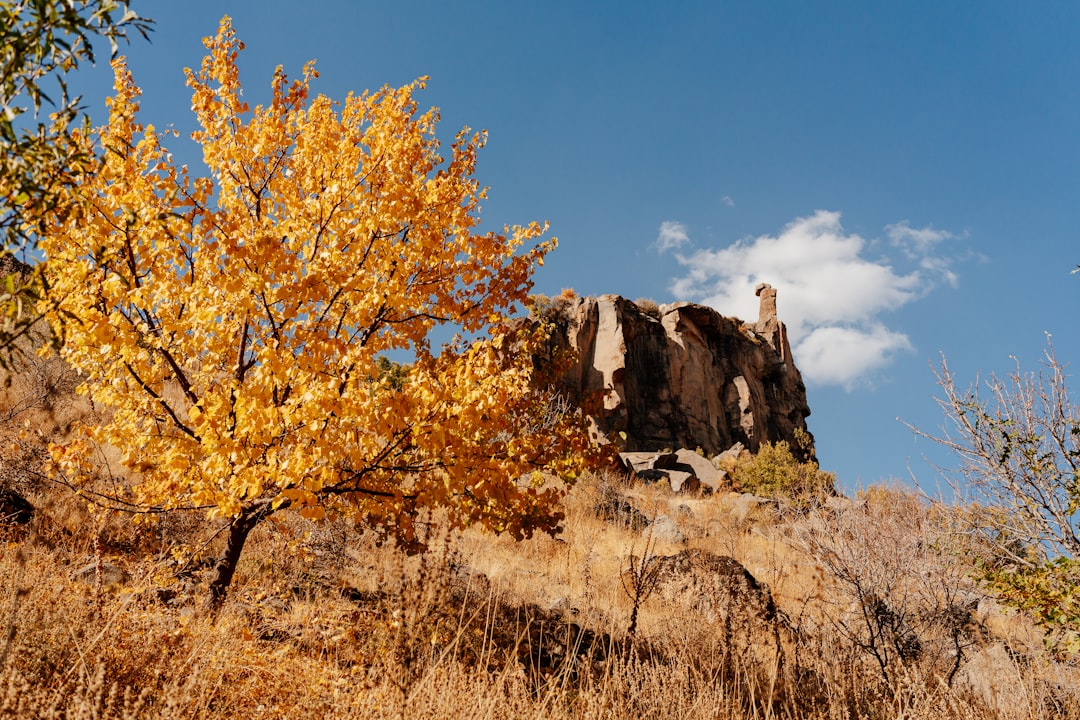
What distinguishes this valley visually is the colour. The tufa here shifts from pale cream in the upper canyon walls through ochre and rust in the mid-sections, deepening toward terracotta where the iron content in the rock is highest. In morning light, that colour gradient becomes vivid — the eastern cliff faces catch the sun directly and the rock almost glows. By midday it flattens out. Early walkers get the better show.
Compared to Rose Valley, which runs roughly east-west and offers long open views across multiple ridges, Avcılar is narrower and more enclosed in its central section. The canyon walls press closer, the chimneys feel larger relative to the trail width, and the sense of being inside a geological process rather than looking at it from a distance is more acute here.
Hiking in Avcılar Valley
The main trail access is from the road between Göreme and Ürgüp, near the point where the valley floor meets the road. From Göreme town centre, the walk in takes around 20 minutes on foot — longer if you detour through the southern edge of the open-air museum area. Most walkers drive or take a taxi to the valley entrance and walk the canyon itself.
The trail through the main valley takes roughly 45 minutes to an hour at a comfortable pace, covering about 2.5 kilometres. Difficulty is low to moderate: the valley floor is mostly flat compacted earth with sections of loose volcanic rock, and there are a few short scrambles where the trail narrows. No technical climbing is involved.
- Trail start: Göreme–Ürgüp road, valley floor access point
- Distance: approximately 2.5 km through the main canyon
- Walking time: 45–60 minutes one way
- Difficulty: easy to moderate — flat sections with some loose rock
- Highlights along the way: narrow canyon passages, open plateau views from the upper section, carved cliff openings at multiple heights
The trail opens up noticeably in the upper section, where the canyon walls step back and the plateau appears above you. From here, experienced walkers can connect to paths that loop toward Rose Valley for a longer half-day circuit.
The Pigeon House Tradition
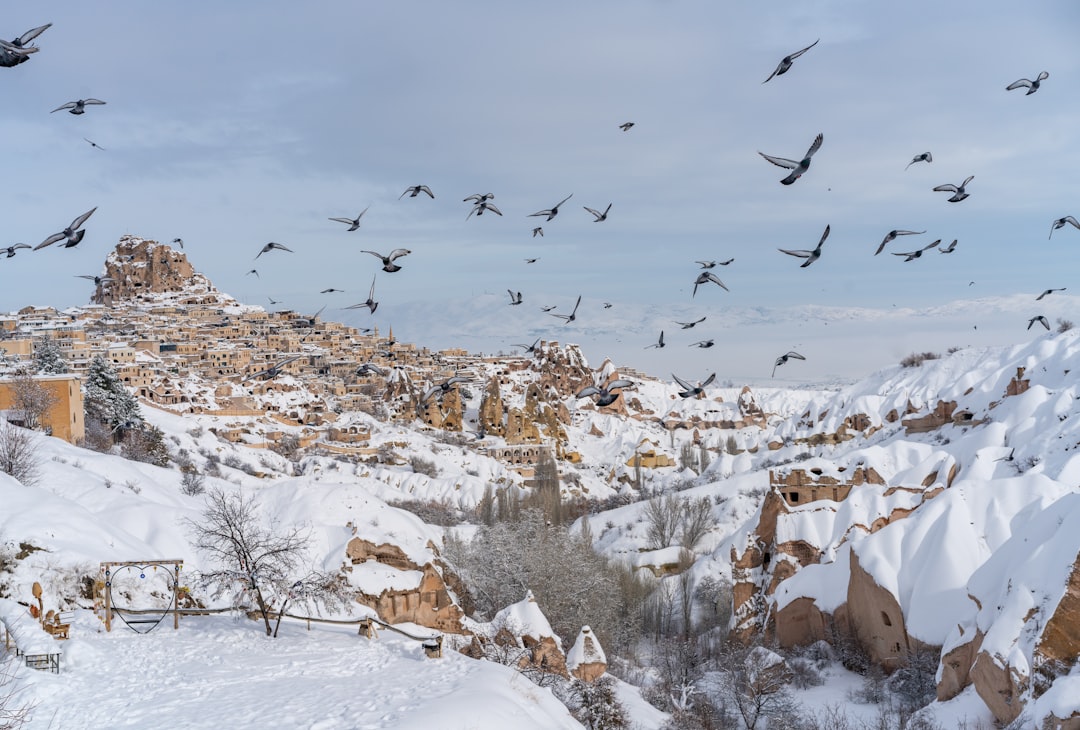
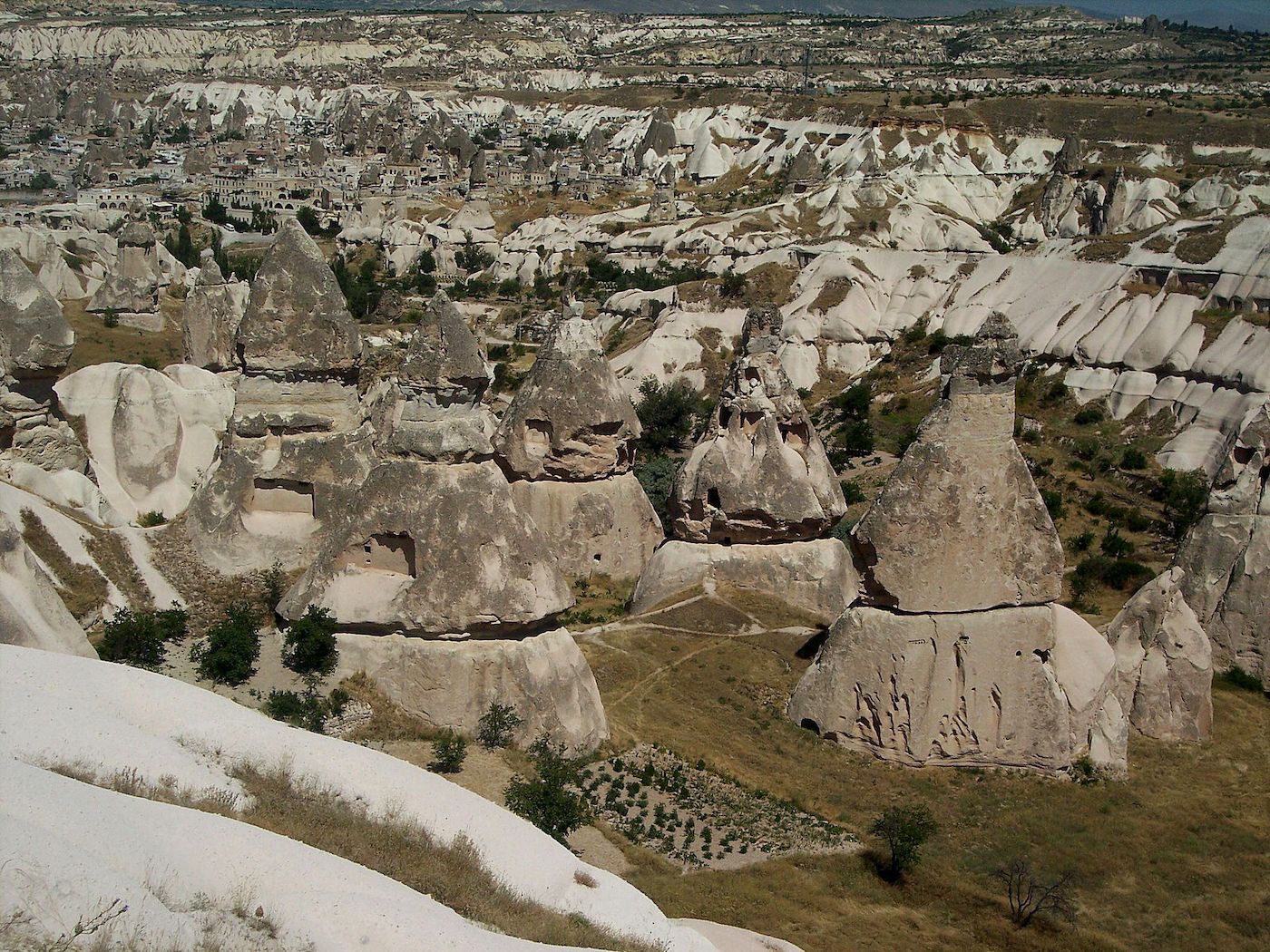
No valley in Cappadocia tells the story of the dovecote tradition quite as clearly as this one. Cut into cliff faces at heights that required ladders or rope access, the güvercinlik — pigeon houses — are visible throughout Avcılar: small arched doorways, often framed with carved decorative borders, opening into chambers where pigeons nested in purpose-built niches cut into the interior walls.
The agricultural logic behind them was simple and effective. Pigeon droppings — rich in nitrogen and phosphorus — were collected seasonally and used to fertilise the vineyards that grew across the Cappadocian valleys. In a region where volcanic soil needed supplementing, guano was the difference between a productive vineyard and a poor one. Families competed to maintain the largest and best-provisioned dovecotes. The carved entrance designs you see today were not purely decorative: they were also status markers.
Avcılar Valley has a high concentration of these carved openings still visible in good condition. The practice continued into the early twentieth century before chemical fertilisers rendered it economically unnecessary. The chambers remain, and in some cases the carved designs around the doorways are detailed enough to suggest they were executed by skilled craftspeople rather than subsistence farmers working with basic tools.
Wildlife and Seasonal Flora
The valley's relative quiet pays dividends for wildlife. In spring — April through early June — kestrels nest in the tufa columns, hunting the valley floor for insects and lizards. Short-toed eagles work the upper plateau edges. The enclosed canyon means less human foot traffic than Göreme Open Air Museum, and the birds behave accordingly: closer, longer perches, more indifferent to walkers who move slowly.
At ground level, the flora follows the season. Wild rosemary and thyme push out of the rocky cracks year-round, releasing scent when brushed. In April and May, crown anemones and red poppies appear in the wider sections of the valley floor where soil has accumulated. By June the colour has mostly gone but the aromatic scrub remains. At dusk in any season, foxes occasionally cross the lower valley, particularly in the narrow section where the terrain channels movement.
This is not a wildlife destination in the formal sense — there are no hides, no viewing platforms, no guided naturalist walks. But walkers who move quietly and arrive early or late in the day consistently see more here than in the busier valleys nearby.
Getting There
Avcılar Valley sits between Göreme and Ürgüp, accessible from the main road connecting the two towns. By car, it is around 5 minutes from Göreme's town centre. On foot from the centre of Göreme, allow 20–25 minutes to reach the valley entrance along the southern road — manageable but not the most scenic start.
Most visitors arrive by taxi, which allows you to choose the precise entry point and return to a different location after the walk. Reach Avcılar Valley by private taxi from Göreme or Ürgüp — use the Cappadocia taxi price calculator to check current fares before you go. There are no facilities inside the valley itself — no café, no water point, no toilet — so come prepared.
Practical Tips
- Timing: morning light hits the eastern cliff faces directly — the tufa colours are at their best in the first two hours after sunrise
- Water: bring at least 1.5 litres per person; there is no water source in the valley
- Footwear: closed shoes with grip — the trail surface includes loose volcanic rock and the canyon floor can be uneven
- Navigation: there is no formal signage in the valley; download an offline map (Maps.me or the AllTrails Göreme valley routes) or ask at your accommodation for the current entry point
- Combine with nearby valleys: Avcılar connects at its upper end with paths toward Rose Valley and Meskendir Valley — a full loop makes a satisfying half-day circuit of around 4–5 hours
- Best seasons: spring (April–May) for wildflowers and wildlife; autumn (October–November) for crisp air and lower tourist numbers; avoid midday in July and August
Frequently Asked Questions
Is Avcılar Valley signposted from Göreme?
No. Unlike Rose Valley or Pigeon Valley, Avcılar has no formal tourism signage. The valley entrance is accessed from the road between Göreme and Ürgüp. Download an offline map before you visit, or ask at your hotel for directions to the current trail access point — the entrance is straightforward once you know where to look.
How do I get to Avcılar Valley from Göreme?
By car or taxi it is roughly 5 minutes from Göreme town centre via the Ürgüp road. On foot from the town centre, allow 20–25 minutes to reach the valley entrance. Most visitors take a taxi to the valley and walk back to Göreme through the canyon, which takes 45–60 minutes. Use the Cappadocia taxi price calculator at cappadocia.taxi to check current fares.
What makes Avcılar Valley worth visiting over Rose Valley?
Avcılar and Rose Valley offer a similar geological experience — fairy chimneys, carved cliff openings, canyon walking — but Avcılar attracts far fewer visitors. If you visit Rose Valley on a weekend and find it busy, Avcılar will likely be empty or near-empty. The canyon is narrower and the terrain more enclosed, which some walkers prefer. It is also particularly good for wildlife, especially kestrels and eagles in spring, precisely because foot traffic is lower. The two valleys can be combined in a single half-day loop.