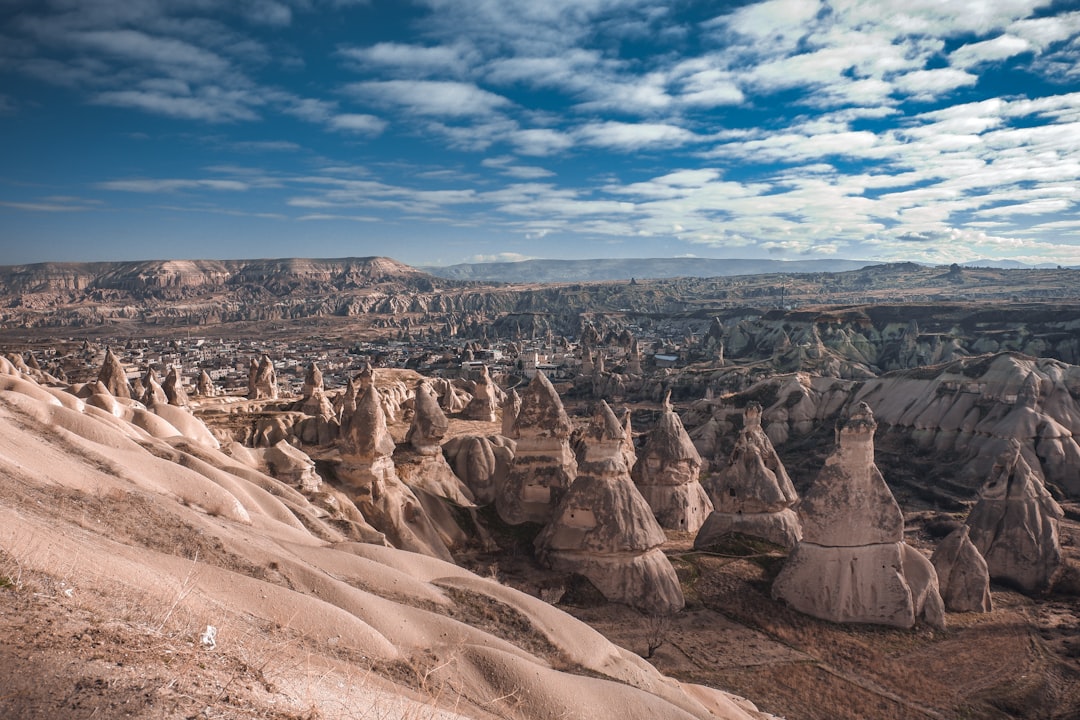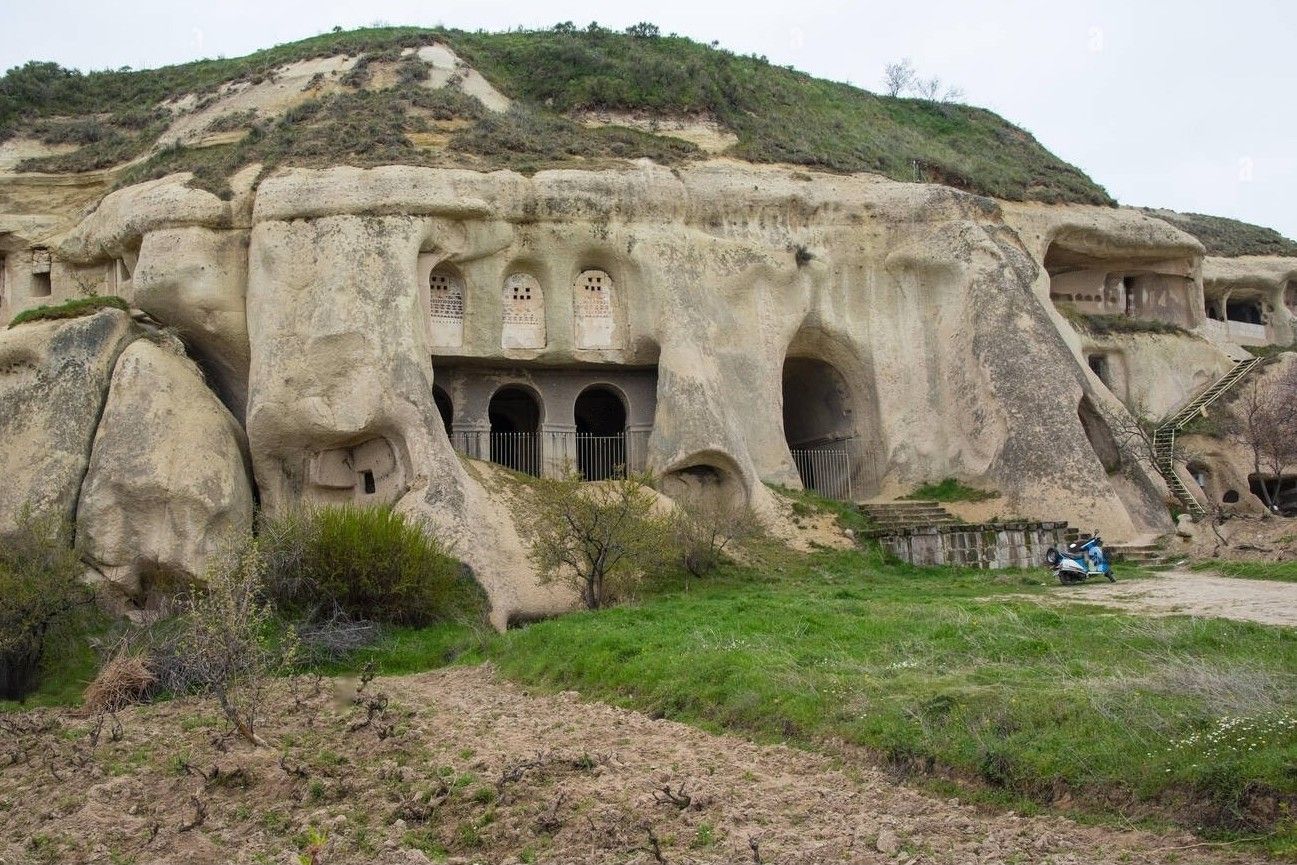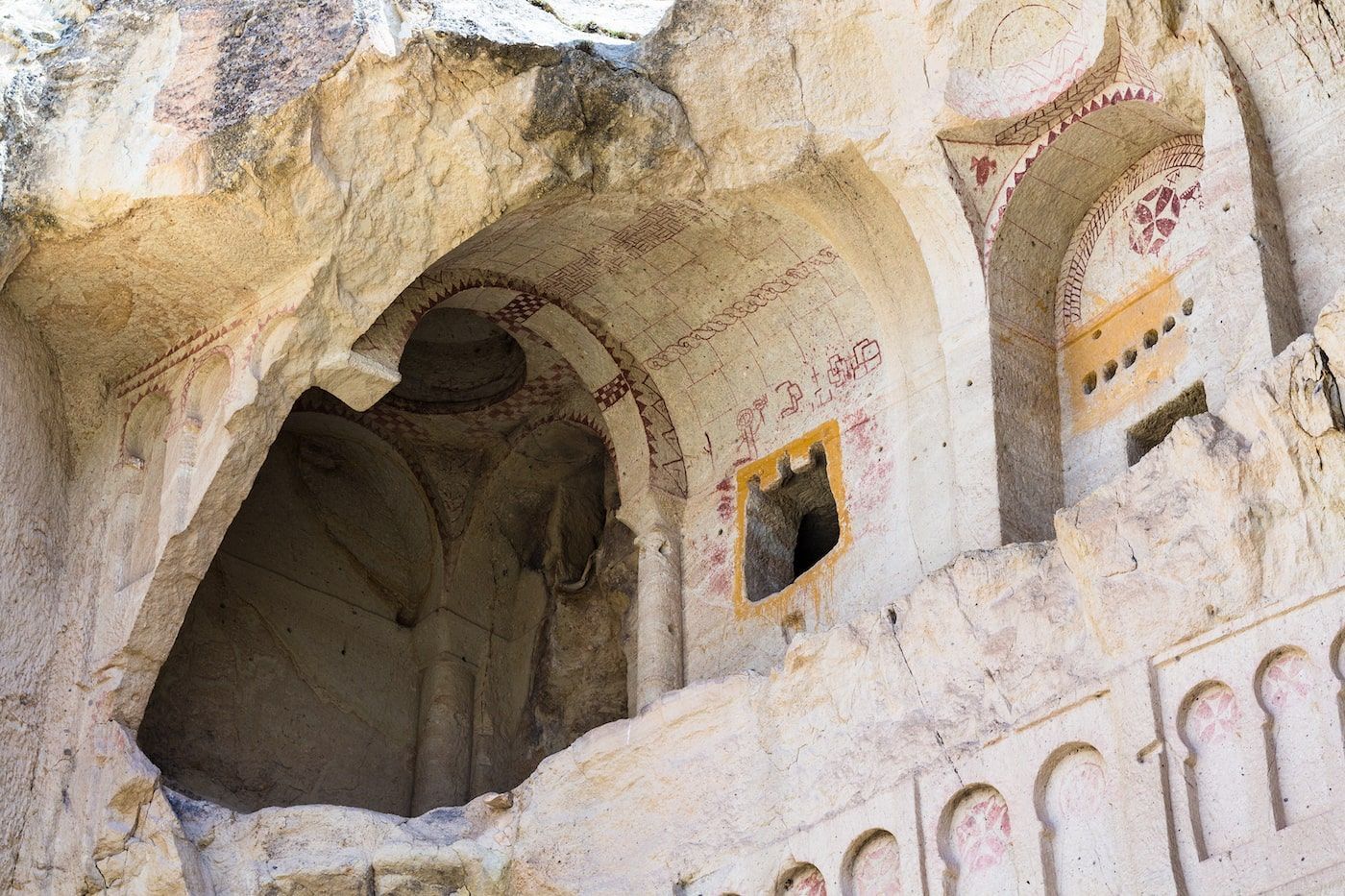
In a landscape carved with more than 600 rock churches, the Karanlık Kilise — the Dark Church — stands entirely apart. Sealed from direct sunlight by its deliberately small windows, its 11th-century lime plaster frescoes endured a 900-year sleep undisturbed by UV light, pilgrims' candles, and the slow bleaching that stripped the colour from almost every other painted church in Cappadocia. When the door was finally opened permanently to visitors, the colours shocked art historians. This is not merely the finest rock church in the region; it is the most important single room of Byzantine painting you can visit anywhere in Turkey.
Why "Dark Church"? The Story of the Light
The Turkish name Karanlık Kilise means simply Dark Church, and the darkness is the whole story. The builders carved just a few narrow windows into the narthex — the entry vestibule — leaving the naos, the main worship space, in near-permanent shadow. Scholars debate whether this was a deliberate liturgical choice, a structural decision made easier by the soft tufa rock, or whether later generations walled up original openings to protect the building. Whatever the reason, the effect was the same: without sustained sunlight, the ultraviolet degradation that fades pigment was almost completely eliminated.
The paradox of the Dark Church is that neglect preserved perfection. Churches that remained in active use — repainted, relit with oil lamps, touched by generations of hands — lost their original surfaces. The Dark Church was sealed, forgotten by all except local farmers who briefly used it as a pigeon house, and that abandonment turned out to be the finest conservation intervention possible. When restoration teams entered in the 1990s, they found colours so vivid they seemed to belong to a painting completed the previous century, not the previous millennium.
The Architecture: A Byzantine Masterwork in Tufa
The Dark Church follows a cross-in-square plan — the most sophisticated layout in Byzantine ecclesiastical architecture, typically reserved for stone churches in Constantinople and the major imperial centres. To find it executed here, carved entirely from the living rock of Göreme, is remarkable. Four columns support a central dome; the arms of the cross extend outward in each direction, vaulted in barrel fashion. The naos — the main worship hall — leads east to the bema, the raised sanctuary, and a small prothesis chapel sits to the side where liturgical preparations were made.
Look at the capitals of those four columns. The carvers reproduced Corinthian-style acanthus leaf detailing from the soft tufa with a precision that implies they had either trained masons or, more likely, a detailed pattern to follow. This is not improvised regional work; it is a deliberate translation of urban Byzantine forms into the volcanic landscape of central Anatolia. The builders achieved a complex, multi-domed spatial sequence entirely underground, without mortar, without scaffolding in the conventional sense — working with chisels into a hillside.
The Frescoes: A Complete Byzantine Iconographic Program
Most surviving Cappadocian churches show fragments — a partially preserved Pantocrator here, a damaged Nativity there. The Dark Church presents something rarer: a complete theological program covering every surface of the interior, from the dome above to the lower register of the walls. The composition follows a strict Byzantine hierarchy: Christ Pantocrator (Ruler of All) occupies the central dome, the highest symbolic position; the Deësis — Christ enthroned between the Virgin Mary and John the Baptist in an act of intercession — fills the apse conch; the narrative scenes of the liturgical calendar ring the walls below.
The scenes worth stopping longest before:
- The Anastasis: Christ in dazzling white robes reaches down into hell, gripping the wrists of Adam and Eve and pulling them from their tombs — the Eastern Christian image of Resurrection, far more active and dramatic than the Western empty-tomb tradition.
- The Nativity: A multi-episode composition including the manger scene and, below it, the bathing of the newborn Christ by midwives — a domestic, human detail that appears in Byzantine painting but rarely survives intact.
- The Transfiguration: Christ blazing in white on Mount Tabor, the apostles Peter, James and John collapsed in awe at his feet, the figures of Moses and Elijah flanking him.
- The Entry into Jerusalem: Christ on a donkey, children spreading cloaks on the road ahead, a crowd thronging the city gate — one of the most complete surviving versions of this scene in Cappadocia.
- The Crucifixion: A restrained, hieratic composition; the figure of the Virgin and the beloved disciple standing below the cross, the Roman soldier with the sponge.
- The Deësis: In the apse, the full intercessory image — Christ as judge, softened by the presence of his mother and the Baptist pleading on humanity's behalf.
The quality of the figure drawing is not typical of provincial Byzantine work. The artists modeled drapery with understanding of the body beneath; faces show individual character rather than blank convention; spatial recession is suggested with care. These frescoes were made by painters who knew the best metropolitan work of their era.
The Colour Palette That Survived 900 Years
The specific pigments used in the Dark Church happen to be among the most chemically stable ever employed by Byzantine painters. The deep blue — the defining colour of the backgrounds — is a lapis lazuli-derived ultramarine precursor, extraordinarily lightfast and unaffected by humidity. The whites are lead white, the reds vermilion, the yellows orpiment; the blacks are carbon. These are not cheap materials. The commission that produced the Dark Church's paintings was well funded, using the best available pigments on a properly prepared lime-plaster ground.
Compare the Dark Church to the nearby Elmali Kilise (Apple Church) or Yilanli Kilise (Snake Church), where centuries of exposure have faded blues to grey and turned reds to rust shadows. Those churches give you the composition; the Dark Church gives you the colour as the 11th-century patrons saw it. The UNESCO-supported restoration work carried out in the 1990s cleaned accumulated grime and stabilised flaking areas without repainting — what you see now is original pigment, not a modern recreation.
The Separate Entry Ticket
The Dark Church charges a separate admission fee on top of the standard Göreme Open Air Museum entrance (). The additional charge has been in place for years and is enforced at a turnstile immediately before the church entrance. The reason given — and it is a genuine one — is visitor-number control. Allowing unlimited entry would mean the humidity and carbon dioxide from breath would accelerate deterioration of the very frescoes that make the church unmissable. The number of simultaneous visitors inside is capped, and queue times at peak season (May to October) can be 20–30 minutes.
No photography flash is permitted inside, and this rule is enforced. Many visitors find that their phone cameras adjust well to the interior light levels — the frescoes are lit by careful museum-grade spotlights — and produce entirely usable images without flash. Flash photography, over thousands of visits, contributes to pigment degradation; the rule exists to protect the paintings for the next century of visitors.
How to Visit
The Dark Church sits at the highest point of the Göreme Open Air Museum complex, reached by a path that climbs for five to ten minutes from the main entrance. The museum opens at 9 am; arriving at opening gives you the best light in the courtyard spaces and the shortest queue at the Dark Church turnstile before visiting groups begin arriving at 9:30–10:00. Plan 45 minutes inside the Dark Church itself — it takes multiple circuits of the interior to absorb the full iconographic program. Rushing through in ten minutes is the most common mistake first-time visitors make.
Get to Göreme Open Air Museum and the Dark Church by private taxi — use the Cappadocia taxi price calculator to check current taxi fares from your hotel or airport before you go.
What to Look For — A Room-by-Room Guide
Enter the narthex and look up immediately: the decorative program begins here, and your eyes need a moment to adjust from outside light. Move through into the naos and look straight up to the central dome — the Pantocrator's gaze is the visual anchor of the entire space, intentionally so. Then work systematically: the apse Deësis first (straight ahead), then the left wall (Nativity, Transfiguration), then the right wall (Entry into Jerusalem, Crucifixion), and finish with the Anastasis above the apse arch — the scene that most visitors remember longest.
If visible on your visit, look for the donor portrait — a small figure or group of figures, usually depicted in a lower register in a posture of offering, representing the patron who funded the paintings. Such portraits are rare survivals and connect the frescoes to a real historical moment: a specific family, a specific year, a specific act of piety in 11th-century Cappadocia.
Frequently Asked Questions
Does the Dark Church cost extra beyond the Göreme Open Air Museum ticket?
Yes. The Dark Church (Karanlık Kilise) has a separate entry fee charged at its own turnstile inside the museum complex. You pay the standard Göreme Open Air Museum admission first, then an additional amount to enter the Dark Church itself. Budget for both when planning your visit, and check current prices at the ticket office on arrival as they are updated seasonally.
Can you take photos inside the Dark Church?
Photography is permitted inside the Dark Church, but flash photography is strictly prohibited. The rule is enforced by staff positioned inside the church. Modern smartphone cameras generally perform adequately in the museum-lit interior without flash. The restriction exists to protect the original 11th-century pigments from cumulative light damage over millions of visitor photographs.
Is the Dark Church the best rock church in Cappadocia?
For fresco quality and preservation, yes — the Dark Church is widely considered the finest surviving painted rock church in the entire region. Other churches such as Elmali Kilise (Apple Church), Tokali Kilise (Buckle Church, just outside the museum), and the churches of Ihlara Valley each have their own outstanding features. But for a complete, brilliantly coloured, sophisticated Byzantine iconographic program in a single space, the Dark Church has no equal in Cappadocia.