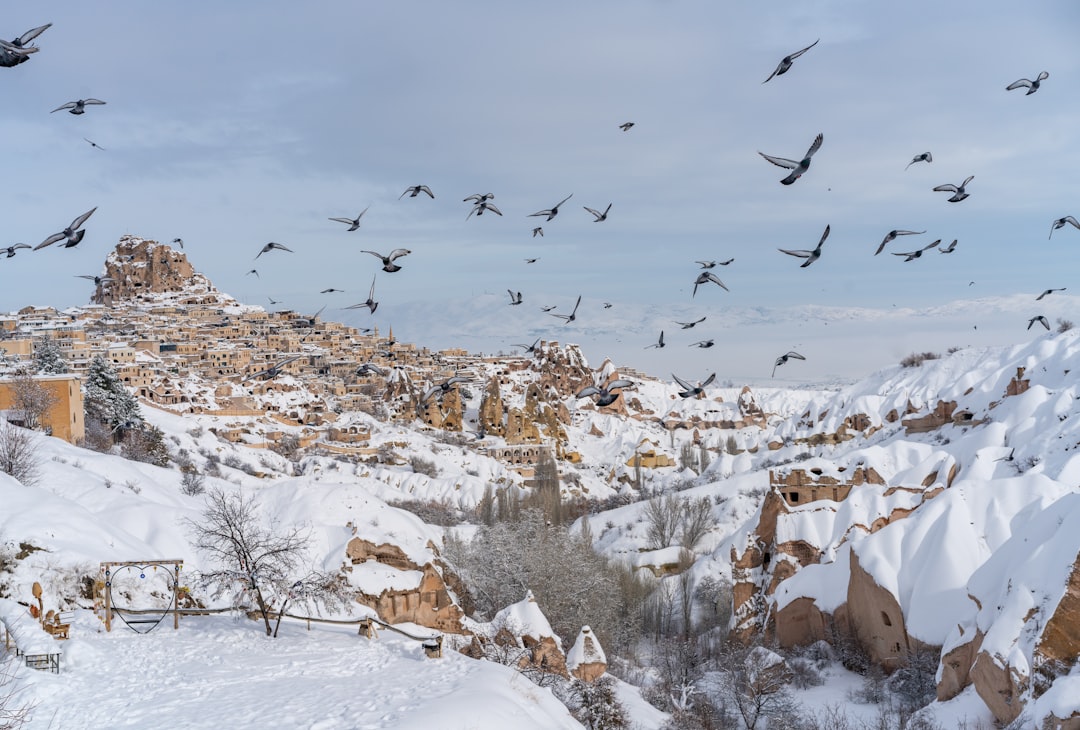
A ten-minute drive from Ürgüp, Pancarlık Valley offers Cappadocia at its most undisturbed. Cave churches cling half-hidden to tufa cliffs, working dovecotes crowd every available ledge, and the trail winds past abandoned cave dwellings where you might not encounter another visitor for hours. While the Göreme Open-Air Museum draws coachloads daily, Pancarlık rewards the traveller willing to steer slightly off the main circuit — with silence, birdsong, and frescoes that have endured for more than a thousand years.
The Valley Landscape
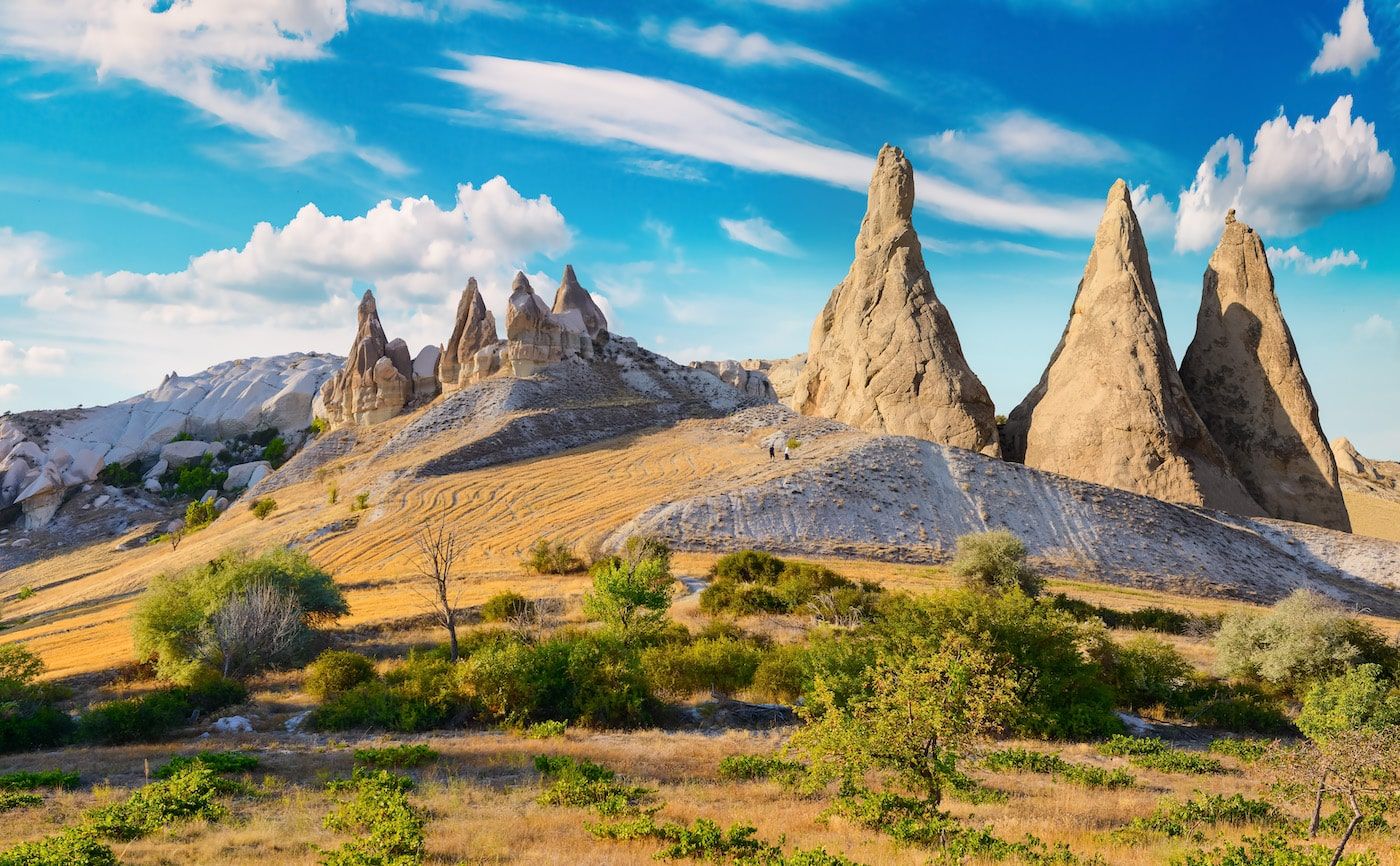
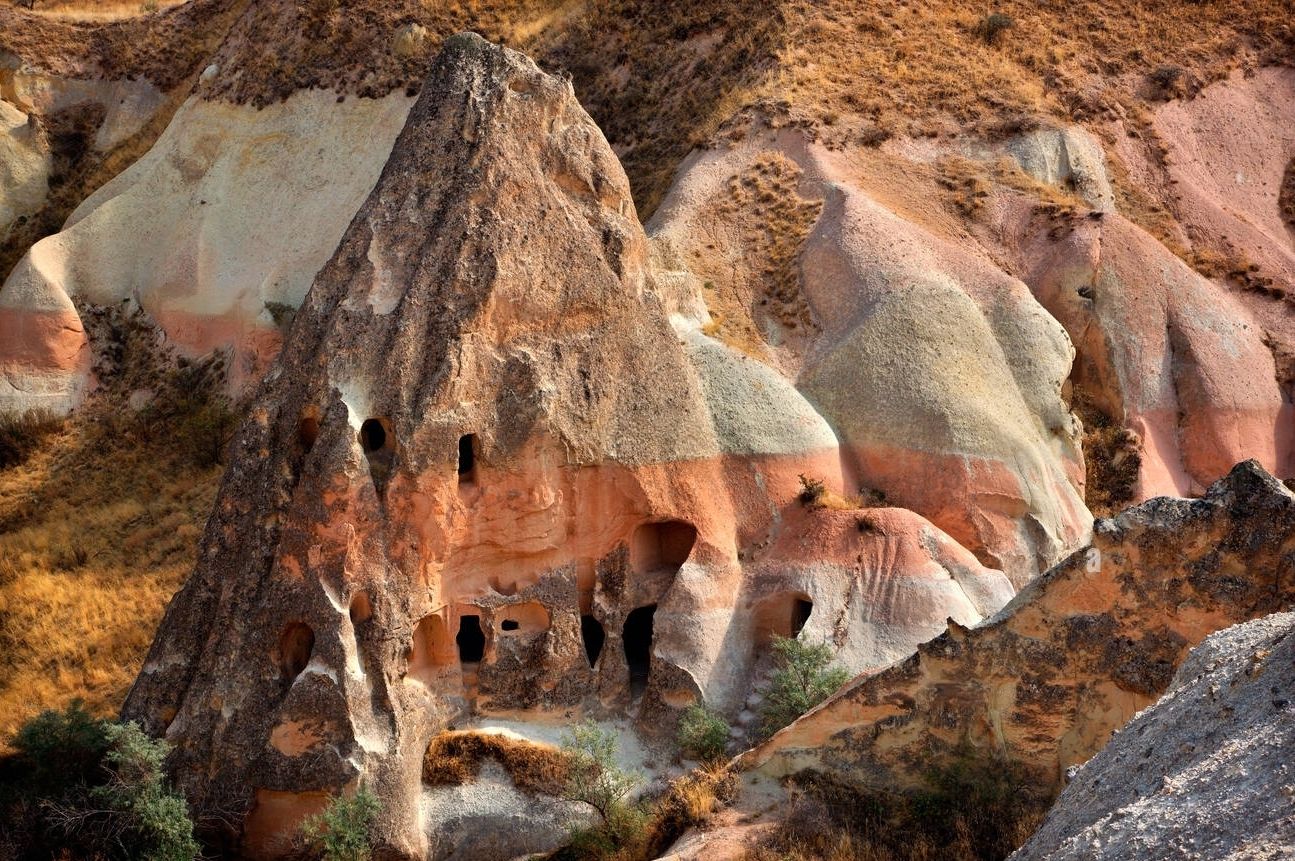
Pancarlık Valley is carved into the soft volcanic tuff that defines the Cappadocia plateau. Wind and water have sculpted the cliffside into honeycombed terraces, and a seasonal stream threads along the valley floor in late spring before disappearing underground in summer. Look closely at the slopes and you can read traces of ancient farming: levelled platforms, dry-stone retaining walls, and irrigation channels cut into the softer rock.
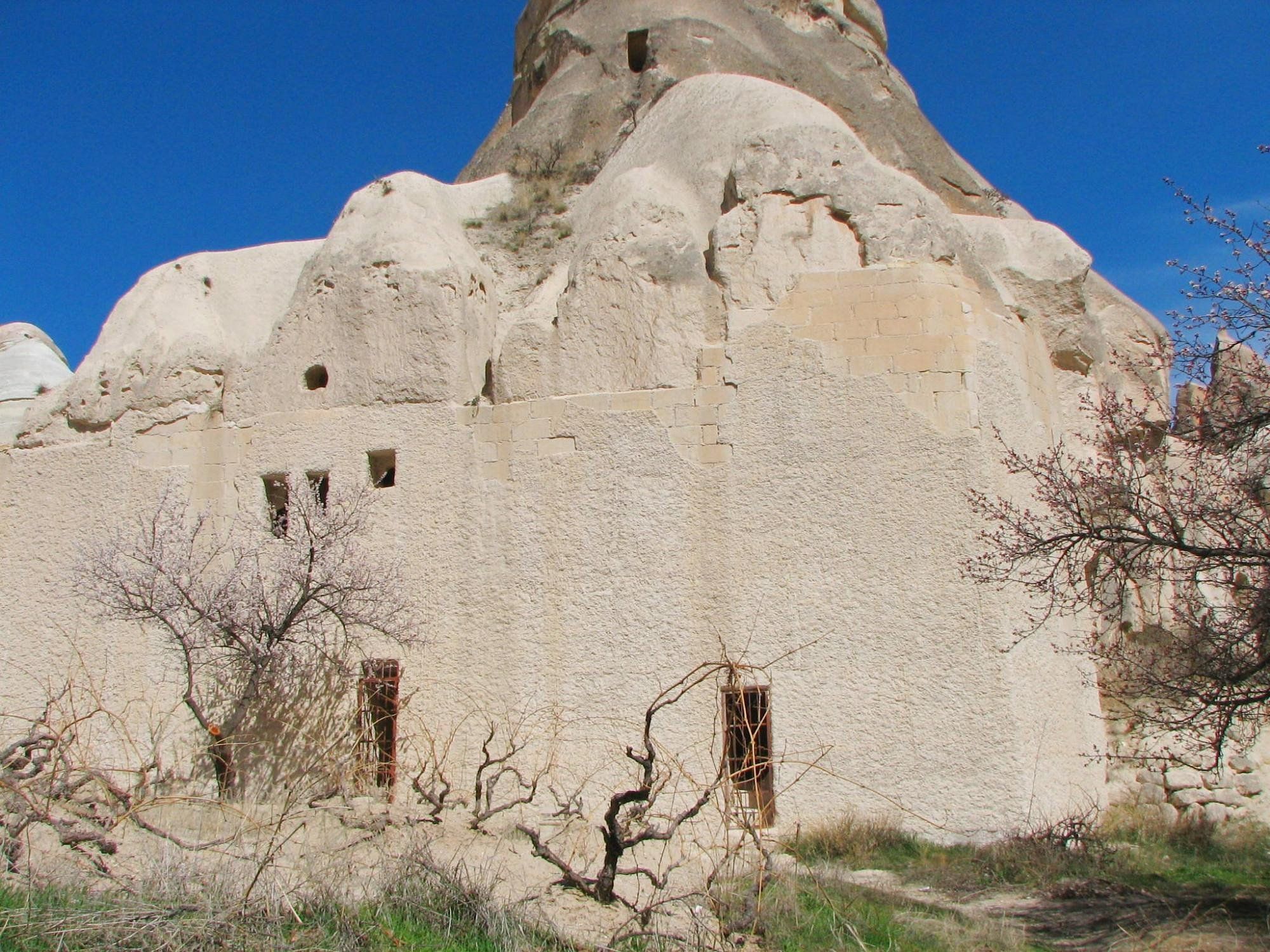
Most striking, however, are the pigeon houses — hundreds of small carved cavities pockmarking every cliff face. Pigeon droppings were Cappadocia's most prized fertiliser for centuries, and farmers competed to attract flocks by painting the dovecote entrances with vivid geometric patterns, many of which remain faintly visible today.
The Rock Churches of Pancarlik
The valley takes its name from the Pancarlik Church, a Byzantine rock-cut church carved directly into the tuff during the middle Byzantine period — likely between the ninth and eleventh centuries. The church follows a cross-in-square plan with barrel-vaulted arms meeting at a central dome, and the painted surfaces once covered walls, ceiling, and the apse behind the altar.
The iconographic programme includes scenes from the life of Christ alongside images of saints and archangels, painted in the warm ochres, rust-reds, and muted blues typical of regional Byzantine workshops. Time and moisture have damaged sections, and some faces have been deliberately defaced. Even so, enough survives to make the visit meaningful: stand in the half-light of the nave and the theological ambition of the original decoration is still legible. Several smaller cave chapels are scattered further along the valley walls, equally atmospheric if less ornamented.
Cave Villages and Abandoned Dwellings
Unlike some rock-cut sites in Cappadocia that feel purely archaeological, Pancarlık retains a lived quality. The carved openings lining the lower cliffs were not all churches — many were homes, occupied by farming families whose descendants left within living memory. Rounded doorways polished smooth by generations of use, niches shaped for oil lamps, and cisterns fed by roof-catchment channels speak of a practical domestic life conducted entirely within the rock. The main depopulation came in the twentieth century as younger generations moved to Ürgüp and Nevşehir. Near the valley entrance, some cave structures remain in active use, incorporated into newer buildings or adapted as farm storage — a reminder that this landscape is still inhabited, not merely preserved.
Hiking Pancarlık Valley
The trail through Pancarlık Valley is straightforward for most walkers. The path follows the valley floor for the majority of its length, rising gently in places before becoming rockier further in. Total out-and-back distance is roughly three to four kilometres, and a leisurely two-hour return is realistic — longer if you linger inside the churches or explore cave dwellings.
- Terrain: Mostly flat valley floor with some loose gravel and rocky sections deeper in
- Distance: Approximately 3–4 km return
- Duration: Around 2 hours at a relaxed pace
- Navigation: Intuitive — simply follow the valley floor; the cliffs guide you
- Suitability: Families with children and casual walkers; no technical climbing required
- Best season: Spring (April–May) and autumn (September–October)
Wildlife and Flora
In April and May the valley floor comes alive with wildflowers — grape hyacinth, scarlet poppies, and yellow mustard colonise the terraced edges, and bees work the scrubland constantly. Birds of prey ride the thermals above the valley rim; kestrels are common, and long-eared owls occasionally shelter in deeper cave recesses. Foxes and rabbits inhabit the scrub at the valley margins. Walk quietly in the early morning and you have a reasonable chance of seeing both, along with partridges that burst from the undergrowth with startling energy.
Getting There and Tips
Pancarlık Valley sits just outside Ürgüp, reachable in ten to fifteen minutes by car. From Göreme, allow around thirty minutes by road. The trailhead is signed from the main road, and a small informal parking area marks the start of the walk.
Getting to Pancarlık Valley without a car is easiest by taxi — use the Cappadocia taxi price calculator to check the fare from your base before you travel.
- Morning light: Visit before midday — east-facing church interiors catch the best natural light for viewing frescoes
- Water: Bring at least one litre per person; there are no cafes or facilities in the valley
- Footwear: Sturdy trainers with grip are sufficient; hiking boots add comfort on the rockier sections
- Admission: The valley is freely accessible; some individual churches may charge a small entry contribution — verify locally
- Crowds: Weekday mornings are the quietest, though the valley rarely fills even at weekends
Frequently Asked Questions
Is Pancarlık Valley worth visiting if I have already done Rose Valley?
Yes — the two offer distinctly different experiences. Rose Valley is known for dramatic formations and sees steady foot traffic; Pancarlık is quieter, flatter, and focuses on the human history of the landscape, with rock-cut churches, dovecotes, and cave dwellings that feel genuinely off the tourist trail. If you enjoyed Rose Valley, Pancarlık will complement rather than repeat it.
Is it easy to get to Pancarlık Valley without a car?
A taxi is the most practical option. The valley is ten to fifteen minutes from Ürgüp and around thirty minutes from Göreme. There is no regular public bus service to the trailhead. Use the Cappadocia taxi price calculator at cappadocia.taxi to check the current fare before you go.
Are the rock churches open to enter?
The main Pancarlik Church and several smaller chapels are generally accessible, though conditions can vary — some may be gated to protect fragile frescoes. A torch or phone light is useful inside, as the interiors receive little natural illumination. Always step carefully on uneven floors and avoid touching painted surfaces.