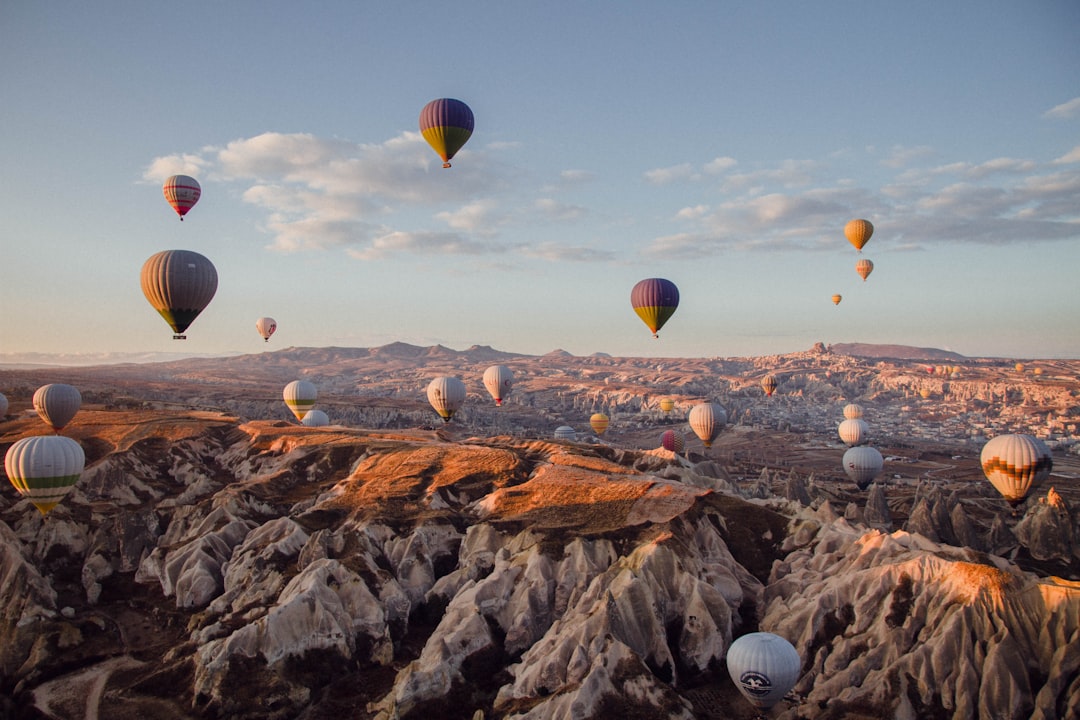
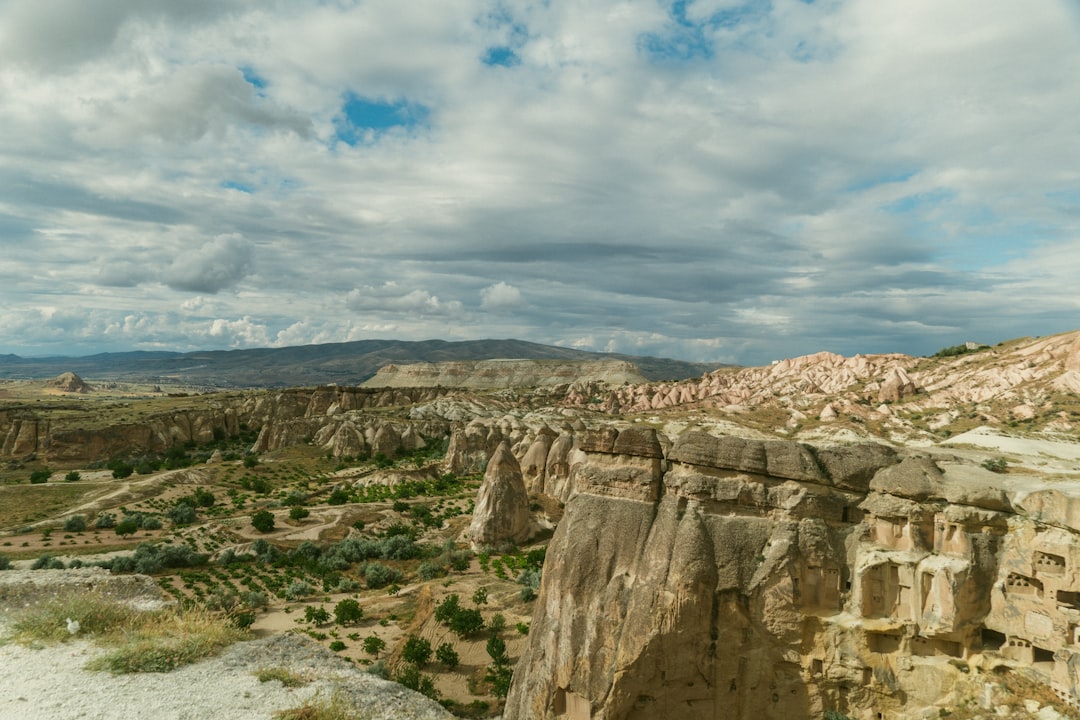
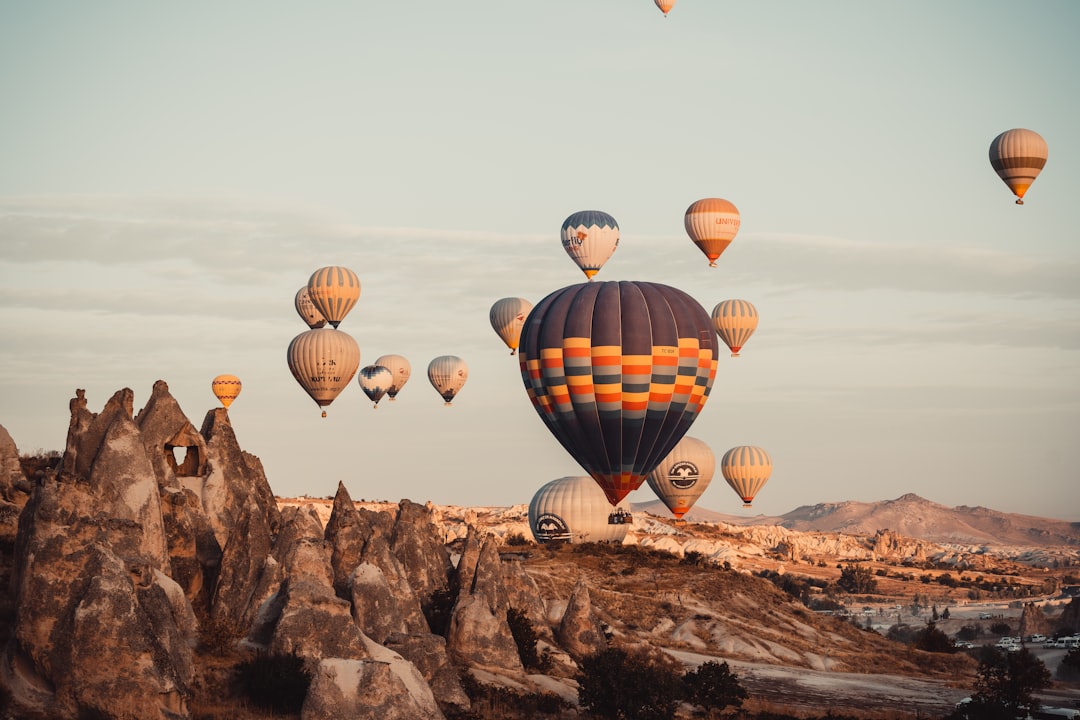
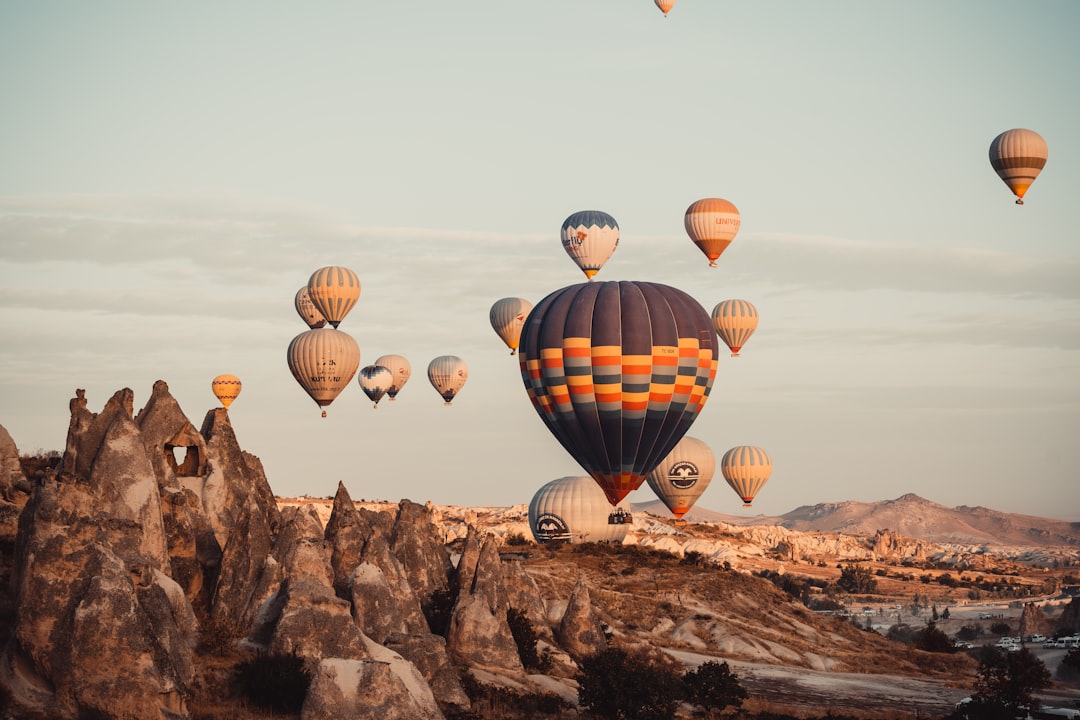
Turkey is a country layered in civilizations — Byzantine, Hittite, Ottoman, Roman, and beyond — and nowhere is that layering more literally visible than in Cappadocia. While Istanbul's world-class museums and Ankara's archaeology halls rightfully attract culturally curious travelers, Cappadocia offers something no conventional museum can replicate: an entire landscape that is itself a masterpiece. This guide starts where your Turkey trip most likely begins — or should — in Cappadocia, then ranges outward to the institutions that complete the picture of Turkish art and civilization.
Cappadocia: Where the Open Air Is the Museum
The volcanic tuff landscape of Cappadocia was not just sculpted by nature. For over a millennium, communities carved churches, monasteries, homes, and entire underground cities into the rock. The result is a living archive of Byzantine art, early Christian iconography, and pre-Ottoman engineering that no indoor gallery can contain. The open-air 'museums' here are not reconstructions — they are the original sites, still standing, still painted, still resonant.
Göreme Open Air Museum
The crown jewel of Cappadocia's cultural heritage, Göreme Open Air Museum is a UNESCO World Heritage Site and the single most important repository of Byzantine religious art in Turkey. Carved into the soft volcanic rock between the 10th and 13th centuries, the complex holds more than thirty rock-cut churches and chapels, their interiors covered floor to ceiling in frescoes of extraordinary sophistication. Entry to Göreme Open Air Museum costs for international visitors.
The frescoes here are not decorative afterthoughts. They are theological programs — dense visual narratives of the life of Christ, the Virgin, and the saints, painted by artists who understood Byzantine iconographic conventions intimately. The Elmali Kilise (Apple Church) is the most vibrant, its dome medallions and arched nave still rich with crimson, ochre, and deep lapis. What makes Göreme extraordinary is the intimacy: you stand inside a domed ceiling just metres across and look up at a Pantokrator painted nine hundred years ago. No museum vitrine exists between you and it.
- Don't miss: The Tokalı Kilise (Buckle Church), just outside the main complex — Turkey's largest rock-cut church, with a four-scene New Testament cycle across its nave ceiling
- Practical note: Arrive early morning or late afternoon; midday crowds and direct sunlight make photography difficult and queues long
- Museum Pass: The Müzekart covers entry here — see the FAQ below
Karanlık Kilise (Dark Church), Göreme
Accessed via a separate ticket within the Göreme complex, the Dark Church earns its extra admission many times over. Its name comes from the near-total absence of windows — which turned out to be a gift. Where other churches saw their pigments bleached by centuries of sunlight, Karanlık Kilise's frescoes survived with a colour saturation that stops visitors in their tracks. The deep cobalt blue of the background fields, the fine red of the haloes, the detailed rendering of apostolic faces in the Last Supper scene: these look far closer to newly painted than to thousand-year-old pigment.
Conservation work completed in recent decades has stabilized the frescoes and removed accumulated smoke damage. What remains is arguably the finest single interior in Cappadocia — a compact, breathtaking demonstration of what middle Byzantine painting could achieve at its peak.
- Unforgettable detail: The Betrayal of Judas scene — compositionally sophisticated, with Judas and Christ facing each other while apostles react behind them
- Practical note: The separate fee is modest; the experience justifies it without question
Zelve Open Air Museum
Less visited than Göreme, Zelve rewards the traveler willing to walk a little further. While Göreme is a religious complex, Zelve was a living town — an entire monastic and civilian settlement carved into three converging valleys and inhabited continuously until 1952, when rock collapses made it too dangerous to remain. Walking through Zelve today is walking through domestic history: cave rooms that held families, a rock-cut mosque built after the Christian population departed, millstones still lodged in their original channels, dovecotes carved in decorative geometric patterns to signal status.
The art at Zelve is less formal than Göreme's theological programs — it is the art of everyday life inscribed in stone. The dovecote facades, with their rhythmic rows of carved niches and decorative borders, are a reminder that Cappadocian builders had an aesthetic sensibility that extended well beyond religious commissions. Zelve feels unmediated in a way that the more heavily visited sites do not.
- Unforgettable detail: The carved fish motif found on several exterior walls — a discrete Christian symbol from the pre-Byzantine period
- Practical note: Wear sturdy shoes; the valley floor is uneven and some passages require ducking
Derinkuyu and Kaymakli Underground Cities
If fresco painting represents Byzantine Cappadocia's artistic ambition in two dimensions, the underground cities represent it in three — and then some. Derinkuyu, the deepest of the region's subterranean complexes, descends eight levels below the surface, sheltering an estimated twenty thousand people in its labyrinth of tunnels, ventilation shafts, stables, churches, and wine cellars. Kaymakli is more compact but equally intricate, its passages designed with a spatial intelligence that modern architects study.
These are engineering as art: the ventilation shafts that move fresh air to rooms eighty metres underground, the millstone doors that two people could roll shut against an advancing army, the acoustic design that let defenders hear tunnel-digging from above. To walk through Derinkuyu is to recognize that the people who built these cities were solving complex structural and social problems with extraordinary ingenuity. There is no decorative program to admire — only the austere geometry of carved tufa, which becomes beautiful precisely because it served so specific and serious a purpose.
- Unforgettable detail: The circular millstone doors at Derinkuyu — up to half a tonne each, engineered to roll and lock from within
- Practical note: Visit both Derinkuyu and Kaymakli if time allows; they offer meaningfully different spatial experiences. Getting between Cappadocia and nearby cultural sites is easy with a private taxi — use the Cappadocia taxi price calculator for accurate fares
Avanos Pottery Workshops and the Red River Tradition
The town of Avanos, sitting on the Kızılırmak (Red River) whose silty clay has supplied potters for four thousand years, is the living continuation of a ceramic tradition that predates Hittite civilization. The pottery here is not a tourist gimmick — it is an unbroken craft lineage, and the workshops along the riverbank are both studios and informal museums. Several ateliers display examples spanning Hittite, Phrygian, Byzantine, and Ottoman periods alongside contemporary work, making the chronological sweep of the tradition concrete and visible.
Visitors can throw clay on the wheel under guidance from master potters whose families have worked this trade for generations. The experience is tactile and immediate — a direct connection to the same material and gestures that produced vessels found in Hittite burial sites nearby. Even a half-hour at the wheel produces a different appreciation for the precision and patience the craft demands.
- Unforgettable detail: The distinctive terracotta redness of Avanos clay, entirely natural and unique to the Kızılırmak riverbed
- Practical note: Most workshops are free to enter and demonstrate; purchasing a piece supports the artisans directly
Turkey's Major Art Institutions: For the Longer Journey
Cappadocia is ideally positioned as a centrepiece of a broader Turkey cultural itinerary. The following institutions, ranging from Istanbul's contemporary scene to Ankara's ancient collections, complement what Cappadocia offers and together sketch a comprehensive picture of Turkish visual culture across five millennia.
Istanbul Modern (Karaköy, Istanbul)
Relocated to a striking new building by Renzo Piano on the Karaköy waterfront in 2023, Istanbul Modern is Turkey's premier contemporary art museum and one of the finest in the region. Its permanent collection spans Turkish painting from the late 19th century through the present, with particular strength in the Republican-era figurative tradition and in contemporary work that engages with Turkish identity, urbanization, and migration. Temporary exhibitions regularly bring international artists into dialogue with Turkish contexts.
- Unforgettable detail: The permanent collection's survey of Turkish women painters of the early 20th century — overlooked figures whose work is formally accomplished and historically revelatory
- Practical note: The rooftop restaurant offers exceptional views of the Bosphorus; factor in time for it
Pera Museum (Beyoğlu, Istanbul)
Housed in the former Bristol Hotel in Beyoğlu, Pera Museum holds three permanent collections of remarkable distinctiveness: Orientalist paintings by European artists depicting Ottoman daily life, a world-class assembly of Kütahya ceramics spanning six centuries, and Anatolian weights and measures that trace commercial culture from antiquity. The Orientalist collection is simultaneously a trove of 18th- and 19th-century painting skill and a fascinating document of how European artists imagined — and often misread — the Ottoman world.
- Unforgettable detail: Osman Hamdi Bey's 'The Tortoise Trainer' (1906) — the most famous painting in Turkish art history, here in its permanent home, more complex and quietly subversive than its postcard ubiquity suggests
- Practical note: The ceramics collection on the upper floors is often rushed by visitors; it deserves equal time to the paintings
Museum of Anatolian Civilizations (Ankara)
For travellers combining Cappadocia with Ankara — a straightforward bus or flight connection — the Museum of Anatolian Civilizations is essential. Housed in a restored 15th-century Ottoman market building, it holds the world's finest collection of Hittite art and artefacts, including the monumental sphinx gates, ceremonial standards, and carved orthostats that defined Hittite visual culture from 1650 to 1180 BCE. Given that the Hittite heartland overlapped directly with modern Cappadocia, the connection to the region is not abstract.
- Unforgettable detail: The sun disc standards from Alacahöyük (circa 2300 BCE) — abstract, modernist-looking bronze sculptures that predate the Hittites and feel astonishingly contemporary
- Practical note: Allow at least three hours; the Neolithic, Chalcolithic, Bronze Age, Hittite, Phrygian, and Urartian galleries each merit sustained attention
Sakıp Sabancı Museum (Emirgan, Istanbul)
Set in a historic Bosphorus yalı (waterfront mansion) surrounded by gardens, the Sakıp Sabancı Museum is one of Turkey's finest private collections made public. Its permanent holdings are strongest in Ottoman calligraphy — including imperial firmans, Quran manuscripts, and the work of the great 19th-century masters — and in Ottoman miniature painting and imperial documents. The museum also hosts some of Turkey's most significant international loan exhibitions, making it worth checking what's on during your visit.
- Unforgettable detail: The calligraphy gallery's imperial tuğra (sultan's monogram) examples — enormous, elaborately knotted signatures that are as much graphic design as they are administrative document
- Practical note: The museum is in Emirgan on the European shore; take the scenic Bosphorus bus route rather than a taxi for views of the waterway
Hatay Archaeology Museum (Antakya)
A further journey but one that rewards dedicated travelers: the Hatay Archaeology Museum in Antakya holds the world's largest collection of Roman-period mosaics. The works were recovered from the wealthy villas of ancient Antioch, a city that in the 2nd and 3rd centuries CE was the third largest in the Roman Empire, and the quality of the mosaic work reflects that prosperity. Floor-to-ceiling compositions of Dionysiac scenes, marine life, the seasons, and mythological narratives cover multiple halls, their tesserae still singing with colour after eighteen centuries.
- Unforgettable detail: The 'Drunken Dionysus' mosaic — a masterpiece of Roman illusionism, with the god's rosy skin and dishevelled posture rendered in tiny stone cubes with painterly fluency
- Practical note: The museum underwent major reconstruction after the 2023 earthquake; verify opening status and hours before visiting
Frequently Asked Questions
Is the Museum Pass (Müzekart) worth it in Cappadocia?
Yes, if you plan to visit more than two or three sites. The Müzekart covers Göreme Open Air Museum, Zelve, Kaymakli Underground City, Derinkuyu, and several other regional sites, and pays for itself quickly. Note that the Dark Church (Karanlık Kilise) charges a separate admission not covered by the pass, but even with that addition the card saves most visitors money. It also grants entry to hundreds of museums across Turkey, making it excellent value if you are visiting Istanbul, Ankara, or other cities on the same trip.
What is the best time to visit Göreme Open Air Museum?
Opening time — as early as 8am in summer — is by far the best strategy. By mid-morning the main churches are crowded and the light in the frescoed interiors becomes harder to read. Late afternoon (after 4pm) is the second-best window; tour groups have usually departed and the low-angle light brings out texture in the rock-cut facades. Visiting in spring (April–May) or autumn (September–October) means smaller overall crowds at any hour and more comfortable temperatures for walking between the churches.
Is Istanbul Modern worth visiting if you only have a short time in Istanbul?
For most culturally curious travelers, yes — particularly the new Renzo Piano building, which is itself an architectural experience, and the permanent collection's overview of Turkish modern painting, which is difficult to find well-contextualized anywhere else. If your Istanbul time is very limited and you must choose between Istanbul Modern and the city's historic sites (Hagia Sophia, Topkapı, the Grand Bazaar), the historic sites represent a more distinctive use of time in Istanbul specifically. But if you have a full day to spare, the Modern earns its half-day easily.