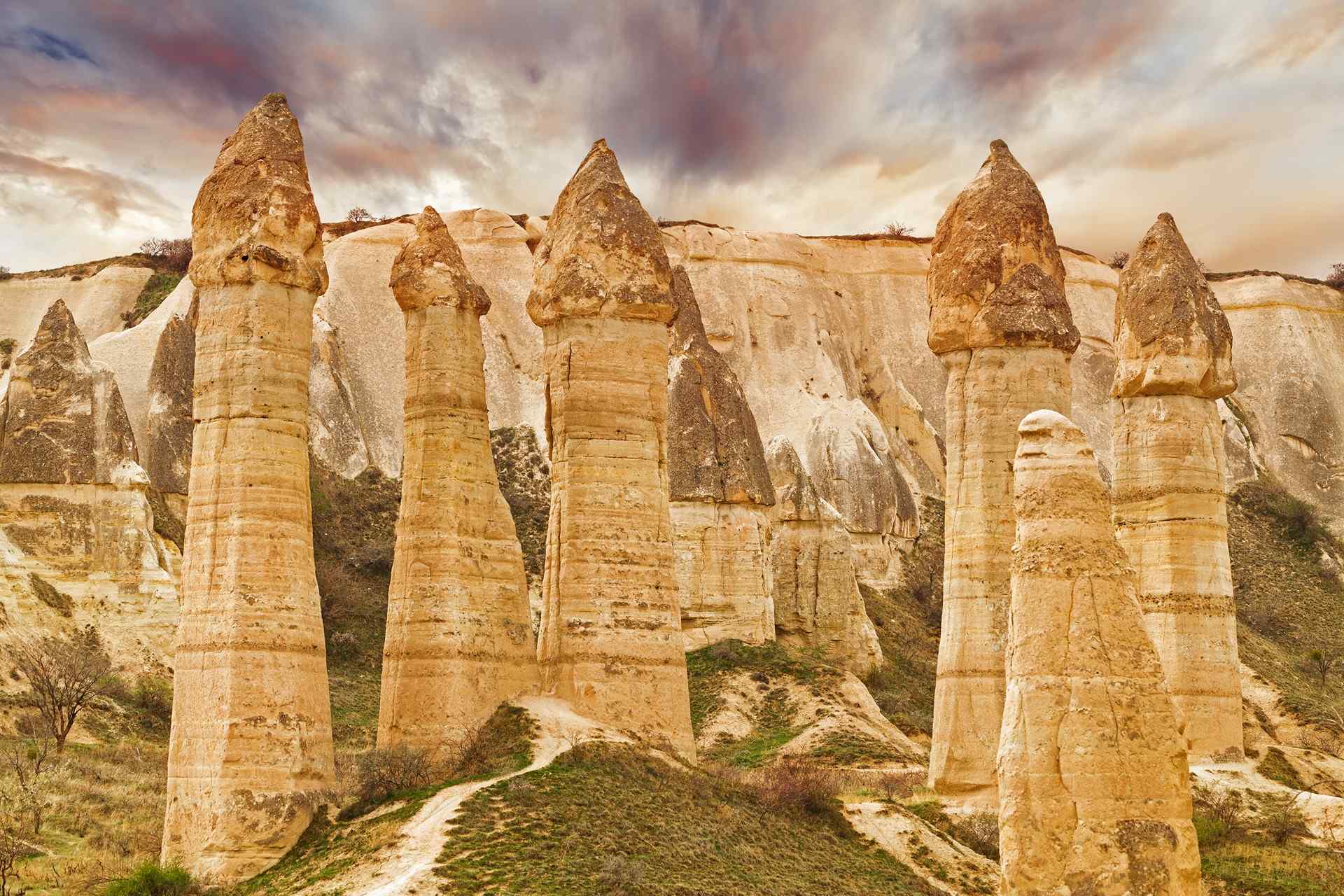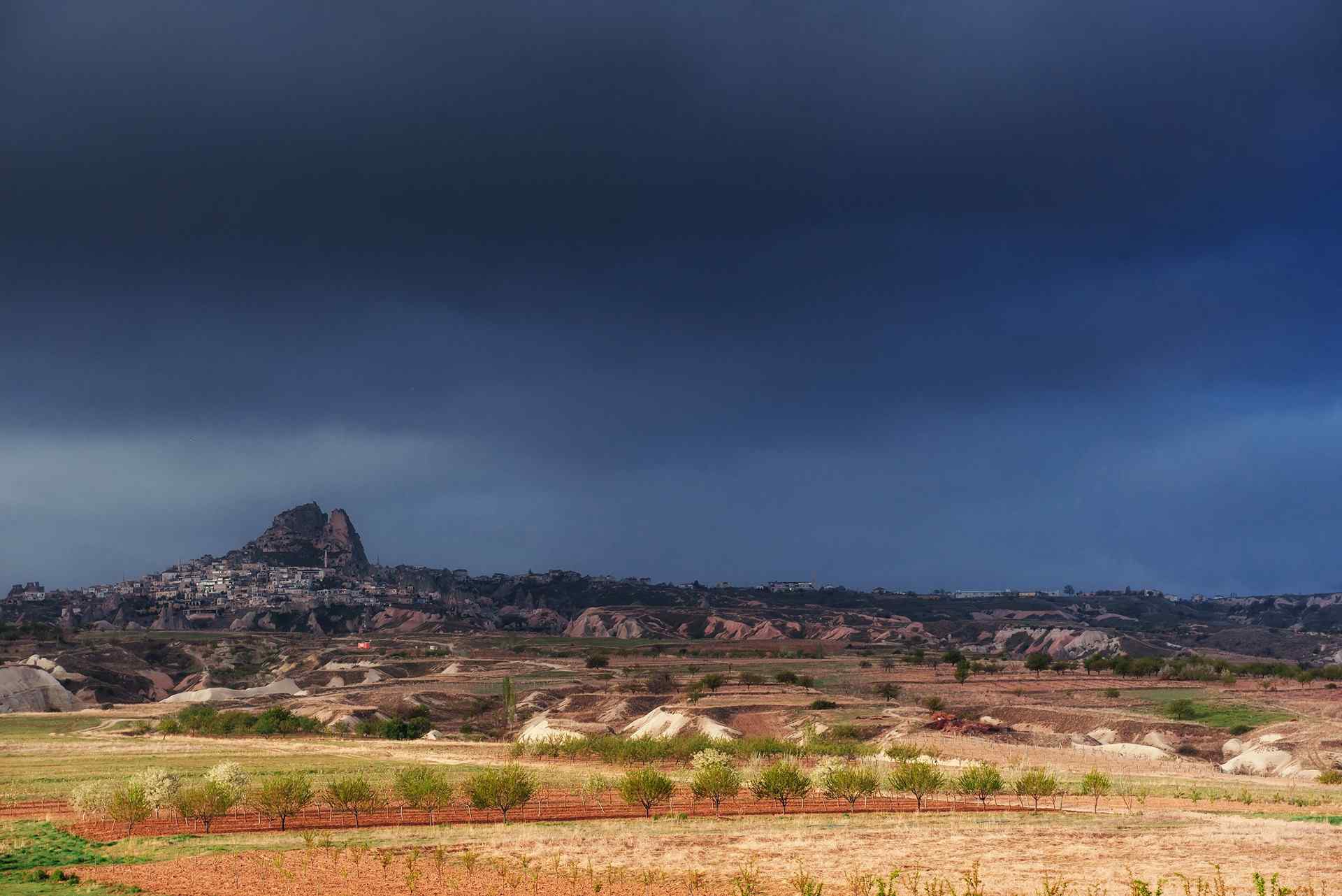
Cappadocia is famous for its otherworldly rock formations, fairy chimneys, and dusty lunar plains — but every spring, the volcanic valleys transform into something unexpected. The same tufa landscape that looks almost lifeless in midsummer hosts hundreds of plant species when winter rains saturate the soil. Slopes that were bare rock in October are blanketed with poppies and wild irises by May. This is one of the region's best-kept secrets: Cappadocia is as much a botanical destination as it is an archaeological one.
The key is the volcanic soil itself. Centuries of weathered tufa have created a mineral-rich, well-draining substrate that suits drought-adapted plants perfectly. Many species here — tulips, alliums, fritillaries — evolved across the Anatolian plateau, adapted to cold winters, dry summers, and volcanic rock. Spring in Cappadocia is not a long season, but it is an intense one.
Spring Bloom Calendar
The Cappadocian bloom unfolds in distinct waves, with each month bringing a new set of species to the fore.
- February – March: Early crocus and snowdrops appear on south-facing slopes, often while patches of snow remain at higher elevations.
- March – April: Anemone blanda — the blue windflower — sweeps across valley floors in violet-blue, particularly around Devrent and Soğanlı. Early poppies appear at field edges.
- April – May: Peak season. Scarlet poppy meadows, wild irises in purple and yellow, Fritillaria species with their bell-shaped heads, and aromatic sage species all flower simultaneously.
- May – June: Lavender-like Salvia species and dense thyme carpets dominate the rocky hillsides. The scent alone is worth a morning walk.
Where to Find the Best Wildflowers
Cappadocia's valleys each have a distinct microclimate and soil character, which means the flora varies meaningfully between them.
- Rose Valley (Gül Vadisi): Wild rose species among rock-cut churches and terraced slopes, with dense poppy displays in late April. The walking trail from Çavuşin is well-marked and accessible.
- Devrent Valley: The most undisturbed terrain in the region. Light foot traffic means pristine flora — ideal for fritillaries and anemones. No facilities; bring water.
- Soğanlı Valley: Perhaps the most underrated spring destination in Cappadocia. Working orchards alongside wildflower meadows, with excellent orchid and allium populations on surrounding slopes.
- Plateau above Göreme near Aktepe Hill: Elevated and exposed, this plateau catches early spring crocuses and offers sweeping views with wildflowers in the foreground.
- Around Avanos: The Kızılırmak riverside supports riverside sedges, reeds, and moisture-loving species not found in the drier valleys — a quieter, less-visited floral zone.
Iconic Plant Species to Look For
- Caper bush (Capparis spinosa): Visible on tufa walls and rocky outcrops throughout the region. Its white flowers appear in summer; the buds are harvested and pickled widely in Turkish cuisine.
- Armenian poppy (Papaver armena): Smaller and more intensely red than the common field poppy, native to the Anatolian plateau. Found on disturbed ground and agricultural edges.
- Fritillary (Fritillaria persica): Tall stems bearing strings of dark purple bell-shaped flowers. Blooms in April on rocky slopes with good drainage — one of the most dramatic regional wildflowers.
- Wild peony (Paeonia kesrouanensis): Large crimson blooms on steep rocky hillsides in late April and early May. Some peony species are protected under Turkish environmental law — observe, photograph, do not pick.
- Wild alliums: Multiple Allium species carpet valley floors in spring with spherical purple flower heads on long stems. Strongly scented and unmistakable.
- Salvia fruticosa: The dominant aromatic shrub on sun-baked hillsides, producing pale lilac flowers and grey-green leaves — the source of the herbal scent that fills the valleys on warm afternoons.
Flora and Fairy Chimney Ecology
One underappreciated ecological detail is the role of the historic dovecotes carved into the cliff faces. Pigeon droppings at the base of these niches act as natural fertiliser, creating nutrient-rich patches that support denser plant growth than the surrounding bare rock.
One underappreciated ecological detail is the role of the historic dovecotes carved into the cliff faces. Pigeon droppings accumulating at the base of these niches act as natural fertiliser, creating nutrient-rich patches that support denser plant growth than the surrounding bare rock. The intersection of human agricultural history and natural ecology is most visible in Güvercinlik (Pigeon) Valley.
Photography of Cappadocian Wildflowers
- Macro lens for fritillaries and anemones: These smaller, intricate flowers reward close-up work. Early morning, when dew clings to petals, produces dramatic results.
- Wide angle for poppy meadows: A wide-angle composition with a poppy-covered foreground and balloons overhead is the defining Cappadocia spring image. The plateau above Göreme is the best location.
- Morning light: Flowers are freshest in the first two hours after sunrise — which also coincides with balloon launch time. Two reasons to be up early.
- Do not trample: Some species grow in small, isolated patches. Stay on established paths and approach rare plants carefully.
- Best window: The last week of April to the first week of May typically sees the widest diversity simultaneously in bloom.
Guided Nature Walks vs. Self-Guided
Most of Cappadocia's best wildflower locations are accessible without a guide, though the experience is richer when you can identify what you are looking at.
- Devrent Valley — fully self-guided: No entry fee, no facilities, no crowds. Open terrain makes navigation straightforward.
- Ihlara Valley — official marked trail: The gorge trail follows the river for several kilometres through one of the region's most verdant wildflower corridors. Entry fee applies; river flora here is distinct from the drier valleys.
- Rose Valley trail — well-marked hiking path: Connects Çavuşin and Ortahisar through the valley. Manageable in half a day, with enough variety for botanists and casual walkers alike.
- Taxi to trailhead + walk back: Take a taxi to the far end of a valley in the early morning when light is best and air is cool, then walk back at your own pace. Reach the best wildflower valleys by taxi in the early morning — use the Cappadocia taxi price calculator.
Frequently Asked Questions
When is the best month for wildflowers in Cappadocia?
Late April to early May is the peak period, when the widest variety of species bloom simultaneously — poppies, wild irises, fritillaries, anemones, and sage. For early species like crocus and snowdrops, visit in February or March. For aromatic hillside shrubs and thyme carpets, May through early June is ideal.
Are there any protected plant species in Cappadocia?
Yes. Some wildflower species found in the Cappadocia region — including certain fritillaries and wild peonies — are protected under Turkish environmental law. Picking, uprooting, or disturbing these plants is prohibited. Always observe and photograph without touching, and stay on marked trails where possible.
Can you pick wildflowers in Cappadocia?
You should not pick wildflowers in Cappadocia. Some species are legally protected, and even common species are best left for others to enjoy and for the plants to seed for the following year. Responsible enjoyment means taking only photographs.