Turkey's most famous Byzantine rock churches — the Dark Church, the Snake Church, the Buckle Church in Göreme Open Air Museum — draw queues of visitors every morning. Tour buses pull in before 9am. Audio guides crackle. And yet, just fifteen kilometres away in a quiet hollow south of Ürgüp, Cemil's Great Church (Büyük Kilise) stands largely in silence. Most days, if you make the effort to reach it, you will stand alone in front of frescoes that are nearly a thousand years old. No ticket line. No crowd noise. Just carved stone columns, dim natural light, and the faces of Byzantine saints looking down from the walls. For travellers who want that — the genuine hush of an ancient place — Cemil Church is one of the most rewarding experiences Cappadocia offers.
Cemil Village: A Forgotten Corner of Cappadocia
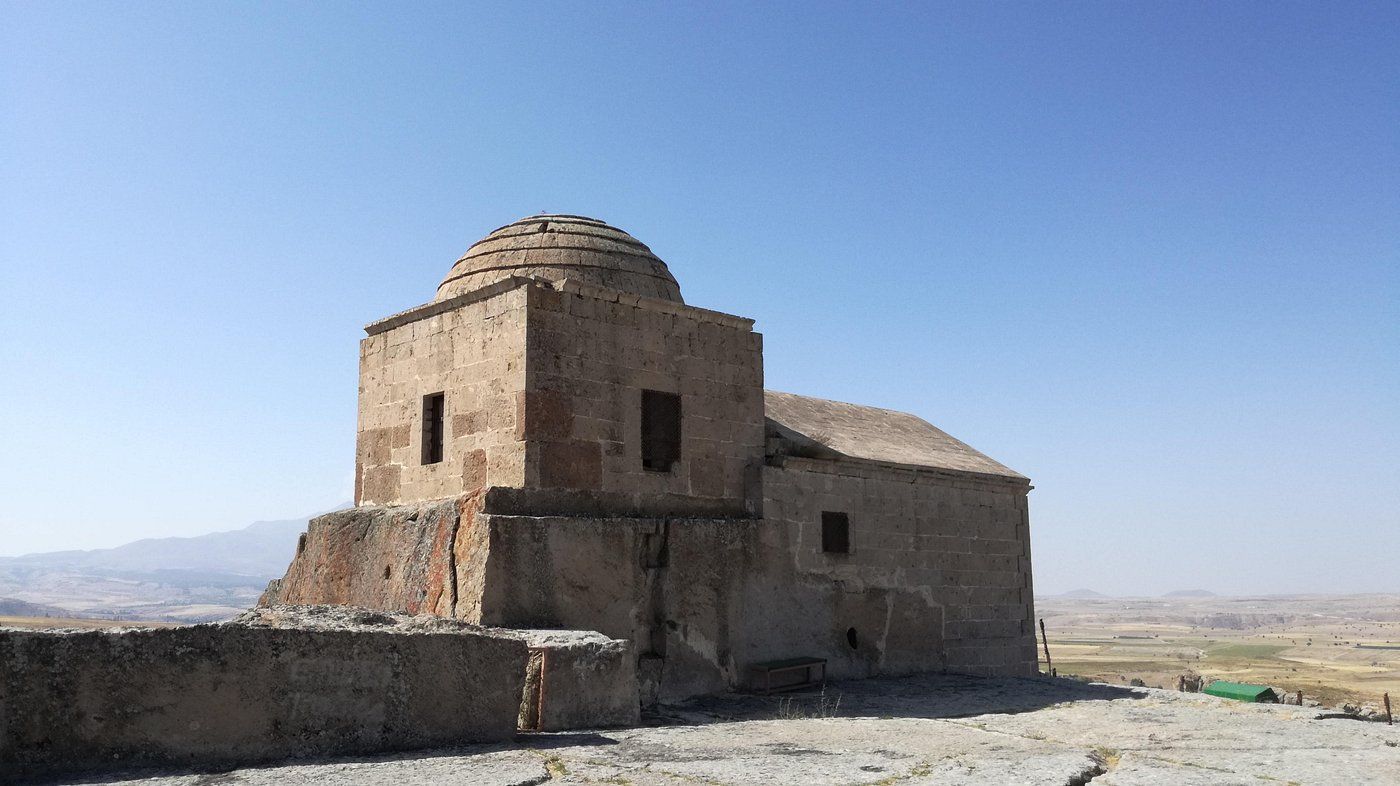
Cemil sits roughly ten kilometres south of Ürgüp, tucked into the undulating plateau between the tourist corridor and the Soğanlı Valley. It is a small village today, but its history is far larger than its current population suggests. For centuries, Cemil was home to a Greek-Christian community — Rum (Anatolian Greek) Orthodox families who built stone houses, churches, and a way of life that persisted here for generations. The name Cemil is thought by some scholars to derive from the Arabic root "cemal," meaning beauty — a fitting name for a village ringed by golden volcanic stone.
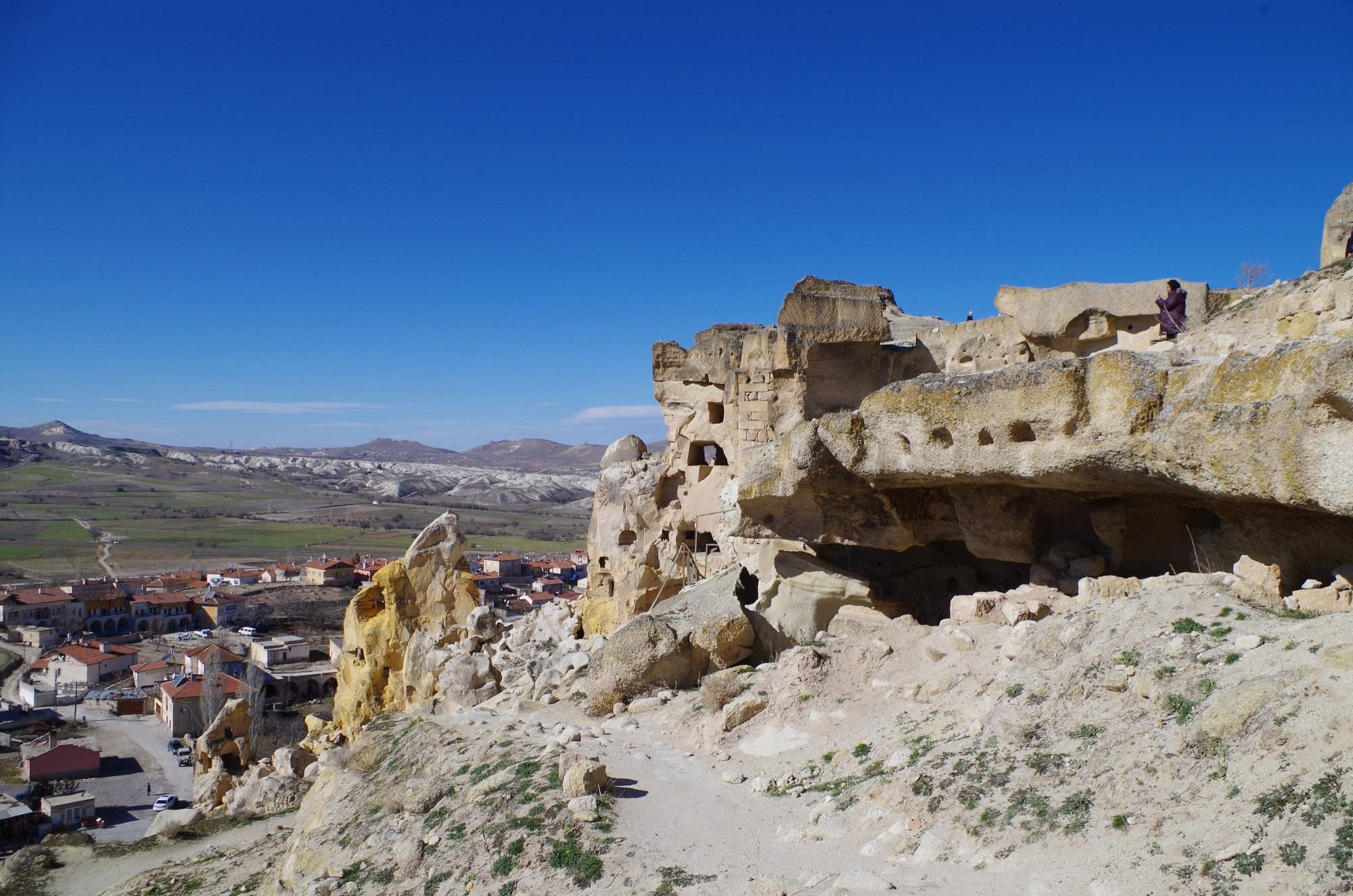
In 1923, the population exchange between Greece and Turkey ended that chapter. The Greek Orthodox families of Cemil, like those of neighbouring Mustafapaşa and dozens of other Cappadocian villages, left for Greece. Their houses gradually emptied; their churches fell into varying states of decay. Walking through Cemil today, you can still read the architectural legacy of that community in the carved stone façades, the abandoned courtyards, and the rock-cut sanctuaries that remain on the hillside above the village.
The Great Church: Architecture Carved from the Rock
The Büyük Kilise — the Great Church — earns its name. By the standards of Cappadocia's rock-cut architecture, this is a large building. The interior follows a three-nave basilica plan, with the central nave separated from the side aisles by carved columns and arches hewn directly from the volcanic tufa. Standing inside, you immediately sense the ambition of the builders: the ceiling height, the proportional nave width, and the deliberate architectural grammar all point to a congregation that wanted something monumental.
Rock-cut architecture in Cappadocia ranges from simple hermit cells with barely enough room to kneel, to sophisticated halls with multiple apses and barrel-vaulted ceilings. Cemil's Great Church belongs firmly in the latter category. The carved columns — sculpted rather than built, emerging from the living rock — create a sense of ordered grandeur that is rare even among the region's notable churches. Natural light enters through openings in the façade, pooling on the stone floor and shifting through the day.
The Frescoes: A Byzantine Iconographic Programme
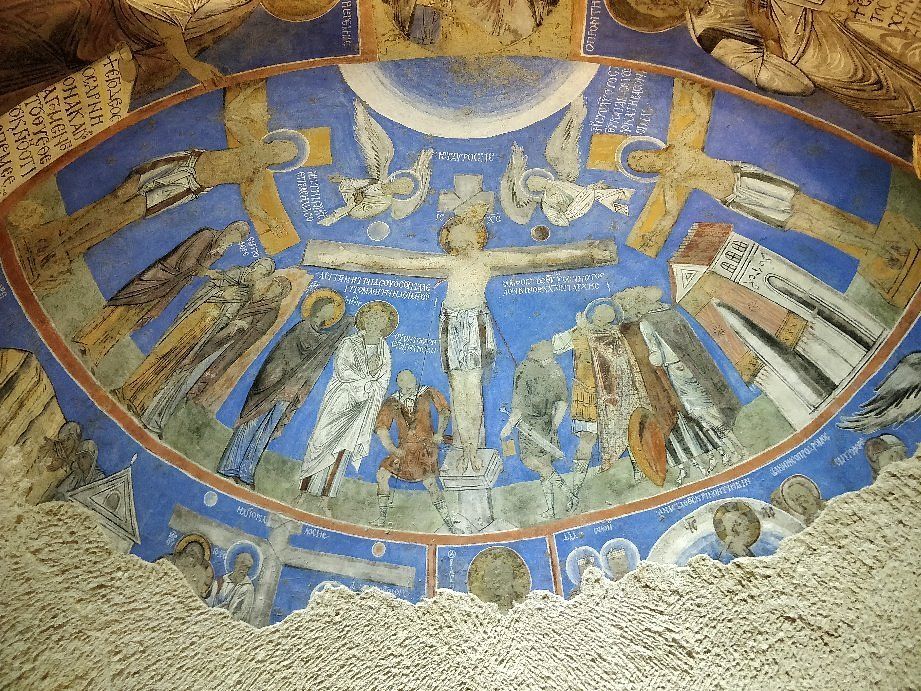
The interior surfaces of Cemil Church were once covered with a full cycle of Byzantine frescoes, dating to the 10th and 11th centuries — the high medieval period of Cappadocian religious art. The programme follows the conventions of Byzantine iconography: scenes from the life of Christ, episodes from the life of the Virgin Mary, and the Deësis — the formal image of Christ enthroned in majesty, flanked by the Virgin and St John the Baptist interceding on behalf of humanity. This composition appears repeatedly in Cappadocian churches of this era and carries a consistent theological weight: the drama of salvation expressed through pose, gesture, and colour.
Some of the frescoes have suffered over the centuries — from moisture, vandalism, and the simple passage of time. Faces have been damaged; sections of pigment have been lost. But enough remains to read the original programme and to feel the intention of the artists who worked here. The colours, where preserved, retain a warmth that reproductions rarely capture: deep ochres, faded crimsons, the specific blue-grey of Byzantine robes. Standing before them in the quiet of the church, without a guided tour narrating over your shoulder, you are left to look and to think.
Smaller Churches and Cave Dwellings Nearby
The Great Church is not the only rock-cut structure in Cemil. The village and its surrounding hillsides form a small cluster of Byzantine remains — one of several such micro-clusters that make the broader Cappadocian landscape so layered with discovery.
- Archangelos Church: A smaller rock church in the village area dedicated to the Archangels, with fragments of fresco decoration still visible
- Hermit cells: Simple cave chambers carved into the cliffs that served as individual monastic cells, each barely large enough for one person to sleep and pray
- Stone houses: Several of the old Greek Orthodox stone dwellings above the village lane give a sense of how integrated the rock-cut and built environments once were
Visitors with time to explore should allow an extra hour beyond the Great Church itself. The hillside above the main church rewards a slow walk — there are openings and carved features that are easy to miss from the road.
The Mustafapaşa Connection: A Natural Day-Trip Pairing
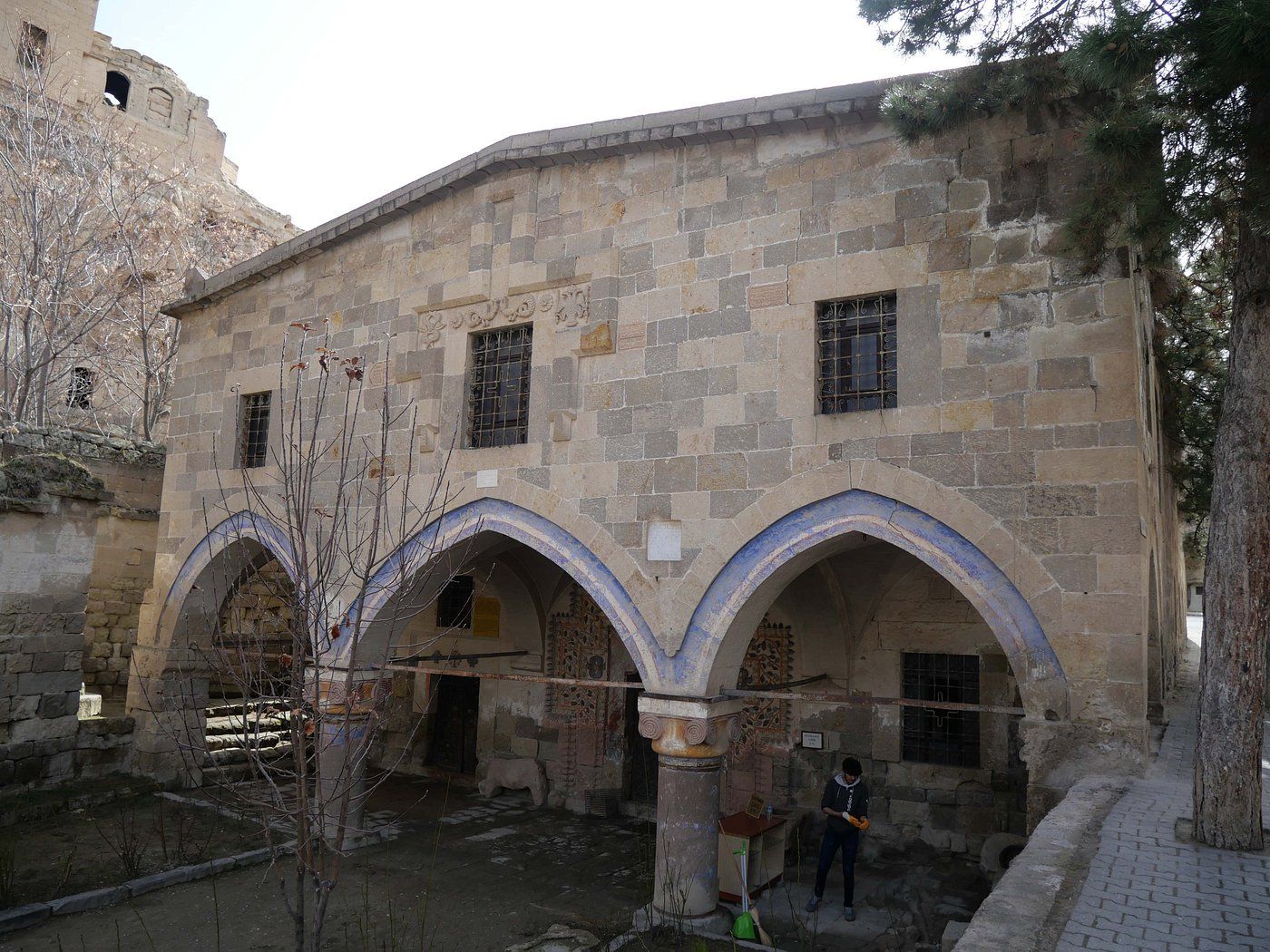
Cemil sits close to Mustafapaşa (formerly Sinasos), another village whose Greek Orthodox heritage is arguably the most intact of any in the region. Mustafapaşa's 19th-century stone mansions, its churches-turned-museums, and its well-preserved streetscape make it a destination in its own right. Combining the two makes for a full and richly layered day.
A practical itinerary: spend the morning in Mustafapaşa, exploring the Monastery of St. Basil and the old stone houses at a relaxed pace. Drive or take a short taxi ride to Cemil in the early afternoon, when the light inside the Great Church tends to be at its best. Then head north to Ürgüp for dinner — the town has a good selection of restaurants and is well-connected to Göreme and other main bases. This loop covers three distinct layers of Cappadocian history in a single day without rushing any of them.
How to Get to Cemil Church
Cemil is approximately fifteen minutes by car from Ürgüp, following the road south toward Soğanlı. From Göreme, the drive takes around thirty minutes. The road to the village is paved, though the final approach to the church area may require a short walk along an unpaved track depending on conditions.
There is no regular public transport to Cemil. The most practical option for most visitors is a private taxi from Ürgüp or Göreme. Reach Cemil Church by private taxi from Ürgüp or Göreme — use the Cappadocia taxi price calculator to check current fares before you set out. A half-day hire that combines Cemil with Mustafapaşa and possibly continues south to Soğanlı Valley is a particularly efficient use of a private vehicle.
Soğanlı Valley itself — with its own cluster of rock-cut churches including the Karabaş and Kubbeli churches — lies about thirty kilometres further south. If your schedule allows, extending the day to include Soğanlı turns the Cemil visit into a genuinely comprehensive survey of southern Cappadocia's Byzantine heritage.
Frequently Asked Questions
Is Cemil Church free to enter?
Access to the Cemil village area and the exterior of the rock churches is generally free. There is no formal ticketing system comparable to the Göreme Open Air Museum. However, conditions and local arrangements can change, so it is worth checking locally when you visit. Always treat the site with care — these are unguarded historical monuments.
What makes Cemil Church different from the churches in Göreme Open Air Museum?
The most significant difference is the experience itself. Göreme Open Air Museum is a managed, high-traffic site — excellent for context and accessibility, but busy. Cemil's Great Church is off the main tourist route, rarely crowded, and gives you unmediated time alone with the frescoes and the architecture. The church is also notable for its size: the three-nave basilica layout with carved columns is more architecturally ambitious than many better-known Cappadocian churches. If you have already visited Göreme and want something quieter and more exploratory, Cemil is the natural next step.
How do I find Cemil Church — it's not well signposted?
Cemil (Büyük Kilise) is not prominently marked on all maps and signage in the area is minimal. The most reliable approach is to navigate to the village of Cemil (search 'Cemil, Ürgüp' or 'Cemil Köyü') and then look for the rock-cut structures on the hillside above the village. A local taxi driver familiar with the area will know the site. Google Maps shows a pin for 'Büyük Kilise Cemil' that is accurate enough to get you to the right area. Arriving with a hired taxi rather than a rental car makes navigation simpler, as the driver can wait while you explore.