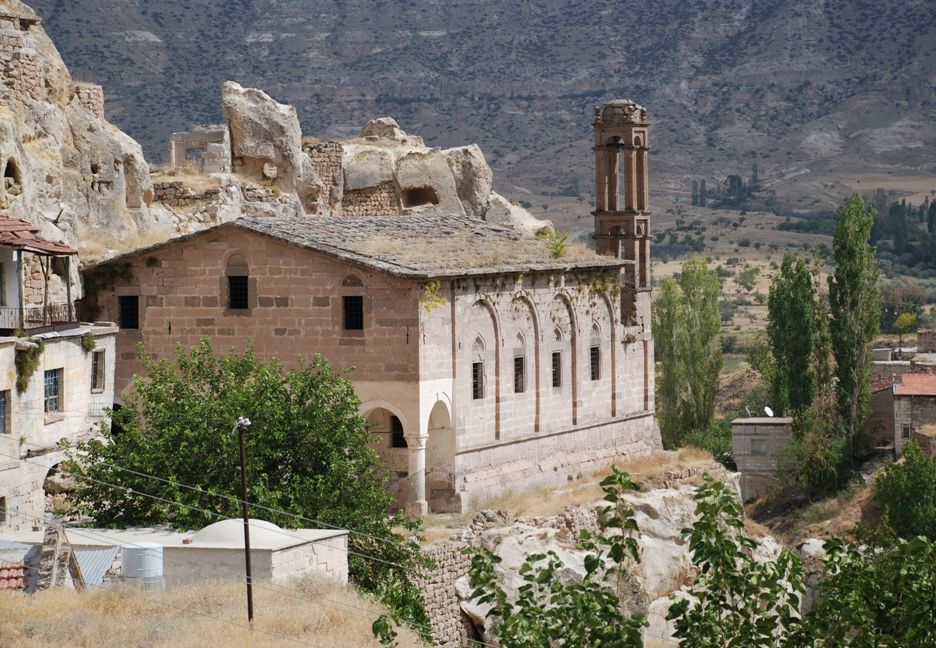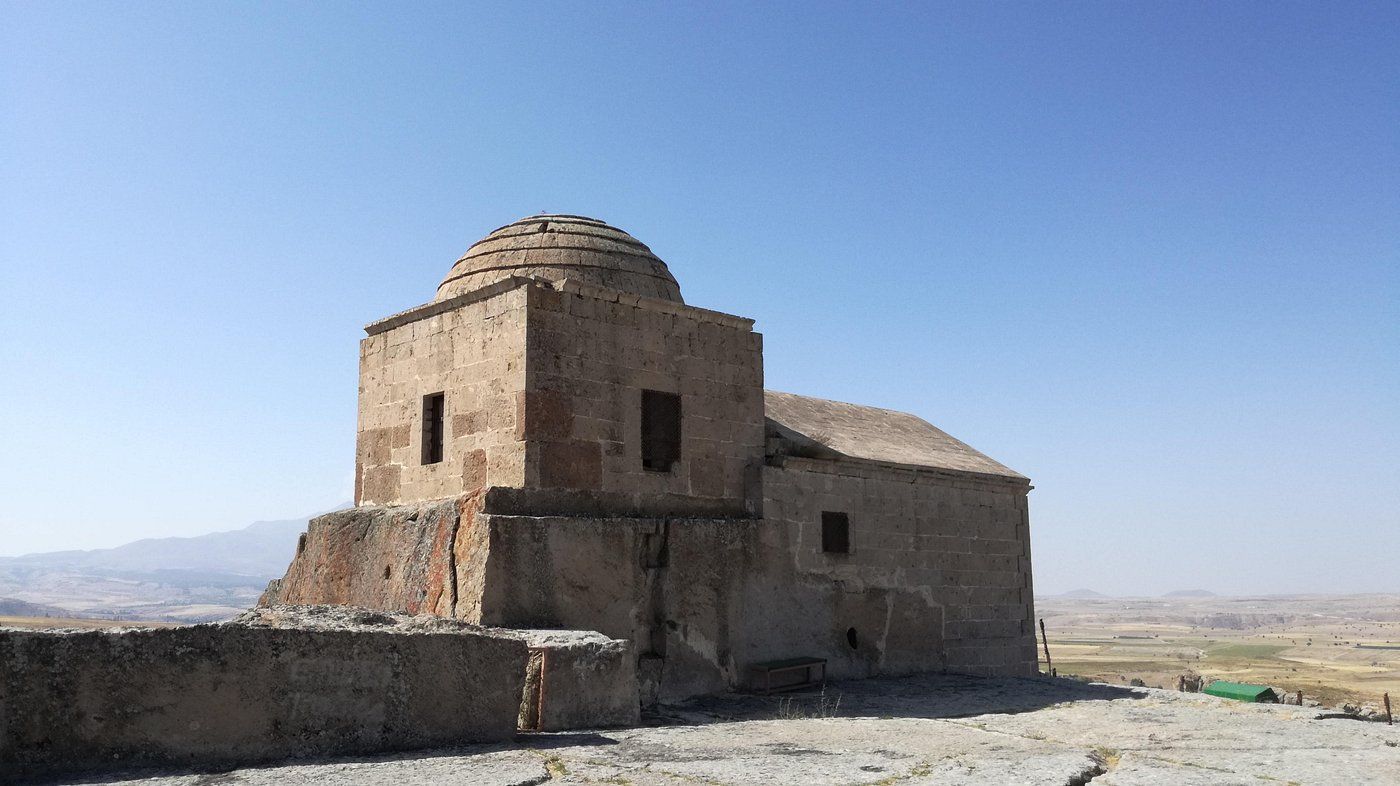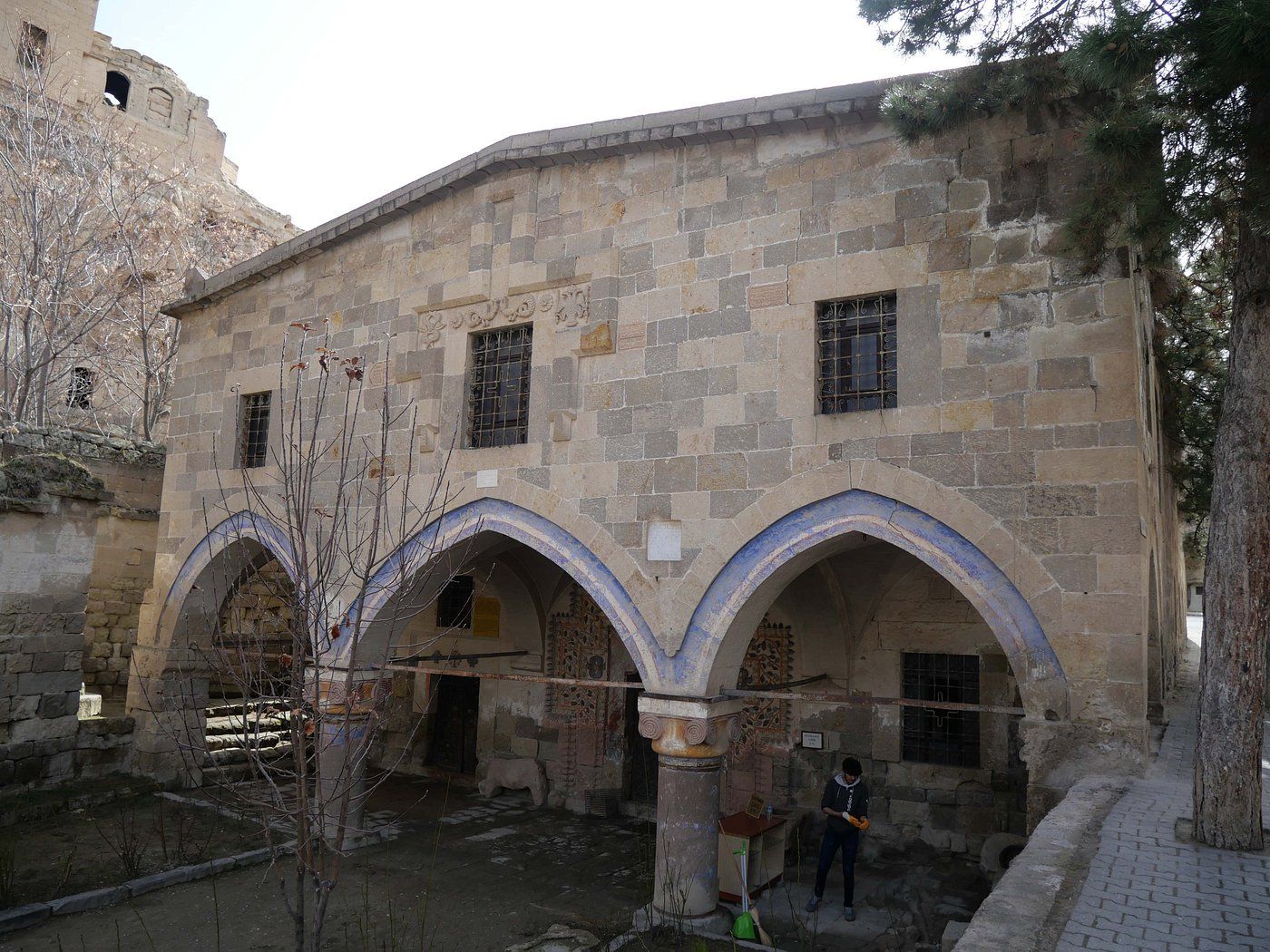
Perched high in the cliff face above the village of Çavuşin, the Church of St. John the Baptist is one of the most historically significant and yet underappreciated rock-cut churches in all of Cappadocia. While the crowds pour through the gates of the Göreme Open Air Museum three kilometres to the south, Çavuşin rewards the curious traveller with something rarer: a sense of genuine discovery, a whiff of antiquity undiluted by group chatter, and views across the valley that belong entirely to you.
About the Church of St. John the Baptist
Dating to the 5th century AD, the Church of St. John the Baptist is widely regarded as one of the oldest surviving rock-cut churches in Cappadocia — predating many of the more famous chapels in the Göreme valley by several centuries. Early Christian communities found the volcanic tuff of this region ideal for carving places of worship: soft enough to work with hand tools, yet sturdy enough to endure millennia of Anatolian weather.
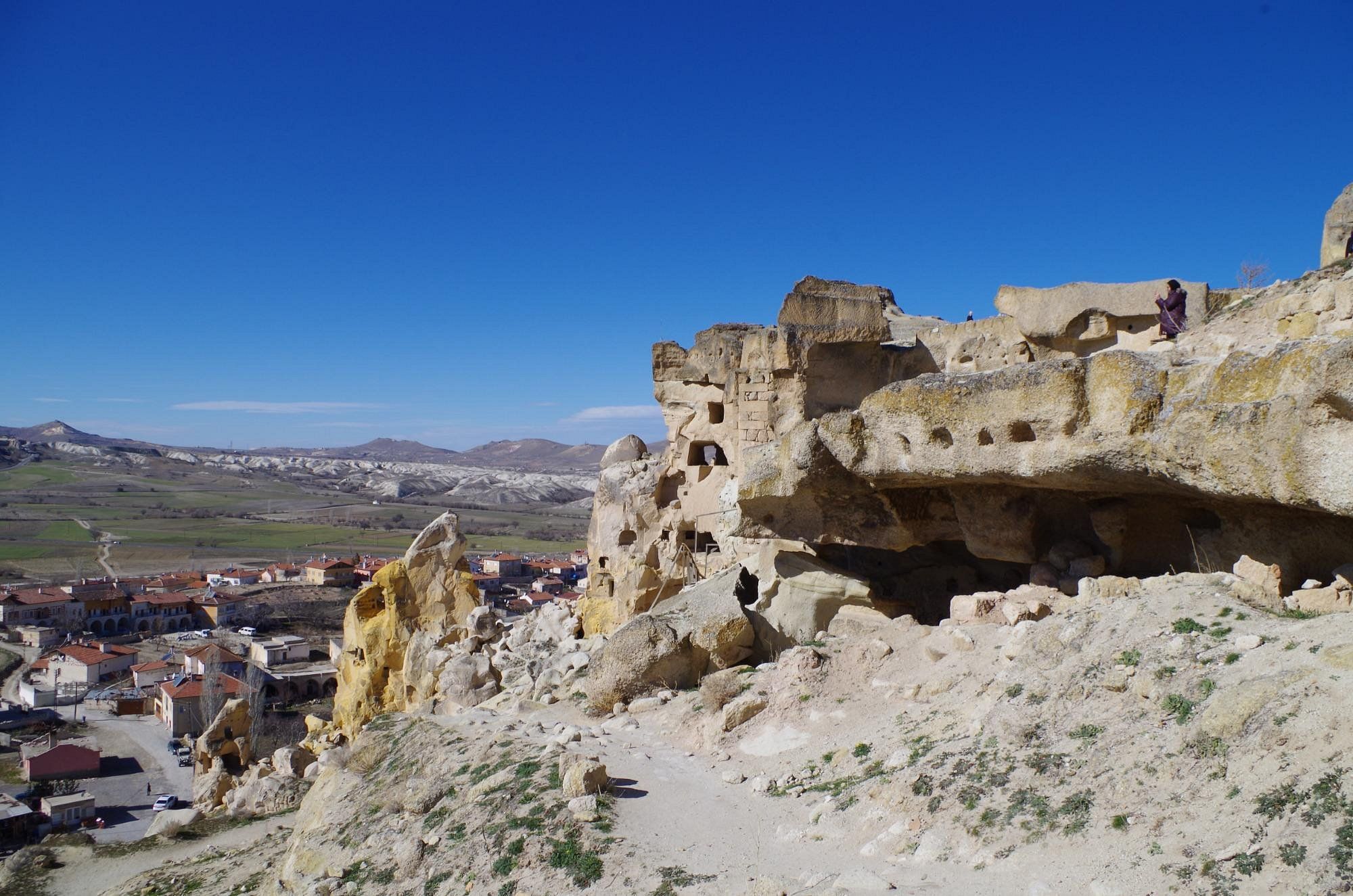
The church is carved directly into the sheer cliff face that rises above Çavuşin village, giving it a dramatic, almost fortress-like presence when viewed from the road below. The nave is notably large compared to most other rock churches in the region — a proportional generosity that hints at the community's prosperity and religious importance during the early Byzantine period.
Its historical prestige is well documented: Byzantine sources record that Emperor Constantine V visited Çavuşin in the 8th century, and Emperor Romanos III is also associated with the site. Whether as a stopping point on military campaigns or as a pilgrimage, the patronage of imperial figures lent the church considerable status in the ecclesiastical geography of Byzantine Anatolia.
The Frescoes
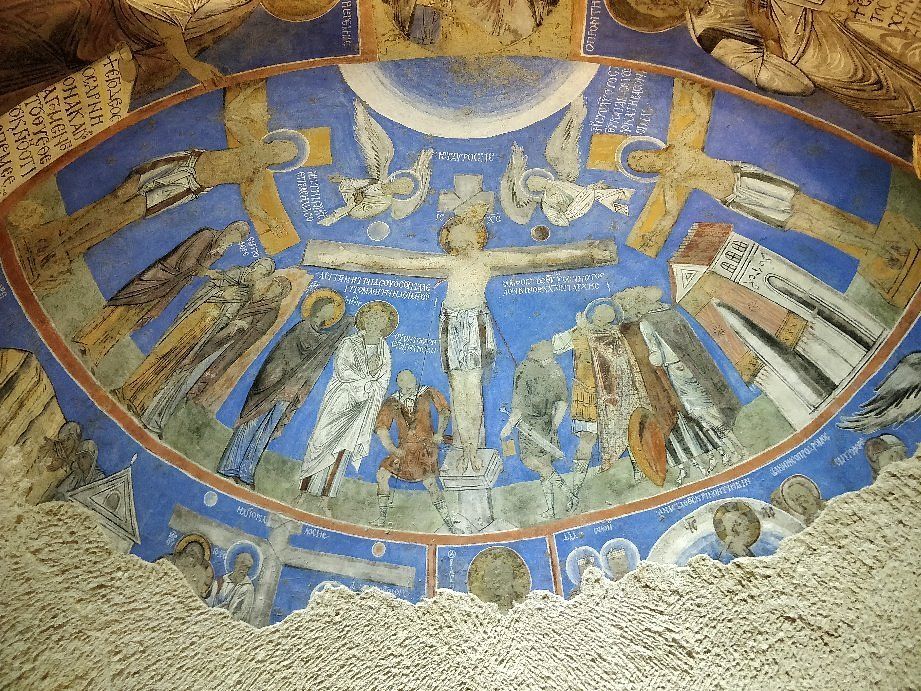
Step inside and allow your eyes to adjust to the dim interior. The walls and ceiling bear the remnants of 10th-century frescoes — some worn to ghostly outlines, others surprisingly vivid despite more than a thousand years of exposure. The pictorial programme follows the early Christian tradition: scenes from the life of St. John the Baptist, depictions of the Deësis (Christ flanked by the Virgin and St. John), and ranks of saints rendered in the hieratic style typical of middle Byzantine iconography.
Centuries of weather, the smoke from fires lit by later occupants, and deliberate damage during periods of iconoclasm have all taken their toll. Faces are sometimes scratched away; plaster has peeled in ragged patches. Yet this very incompleteness gives the frescoes an evocative power that pristine reproductions could never match. You are looking at the actual pigments laid down by actual hands more than a thousand years ago — and that fact, held quietly in the mind as you stand there, is quietly staggering.
Çavuşin Village: More Than Just the Church
The church sits within — and above — something even more unusual: an entire abandoned cave village. Çavuşin's residents carved their homes, storage rooms, and stables into the same soft tuff cliffs that house the church. For generations this was an ordinary Cappadocian community. Then, in the 1960s, a series of rockfalls and landslides made the cliff-top dwellings too dangerous to inhabit. The villagers relocated to newer buildings down on the flat, and the old quarter was simply left.
What remains is one of the most atmospheric ghost towns in Turkey. Doorways stand open to the wind. Carved niches still hold the shapes of objects long since removed. Ruined arches frame views of the valley below. Dovecote caves — their entrances painted with distinctive red-and-white geometric patterns to attract pigeons whose droppings were collected as fertiliser — honeycomb the upper cliffs. Explore with care: paths can be loose underfoot, and some areas of the cliff are unstable. Sensible footwear is non-negotiable.
How to Visit
The church is accessible for most of the day. There is a small entry ticket for the church itself; the surrounding village ruins can generally be explored freely. The climb to the church entrance involves a flight of stone steps cut into the cliff, which can be steep and uneven — wear shoes with a good grip, and take it slowly on the descent.
- Location: Çavuşin village, approximately 3 km north of Göreme on the Göreme–Avanos road
- Getting there on foot: A pleasant 40-minute walk from Göreme along the valley path, mostly flat
- By bicycle: The road is paved and lightly trafficked in the mornings — a very popular cycling route
- By dolmuş: Minibuses running between Göreme and Avanos stop in Çavuşin; check departure times locally
- By taxi: To reach Çavuşin by taxi, use the Cappadocia taxi price calculator for fares
- Footwear: Sturdy shoes essential — the cliff steps are steep and can be slippery
- Entry: Small admission fee for the church interior; village ruins generally free to explore
Combining with Other Nearby Sites
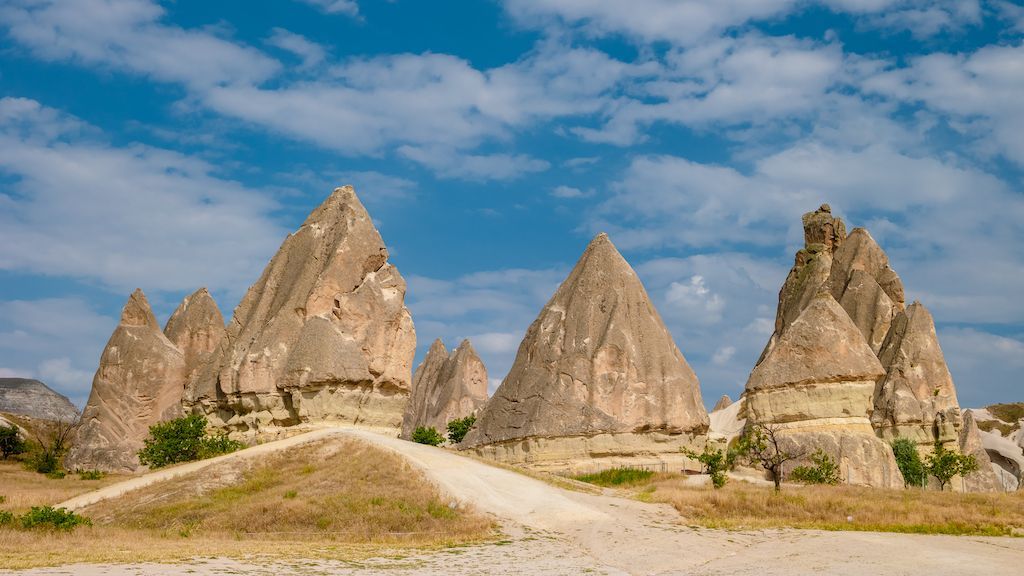
Çavuşin is ideally positioned at the intersection of several of Cappadocia's best hiking corridors. Pigeon Valley runs southwest from here towards Uçhisar, while Rose Valley extends to the southeast — both are outstanding walks through surreal volcanic landscapes studded with fairy chimneys and cave churches. Combine your church visit with a morning hike and you have a full and deeply satisfying day.
The Göreme Open Air Museum (entry ) is just 3 km away and makes an obvious pairing — many visitors do Göreme in the morning and Çavuşin in the afternoon, or vice versa. Seven kilometres further north along the same road lies Avanos, the region's pottery capital, where you can watch master potters working with the distinctive red clay of the Kızılırmak riverbank. Devrent Valley — also known as Imagination Valley for its fantastical rock formations — is a short drive east and requires no entry fee.
Practical Tips and Getting There
The walk from Göreme to Çavuşin takes around 40 minutes along a well-marked valley path — one of the most pleasant short walks in the region. Start early in summer to avoid the midday heat, or arrive in the late afternoon when the low-angle light turns the cliff faces a warm amber and the shadows deepen the carved doorways dramatically. Late afternoon is also the best time for photography: the west-facing cliffs catch the golden hour light beautifully, and the crowds — thin even at peak season — have usually dispersed.
Çavuşin is quiet even during the high season months of April to October. You are unlikely to encounter the organised visitor groups that pack the Göreme Open Air Museum. Bring water, particularly in summer. There is a small café in the village below the cliff, but no facilities on the cliff itself. The site is not well suited to visitors with limited mobility — the cliff steps are genuinely steep and there is no alternative access to the church. The village ruins at the lower levels are more accessible.
- Best light for photography: Late afternoon — west-facing cliffs glow golden
- Quietest times: Early morning and late afternoon, even in peak season
- Accessibility: Cliff steps are steep and uneven — not suitable for visitors with limited mobility
- What to bring: Water, sun protection, sturdy footwear, small change for the entry ticket
- Signal: Mobile coverage is generally good throughout the village and cliff area
Frequently Asked Questions
Is the Church of St. John the Baptist worth visiting if I've already been to the Göreme Open Air Museum?
Absolutely — and for different reasons. The Göreme Open Air Museum offers a curated, well-preserved collection of frescoed churches in a single compact site. Çavuşin is rawer, quieter, and more atmospheric: the abandoned village surrounding the church gives it a quality the museum cannot replicate. Visitors who make the short trip almost universally consider it one of the highlights of their time in Cappadocia.
How old is the Church of St. John the Baptist?
The church dates to the 5th century AD, making it one of the oldest rock-cut churches in Cappadocia. The frescoes inside are later — most date to the 10th century — and reflect the middle Byzantine artistic tradition. The site's association with Byzantine emperors Constantine V and Romanos III underlines its importance as an early Christian centre.
Is the church accessible for elderly visitors or those with limited mobility?
The church itself is reached by a steep flight of stone steps carved into the cliff face, which requires reasonable fitness and sure-footedness. There is no lift or alternative access. Elderly visitors or those with limited mobility may find the climb challenging or inadvisable. However, the lower sections of the abandoned village and the views from the base of the cliff are accessible without climbing, and still well worth the short journey from Göreme.