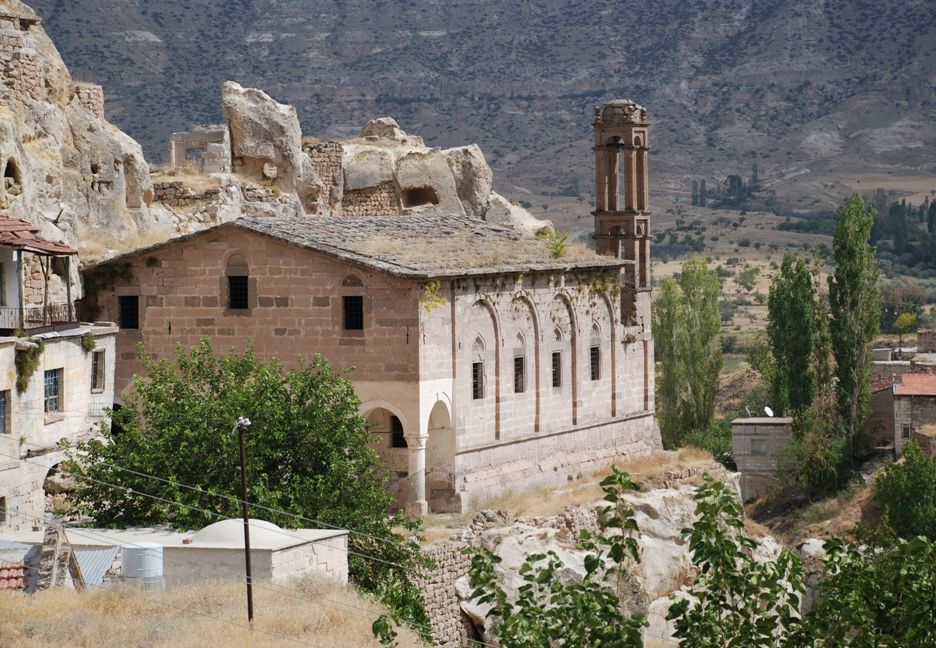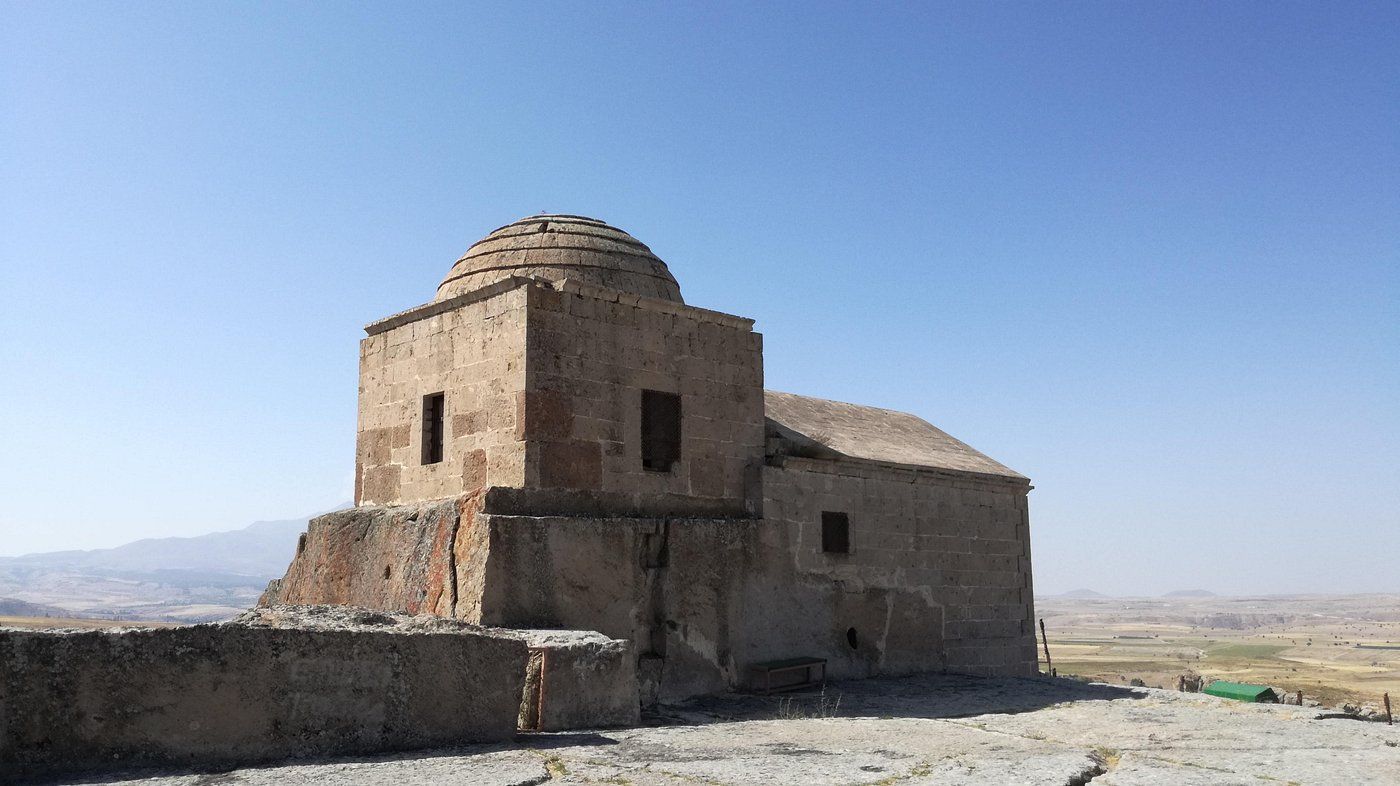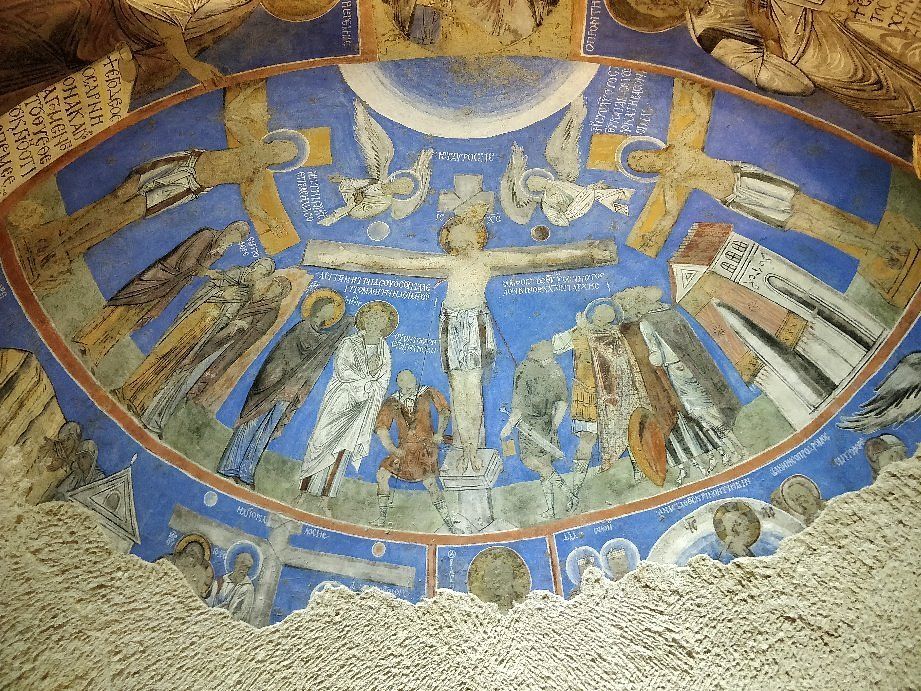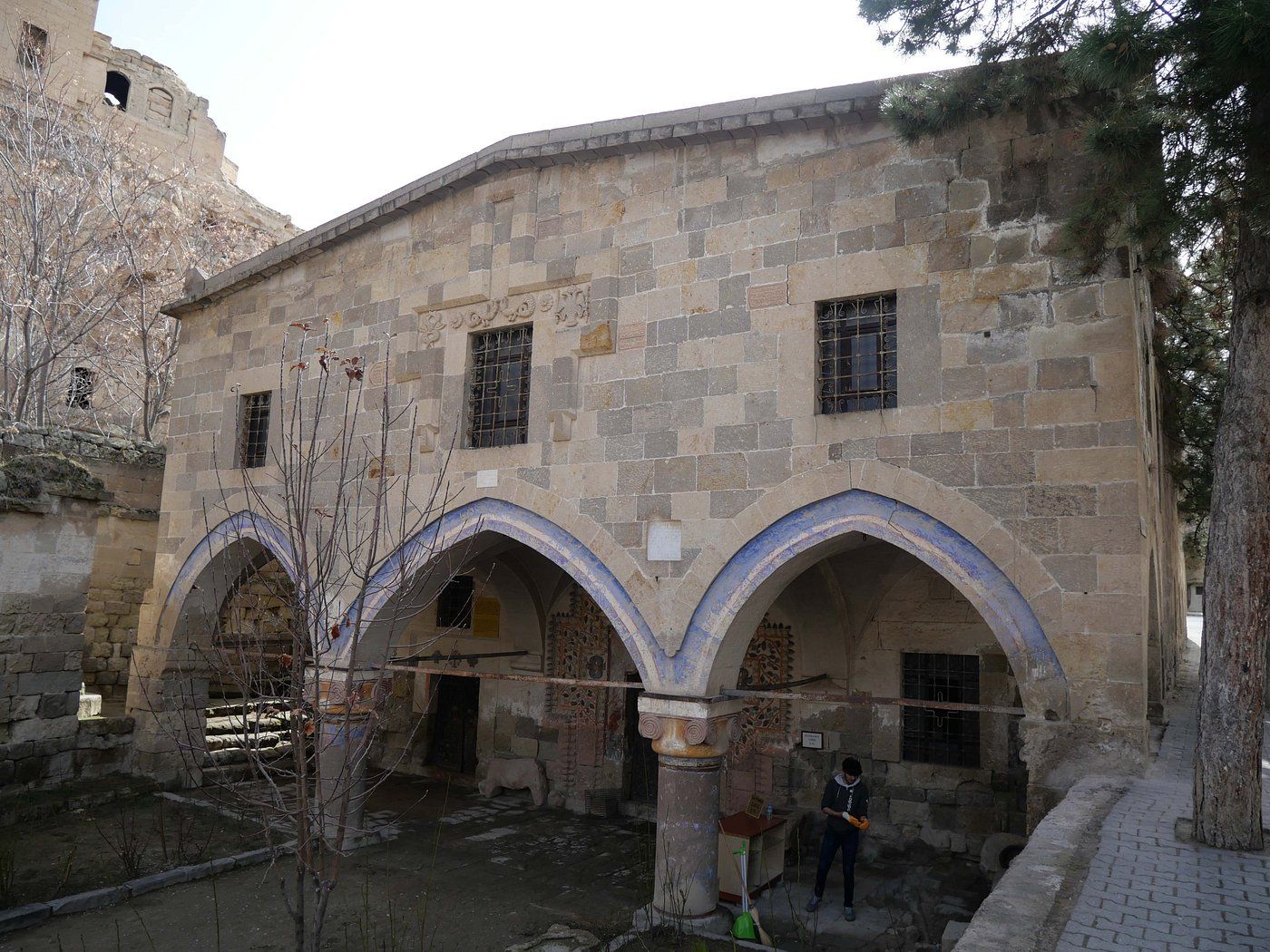
The Konstantin-Eleni Church (Saints Constantine and Helen) stands in the centre of Mustafapasa, the old Greek village once known as Sinasos, about 6 km south of Urgup in Cappadocia. It is one of the largest and most decorated 19th-century churches in the region, famous for the carved dragon, eagle and angel reliefs above its doorway and the eight-line Greek inscription that records its history. Today it is open to visitors and used for cultural events.

Where it is and how to get there
The church is in the heart of Mustafapasa village, easy to find on foot once you reach the central square. Mustafapasa sits roughly 6 km south of Urgup, about a 20-minute drive from Nevsehir and around 30 minutes from Goreme. There is no admission gate, so it pairs naturally with a wider walk around the village's Greek mansions and old streets.
- From Goreme: about 30 minutes by car via Urgup.
- From Nevsehir: about 20 minutes by car.
- From Urgup: roughly 10 minutes; a short local dolmus (minibus) also runs to Mustafapasa.
- By car or transfer: for door-to-door pricing from the airport or your hotel, check the live Cappadocia transfer price calculator rather than relying on a fixed quote.
The architecture
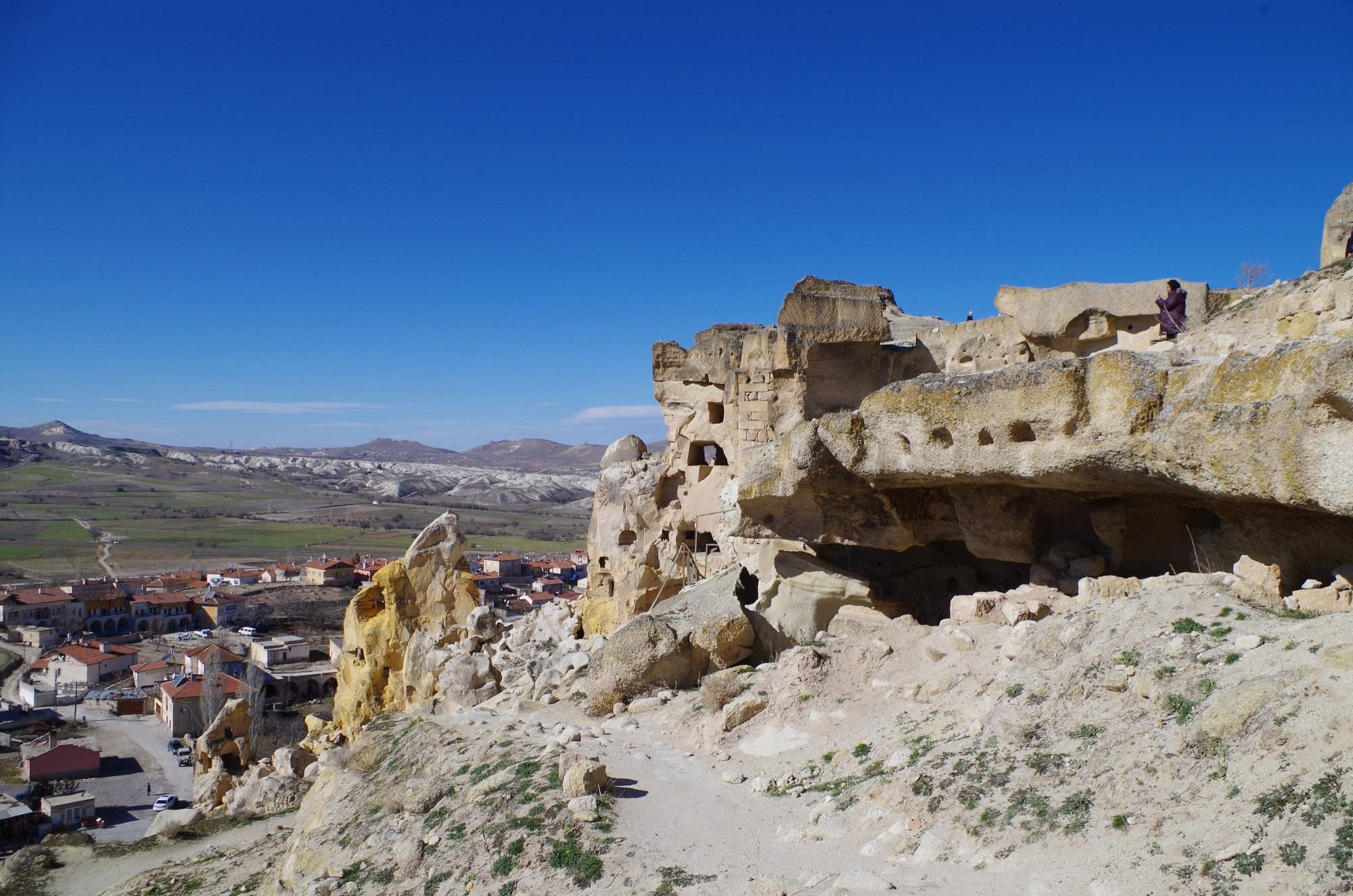
The Konstantin-Eleni Church is a basilica-plan building with a barrel vault, three naves and three apses, fronted by an open courtyard on its western side. Stone walls were raised using masonry and carving techniques, while wood and iron were used for the doors, ceiling and window elements. Part of the structure is cut into the rock, opening onto a low-ceilinged space where, according to local tradition, people once spent the night in prayer hoping for healing.
Above the entrance an eight-line inscription is carved on a marble slab in Greek letters, recording the church's history. It is framed by yellow and dark-blue plant and fruit motifs and geometric ornament. The upper facade has three windows, with carved reliefs around the central one: two dragons facing each other with raised heads, the angel Seraph on the left, and an eagle figure on the right. These animal reliefs are the church's signature detail and the reason it draws photographers and heritage travellers.
History
From the Ottoman conquest of Constantinople in 1453 until 1839, Christian communities were generally barred from building new churches. That changed with the Tanzimat reforms, which granted Christian citizens the freedom to build. According to the account of Serafim Rizos, the villagers of Sinasos mobilised to demolish the old church and raise a new one, and the building took its present form in the 1850s, funded by money the villagers collected themselves. The church was renovated in 1850, and Rizos's account matches the carved inscription.
Through its active years the church hosted Sunday services and feasts, school events, ceremonies welcoming the bishop's guests, and prayers for the sultan's health and the army's success. The Greek-Orthodox population left during the 1923 population exchange between Greece and Turkey, after which Sinasos was renamed Mustafapasa. The building survives as one of the village's defining landmarks.
Visiting tips
- Combine it with a stroll through Mustafapasa's old Greek mansions, the Sinasos heritage houses and the village square cafes.
- Morning light falls well on the carved facade, which is the best time to photograph the dragon and Seraph reliefs.
- Wear comfortable shoes: the village lanes are cobbled and uneven.
- Mustafapasa works well as a half-day stop alongside Urgup; see our Cappadocia day-trip combinations for ideas.
Frequently asked questions
Is there an entrance fee for the Konstantin-Eleni Church?
There is no ticketed gate at the church itself; it sits in the open village centre of Mustafapasa and is generally free to view. As it is also used for occasional cultural events, interior access can vary, so check locally on the day.
Why is it called the Konstantin-Eleni Church?
It is dedicated to Saints Constantine and Helen (Konstantin and Eleni in Greek), the emperor and his mother traditionally credited with promoting Christianity across the Byzantine world.
Is Mustafapasa worth visiting beyond the church?
Yes. Mustafapasa, old Sinasos, is one of Cappadocia's best-preserved Greek villages, with ornate 19th-century stone mansions and a quiet, lived-in feel that contrasts with the busier valleys. For more on the region's Christian sites, see our guide to Cappadocia history, churches and heritage, and pair the visit with the painted cave churches of the Goreme Open-Air Museum.