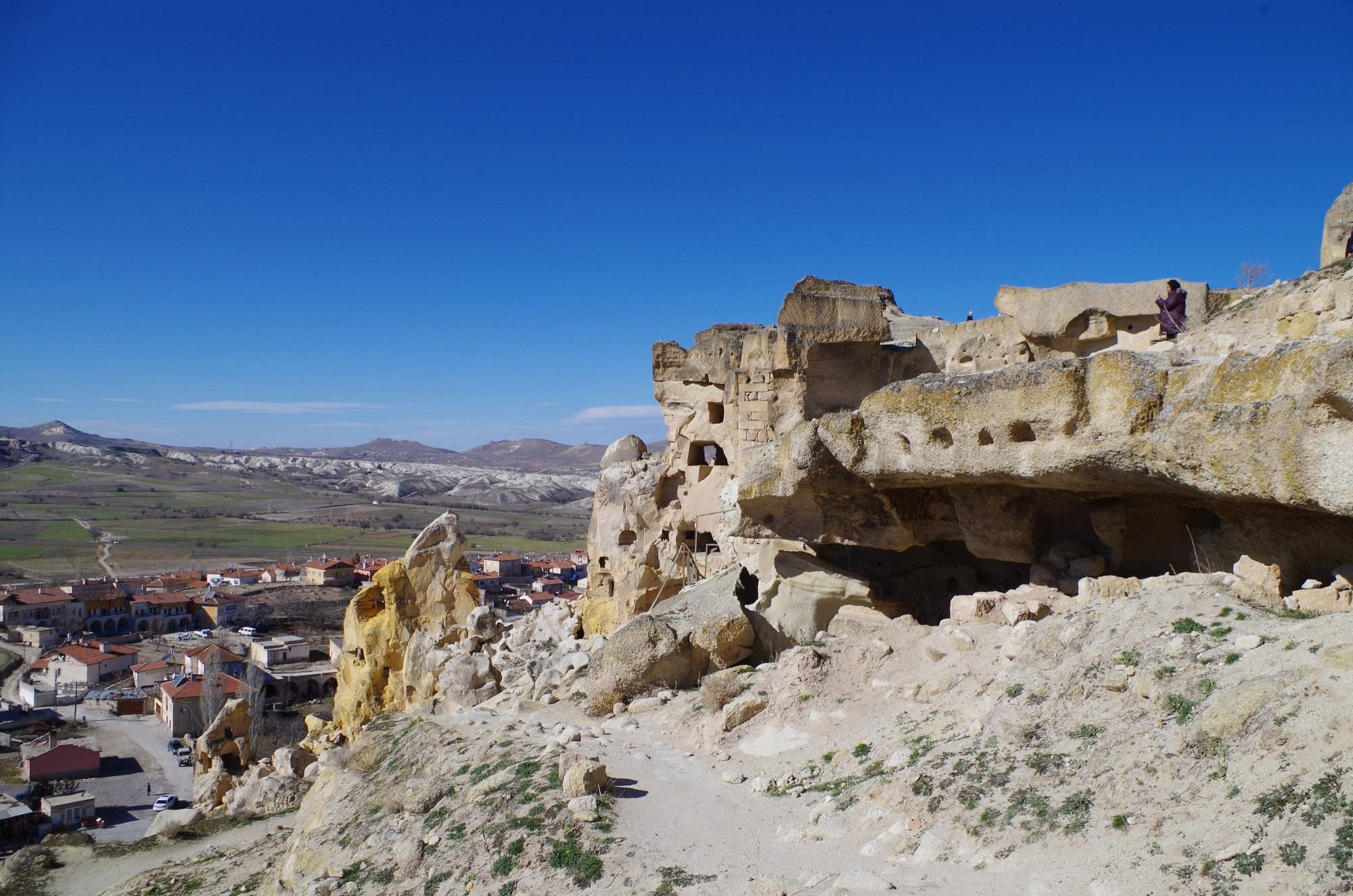
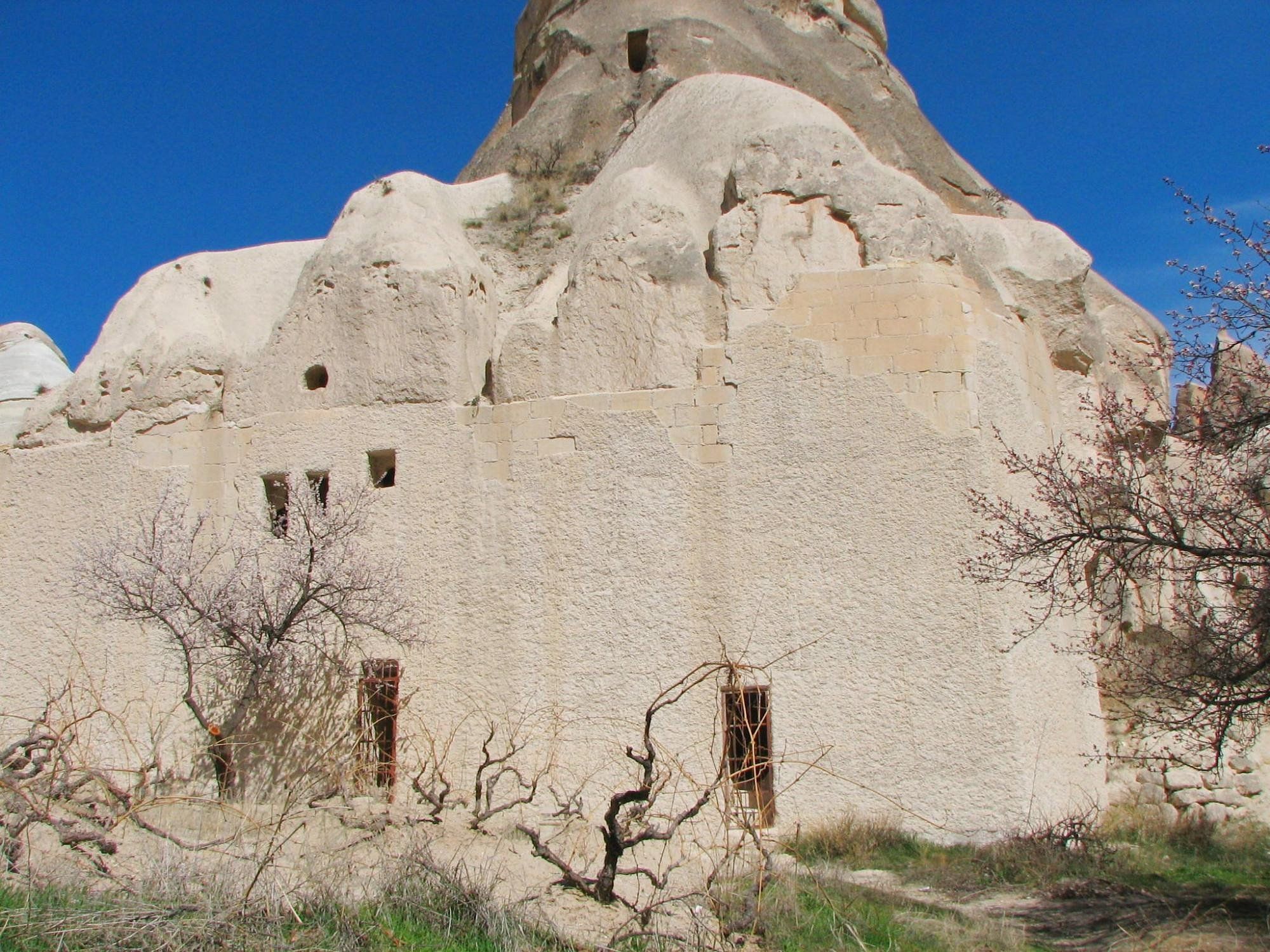
Tokalı Kilise — the Buckle Church — is not simply the largest rock-cut church in Cappadocia. It may be the most important surviving example of 10th-century Byzantine painting anywhere in the world. Carved into a single block of volcanic tufa on the edge of Göreme, it contains a complete New Testament fresco cycle whose deep blues and gilded nimbi have outlasted almost every painted church from the same era in Constantinople, Greece, and the Holy Land. Most visitors to the Göreme Open Air Museum walk straight past it without realising it exists. That is a serious mistake.
Why Tokalı Is Special
The church's importance comes down to four things: scale, completeness, colour, and ambition. The original 9th-century nave — the Old Church — was already a substantial space by the standards of rock-cut architecture. Then, sometime around 965 CE, a second and larger hall was carved directly behind it. This New Church nearly doubled the interior, adding a three-aisle layout with a soaring barrel vault and a full apse. Nothing quite like it had been attempted in tufa before.
What fills that barrel vault is the reason scholars travel here from across the world. A complete narrative cycle of the New Testament — the Infancy of Christ, his Miracles, the Passion, and the Resurrection — runs continuously across the ceiling in a register of images that has survived largely intact for over a thousand years. In most Byzantine churches of the same period, the painted surfaces were destroyed by iconoclasm, later warfare, or simple neglect. Here the tufa acted as insulation, keeping temperature and humidity stable enough to preserve pigments that have almost no parallel.
Chief among those pigments is the extraordinary blue. Derived from a lapis lazuli-based compound — effectively an ultramarine precursor — it was among the most expensive substances in the medieval world. Its lavish use across Tokalı's vaults signals that whoever commissioned this church had access to serious wealth and the finest artisans of the Byzantine capital.
The Old Church
The Old Church occupies the first, narrower nave you enter. Dating to the 9th century, its frescoes belong to an earlier stylistic moment — flatter compositions, less spatial ambition, figures arranged in frontal rows rather than dynamic groupings. You can see the Annunciation, the Nativity, the Presentation at the Temple, and the Crucifixion, all rendered in a palette dominated by ochre and terracotta rather than blue.
The Old Church is damaged in places, and the contrast with what lies beyond makes it easy to dismiss. Resist that impulse. The earlier frescoes are a living record of the artistic tradition the 10th-century painters both inherited and surpassed. Standing in the Old Church and then stepping into the New Church is one of those rare moments in a traveller's life when you can feel a leap in artistic ambition across time.
The New Church: The Masterpiece
The New Church, dated to around 965 CE, is where Tokalı earns its reputation. The three-aisle interior opens into a space that feels impossibly large given the modest hillside outside. The apse at the far end holds a commanding image of Christ Pantocrator — the ruler of all — his right hand raised in blessing, his left holding the Gospels. The gold of his nimbus catches whatever light enters from the narrow windows, and the deep blue of the surrounding vault frames him like a night sky over Jerusalem.
The barrel vault above the central nave carries the narrative cycle. Reading from west to east, the scenes begin with the Annunciation and the Nativity and work their way through the active ministry of Christ — healings, teachings, confrontations — before arriving at the Passion sequence and, finally, the Resurrection. The compositional dynamism is striking: figures lean, gesture, turn toward one another across the curved surface of the ceiling in a way that anticipates the spatial thinking of much later European painting.
The blue pigment intensifies as your eyes adjust to the interior. It appears in background fields, in garments, in architectural details — always vivid, never faded to the grey that lapis compounds often become with age. The gold used for nimbi and highlights is similarly well preserved. Together, they create an interior that feels less like a rock shelter and more like a jewelled reliquary.
Key Scenes to Look For
The cycle contains dozens of individual scenes. These are the ones worth pausing over:
- The Nativity: Unusually, the Byzantine Nativity includes a bathing scene — midwives washing the infant Christ — alongside the manger. The inclusion of this domestic detail, drawn from the Protevangelium of James, is characteristic of Eastern Christian iconography and absent from Western versions.
- The Raising of Lazarus: Lazarus emerges from the cave tomb still wrapped in his burial shroud, his face partially visible. The bystanders hold cloths to their faces — a detail acknowledging that Lazarus, dead four days, would have been decomposing. It is grimly realistic for a sacred image.
- The Entry into Jerusalem: Palm branches wave from every direction, and the crowd presses in on Christ from both sides. Children climb the trees. The sense of a city in movement is vivid.
- The Transfiguration: Christ appears in blazing white on Mount Tabor, flanked by Moses and Elijah, while the disciples below shield their eyes from the light. The white here is lime white — almost the only place in the New Church where blue gives way to a blinding pallor.
- The Anastasis (Resurrection icon): The Eastern Church does not depict the moment of the empty tomb. Instead, it shows Christ in Hades, shattering the gates of death underfoot, reaching down to pull Adam and Eve up by their wrists. This is the image of salvation as rescue, and Tokalı's version is among the most dynamic surviving examples.
The Architecture Explained
The entire complex was carved from a single mass of tufa — the soft, light volcanic rock that makes Cappadocian rock-cut architecture possible. Tufa is easy to carve with iron tools but hardens on exposure to air, making it structurally stable once the work is complete. The architects of Tokalı exploited this by cutting barrel vaults overhead — a form that distributes weight laterally through the rock — rather than the flat ceilings found in simpler chapels.
The name 'Tokalı' is debated. The most widely accepted explanation is that it derives from a metal clasp (toka) that once decorated the church door — now long gone. An alternative reading suggests the plan of the combined Old and New Churches, viewed from above, resembles a buckle in shape. Neither can be confirmed, but the clasp theory is the one you will find in most academic sources.
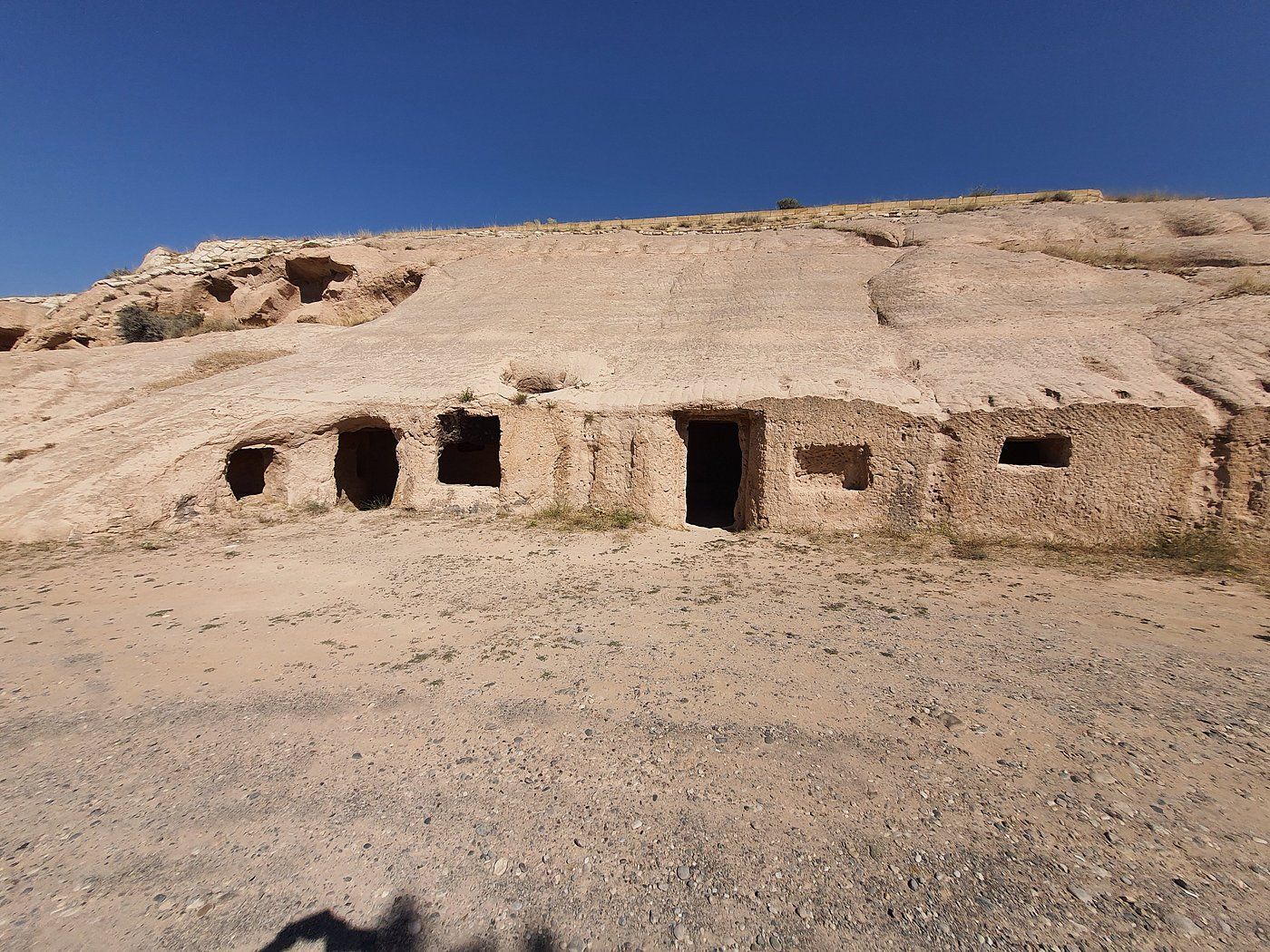
The internal dimensions are deceptive. The exterior, cut into the hillside slope, gives almost no hint of what lies inside. First-time visitors often pause at the threshold, surprised by the volume of space opening ahead of them. That element of concealment — the rock face revealing nothing of what it contains — is part of what makes the experience so arresting.
Visiting Tokalı Kilise
Tokalı Kilise sits just outside and slightly downhill from the main entrance of the Göreme Open Air Museum — easy to miss if you are heading straight for the ticket gate. The same ticket covers both: your entry fee gives you access to the Open Air Museum chapels and to Tokalı. There is no separate charge.
Opening hours follow those of the Open Air Museum, typically 8am to 7pm in summer and shorter in winter — check current hours before you go, as they shift seasonally. The single most important timing advice is to visit Tokalı first, before the Open Air Museum itself. The museum's main loop fills quickly after 10am; Tokalı, because it sits away from the main entrance, stays quieter for longer. Arrive at opening time, walk straight past the ticket gate to Tokalı, spend 30 to 45 minutes inside, and then join the museum loop.
Photography is generally permitted, but flash use may be restricted depending on current conservation rules — check the signage at the entrance to the church on the day of your visit. A guided visit adds enormous value here: the iconographic programme is complex, and a knowledgeable guide can decode the narrative logic of the cycle in a way that transforms the experience. Local guides can be arranged in Göreme village or at the museum.
Practical Tips
Tokalı is, without qualification, the single most important rock church to visit in Cappadocia. If your time is limited and you can only see one painted interior, this is it. These practical points will help you make the most of it:
- Arrive at 9am: The light in the New Church is best in the morning, and the crowds are thinnest. By 11am the site becomes genuinely busy in high season.
- Give it time: Budget at least 30 to 45 minutes inside Tokalı before you enter the main museum loop. Rushing through is a waste of the entry fee.
- Dress for a cool interior: The temperature inside the tufa is stable year-round — refreshing in summer but chilly if you are in light clothing.
- Bring a torch (flashlight): Some corners of the Old Church are poorly lit. A small phone light helps you see the earlier frescoes properly.
- Getting there: Tokalı is a 15-minute walk from central Göreme, or a short taxi ride from anywhere in the Cappadocia region. Get to Göreme Open Air Museum and Tokalı Kilise by taxi — use the Cappadocia taxi price calculator to check the fare from your hotel before you go.
Frequently Asked Questions
Is Tokalı Kilise inside the Göreme Open Air Museum?
No — Tokalı Kilise sits just outside and slightly downhill from the main entrance of the Göreme Open Air Museum, not on the museum's internal loop. However, it is covered by the same ticket (), so you do not need to pay separately. Walk past the ticket gate and follow the path downhill to find it.
What does 'Tokalı' mean?
Tokalı means 'buckle' or 'clasp' in Turkish. The most common explanation is that a metal clasp once decorated the church door — now long lost. Some scholars also suggest the combined floor plan of the Old and New Churches resembles a buckle shape when viewed from above, though neither interpretation can be confirmed with certainty.
How old are the Tokalı Kilise frescoes?
The frescoes span two distinct periods. The Old Church contains earlier paintings dating to the 9th century. The New Church — the larger, more spectacular section — was painted around 965 CE during the Macedonian Renaissance, a golden period of Byzantine art. This makes the best-preserved frescoes in Tokalı over 1,050 years old.