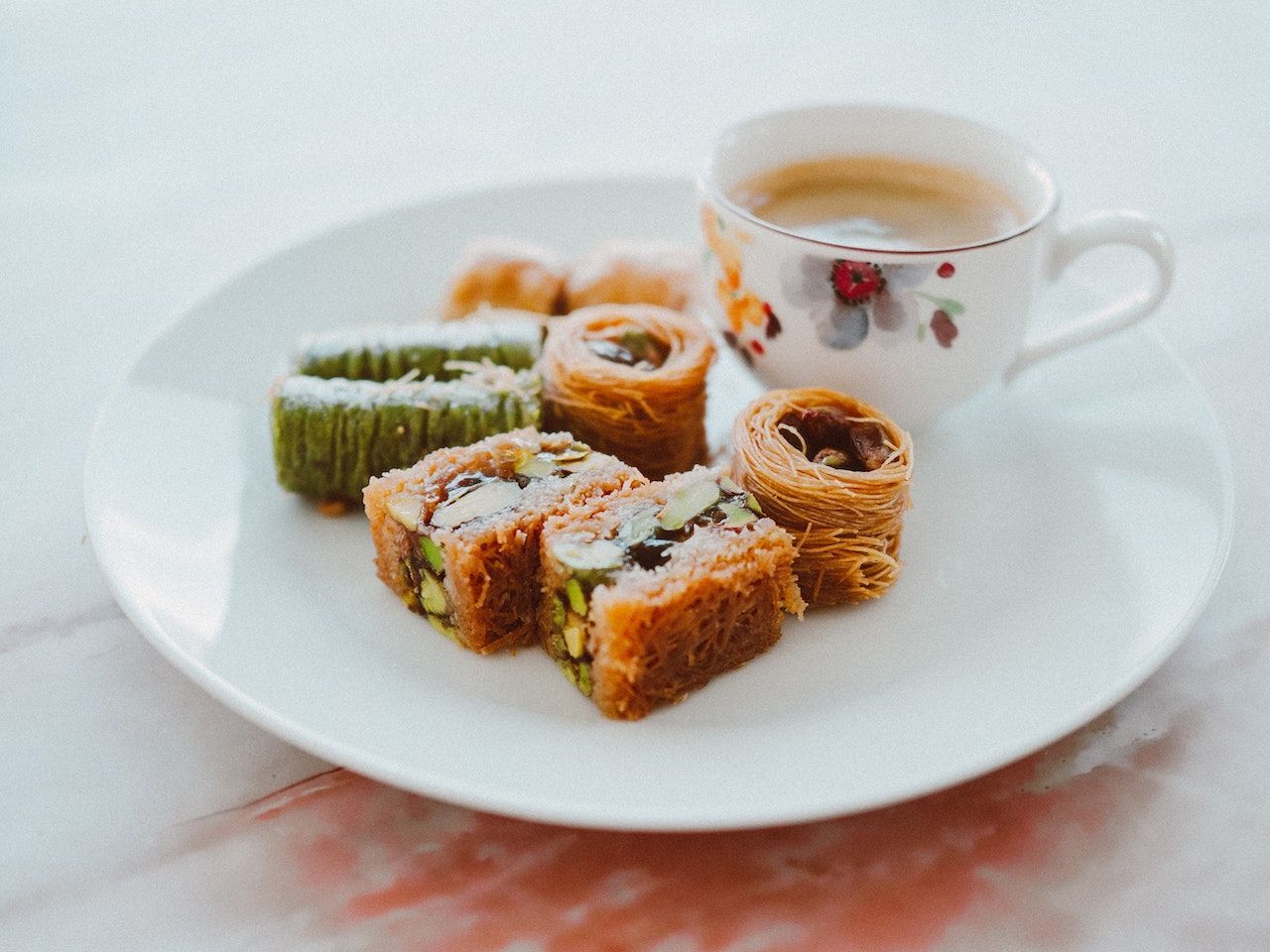
Turkey has one of the world's great dessert traditions, and it didn't happen by accident. Centuries of Ottoman palace kitchens, trade routes carrying pistachio from Gaziantep, pomegranate from the Aegean, rose water from Isparta, honey from mountain hives, and sesame from the southern plains — all of it converged into a sweet culture that is layered, nuanced, and utterly serious about itself. A visit to Cappadocia is, among many things, a chance to work through that tradition systematically. The region sits at a natural crossroads, and its patisseries, markets, and cafes reflect every major strand of Turkish confectionery. Consider this your field guide.
Baklava — Turkey's Defining Sweet
No other dessert carries the weight of Turkish identity quite like baklava. At its finest — and Gaziantep, the acknowledged capital of baklava craft, sets a formidable standard — it is a study in restraint as much as richness. Dozens of gossamer-thin filo sheets, separated by clarified butter, are layered around finely ground pistachios or walnuts, then baked until shatteringly crisp and drenched in a light sugar syrup scented with a touch of lemon. The result should be golden, not soggy; nutty and fragrant, not cloying with sweetness.
In Cappadocia you'll find baklava trays stacked in almost every pastry shop window, and quality varies. Look for freshly baked trays with a pale-green pistachio top — that vivid colour is your cue that the pistachios are good. If the baklava glistens with an almost translucent sheen and the filo layers are visible at the cut edge, you're in safe hands. Planning to take some home? Baklava travels well at room temperature for up to a week; ask the shop to pack it in a flat cardboard tray rather than a lidded box that traps moisture.
Kadayıf and Künefe
Kadayıf is what happens when shredded wheat is soaked in syrup until it becomes something altogether more interesting — chewy, honey-golden, with a nest of clotted cream (kaymak) pooled at its centre. It is gentle and soothing, the kind of dessert that rewards slow eating. But its hot-blooded sibling, künefe, is the one that tends to provoke real devotion.
Künefe is kadayıf taken to an extreme: the shredded pastry encases a layer of melted, mildly salty white cheese, pressed into a small pan and cooked until the outside crisps and the inside pulls apart in long, molten threads. It arrives at the table still sizzling, dusted with crushed pistachio, and must be eaten immediately. The contrast — crisp pastry, molten cheese, fragrant syrup — is genuinely addictive. Seek it out at a proper local patisserie rather than a tourist restaurant; it is always better when made to order.
Turkish Delight / Lokum
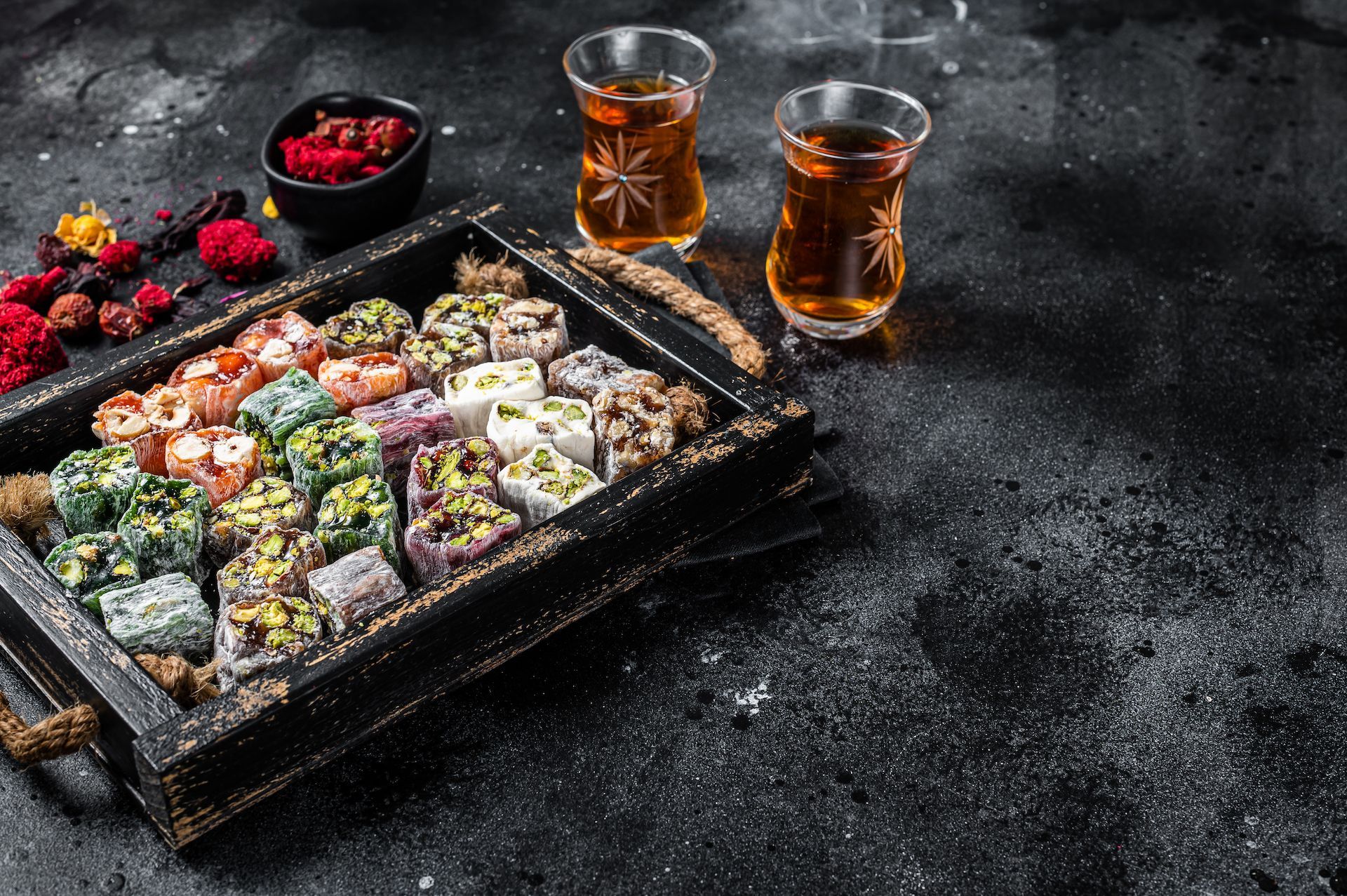
Lokum has had an image problem in the West ever since cheap, rubbery versions flooded export markets. The authentic article is nothing like that. Properly made lokum is soft but structured, yielding under gentle pressure and releasing a clean, fragrant flavour — rose, lemon, mastic, pomegranate, or plain — before dissolving slowly. It is dusted liberally with icing sugar or corn starch to prevent sticking, and a good piece should feel just barely moist when you bite through it.
As a souvenir, handmade lokum is hard to beat — it's light, doesn't require refrigeration, and keeps for weeks. To distinguish handmade from commercial: press the piece gently between two fingers. Artisan lokum will be slightly irregular in shape and will spring back softly. Factory versions tend to be perfectly square, uniformly rubbery, and intensely synthetic in flavour. Ürgüp's covered market and the bazaar lanes in Avanos both have shops worth lingering in.
Sütlaç — Turkish Rice Pudding
Do not make the mistake of assuming sütlaç is like any rice pudding you have eaten before. The Turkish version is baked in a clay dish until the surface develops a deep, caramelised amber crust — almost like a crème brûlée skin but more mellow, with a subtle smokiness from the oven. Beneath it the pudding is silky, barely sweetened, and fragrant with a breath of vanilla. It is one of the most comforting things you can eat after a long day of hiking through valleys, and you will find it on virtually every restaurant menu in Cappadocia. Order it chilled if the day has been warm; the contrast between the cold pudding and the slightly toasted top layer is particularly good.
Dondurma — Turkish Ice Cream
Turkish ice cream earns its own category not just for flavour but for texture. Mastic gum, harvested from trees on the island of Chios, and salep flour, made from wild orchid tubers, give dondurma a distinctive chewiness and elasticity that allows it to be stretched, twisted, and pulled without melting. Sellers have turned this property into street theatre: expect your cone to be offered, withdrawn, flipped upside down, handed to you, taken back, and eventually surrendered with a grin.
Dondurma is sold year-round in Cappadocia — the cool cave-temperature air of the region means even summer does not make it runny — and the classic flavours are mastic and plain cream. It is served in a wafer cone, and the correct approach is to eat it slowly, biting rather than licking, savouring that elastic, mastic-scented chew.
King's Coffee and the Pistachio Connection
Cappadocia's most iconic contemporary cafe flavour is pistachio, and King's Coffee in Göreme has done more than anyone to establish that identity. Their pistachio latte — rich, nutty, and genuinely made with the real thing rather than syrup — has become the drink that defines the region's cafe culture. But the pistachio theme extends well beyond coffee. Baklava topped with Antep pistachios, pistachio-dusted künefe, pistachio ice cream piled into cones — the nut threads through Cappadocian sweet culture at every corner. King's Coffee is the natural headquarters for exploring that thread, a spot where the pastry counter and the coffee menu reinforce each other perfectly.
Cappadocia-Specific Sweets
Beyond the national canon, Cappadocia has its own sweet particulars. Grape molasses — pekmez — produced from the region's ancient vineyards is used to sweeten breads, stir into tahini for a breakfast spread, and drizzle over pastry. It has an intensity that refined sugar can't replicate: dark, mineral, faintly tart. Look also for local honey, gathered from hives kept in the valley floors and on the slopes above Göreme. The flora here — wild thyme, sage, and flowering spurge — gives the honey a complex, herbal edge that jars from the Ürgüp Saturday market carry better than anything imported.
Tarhana, better known as a savoury fermented soup base, occasionally appears in sweet preparations too — a reminder that the line between savoury and sweet has always been porous in Anatolian cooking. For something you can carry home without airport anxiety, a jar of pekmez or a small pot of local honey wrapped carefully in your luggage is one of the most honest food souvenirs this region offers.
- Baklava: Look for fresh-baked trays with vivid pistachio tops — buy a flat-packed box to take home, keeps up to one week at room temperature
- Kadayıf / Künefe: Best at local patisseries, always order künefe fresh and hot, eaten immediately while the cheese is still molten
- Lokum: Choose handmade varieties — slightly irregular shape, soft spring-back texture, and natural flavours like rose, mastic, or pomegranate
- Sütlaç: Order chilled for the full caramelised-top contrast; widely available across Cappadocia's restaurants
- Dondurma: Mastic and cream are the classic flavours; embrace the seller's performance and eat from a wafer cone
- Pekmez and local honey: Find these at the Ürgüp Saturday market — excellent food souvenirs that travel well
Frequently Asked Questions
Where can I buy the best baklava in Cappadocia?
Several reputable pastry shops in Ürgüp and Nevşehir stock freshly made baklava, including varieties imported directly from Gaziantep — Turkey's baklava capital. In Göreme, look for shops displaying open trays rather than pre-packed boxes, which signals freshness. Ask when the current batch was baked; the answer tells you everything.
Can I bring Turkish delight on a plane?
Yes — lokum is a solid food and is permitted in both carry-on and checked luggage on international flights. Pack it in a sealed container or the original shop box to protect the icing sugar dusting. It does not require refrigeration and keeps well for several weeks, making it one of the most practical edible souvenirs from Turkey.
Is künefe available in Göreme?
Künefe is available in Göreme, though the selection is broader in Ürgüp and Avanos where dedicated patisseries serve it fresh throughout the day. In Göreme, look for restaurants that list it as a made-to-order dessert rather than a pre-prepared option — it should arrive at your table visibly hot and still sizzling from the pan.
Turkey's dessert culture rewards curiosity and a willingness to wander — the best künefe, the most fragrant lokum, the creamiest sütlaç are rarely in the most prominent shopfront. Spread your exploration across Göreme, Ürgüp, Avanos, and Çavuşin, and you'll find that each town has its own sweet personality. To move between them without the logistics getting in the way, check fares with the Cappadocia taxi price calculator before you set off — knowing the numbers in advance makes spontaneous detours considerably easier.