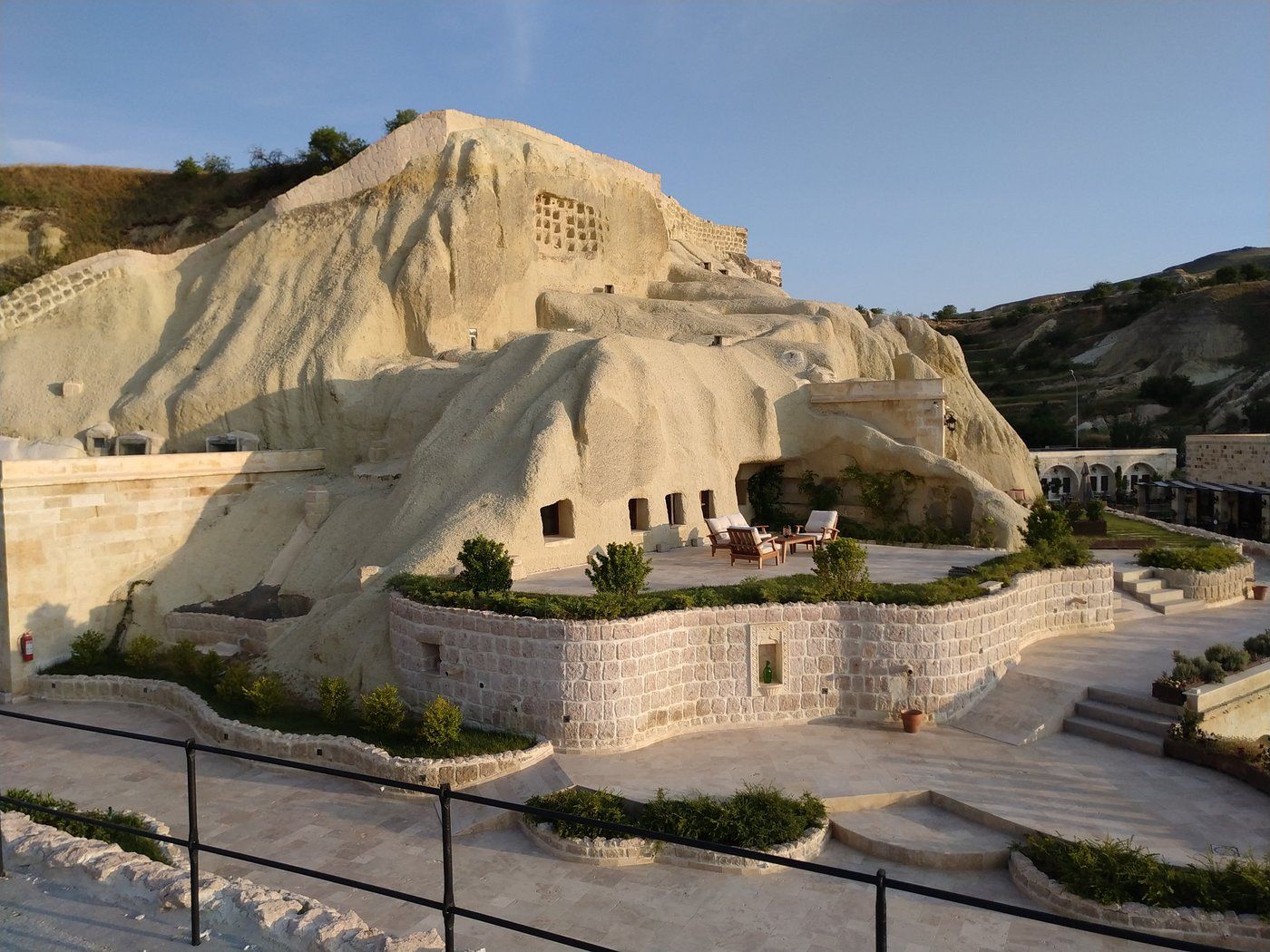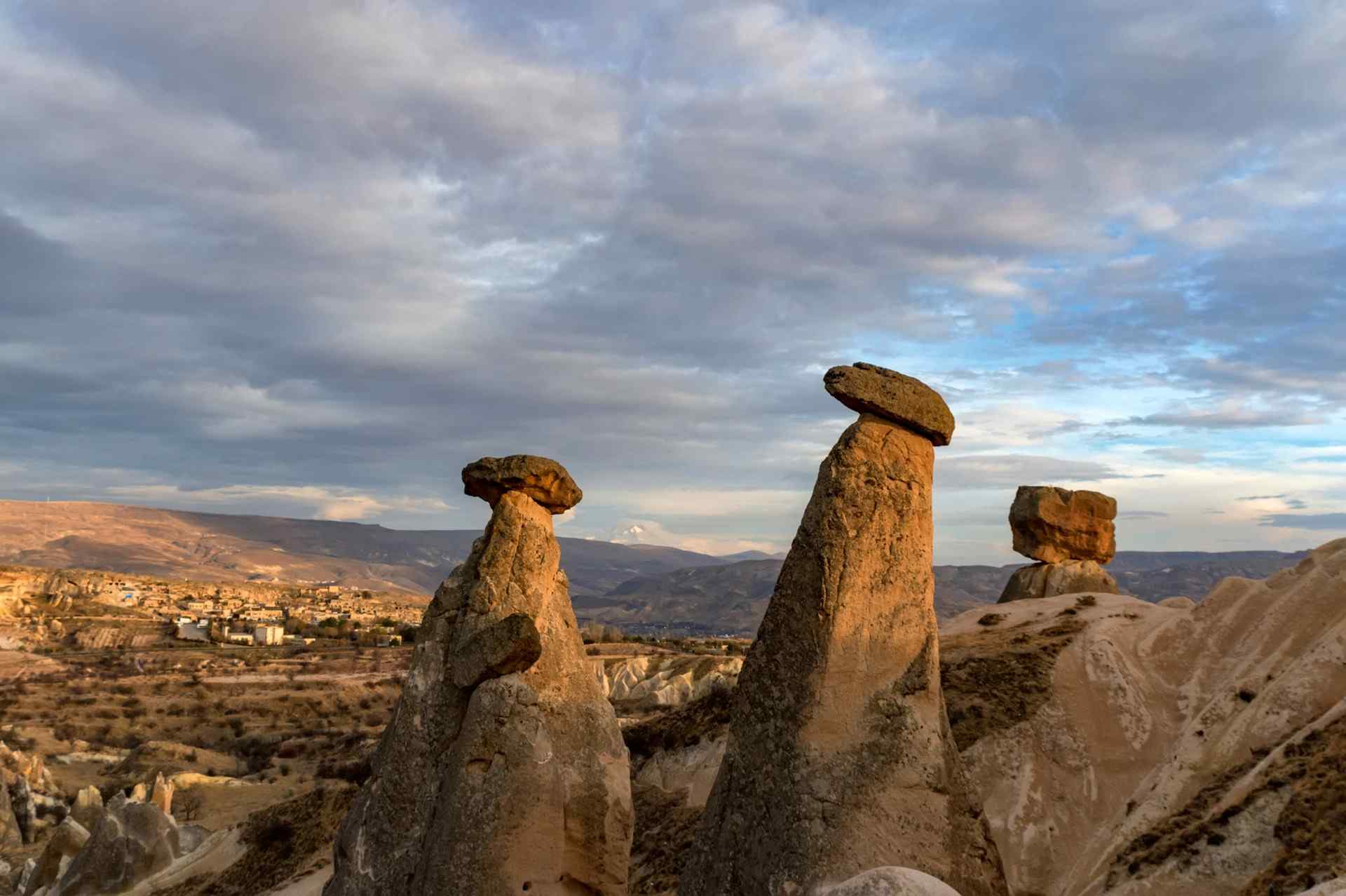
Most visitors come to Cappadocia for the scenery. They leave talking about something else entirely — the flash of a roller's electric-blue wings above a cliff face, the scratch of a kestrel circling a chimney spire, the carpet of wild thyme underfoot in Rose Valley on a May morning. Cappadocia's fairy chimneys are not just geological curiosities. They are habitat — layered, resilient, and quietly teeming with life.
The Unique Ecosystem of Fairy Chimneys
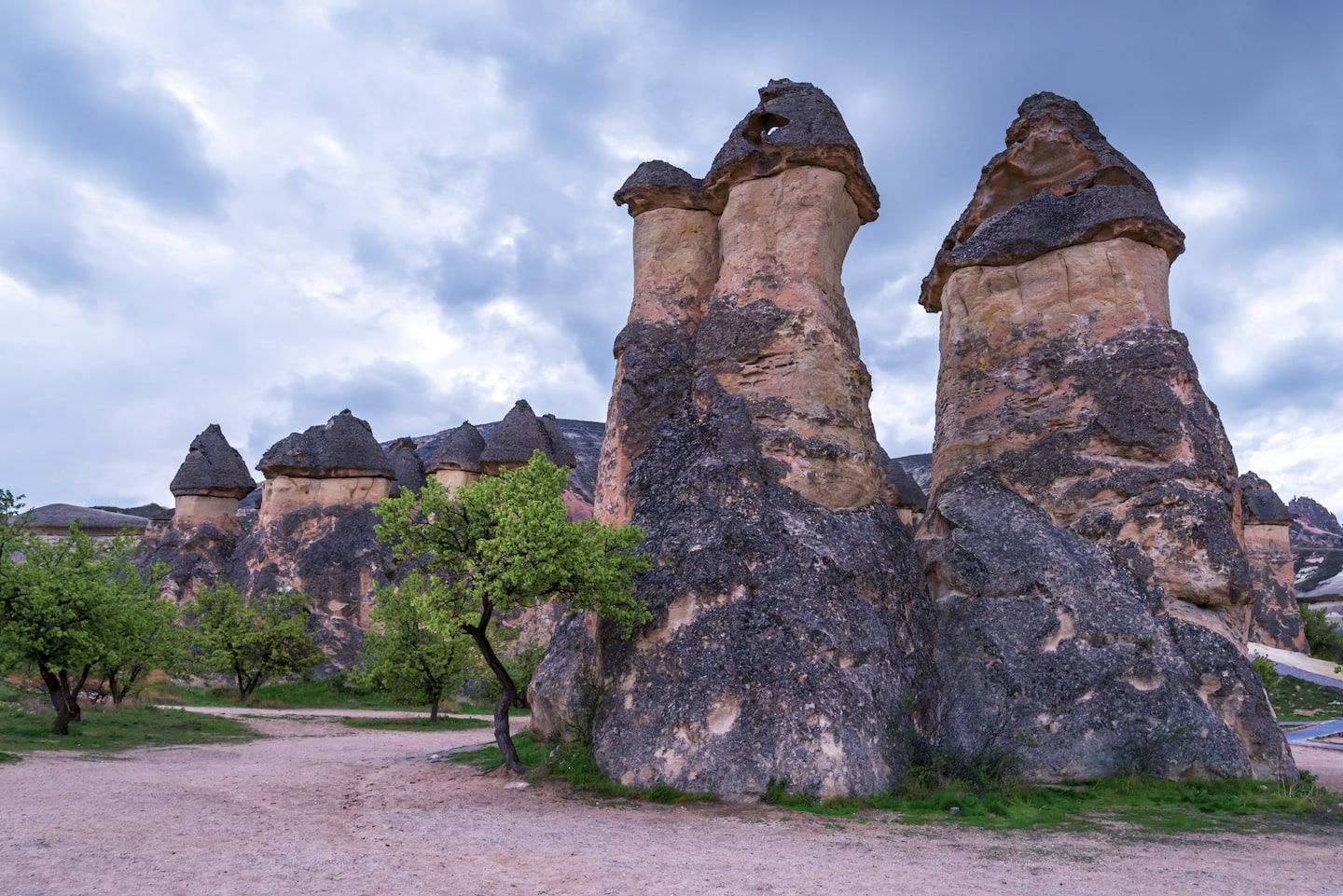
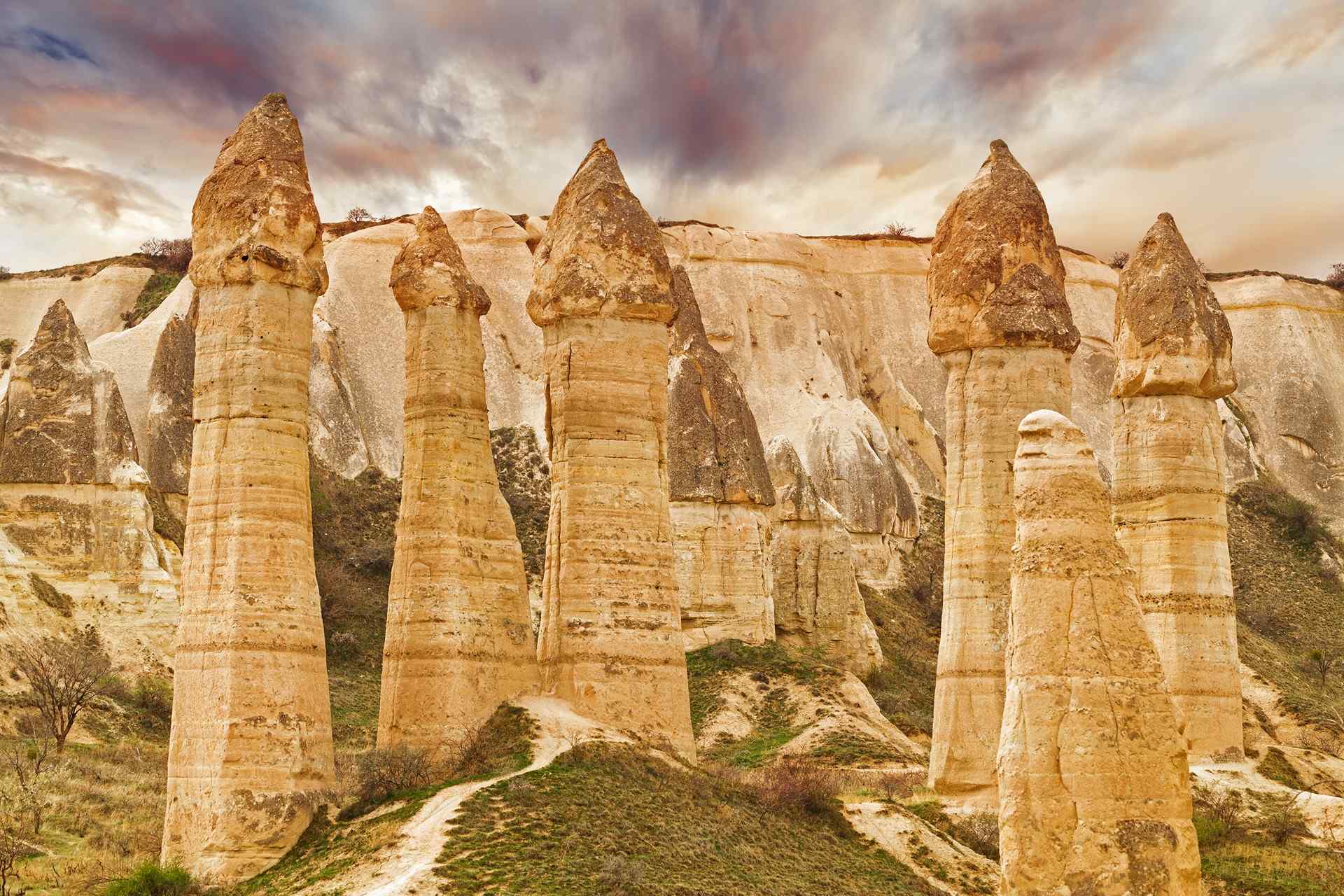
Volcanic tuff, the soft rock that erosion sculpted into Cappadocia's famous spires and cones, is an unusual substrate for life. It drains almost instantly after rain, leaving little soil moisture. Its nutrient content is low. And temperatures swing brutally — from -10°C on a January night to over 40°C on the bare south face of a chimney in August. By most measures, these formations should be harsh, marginal places for living things.
They are not. The same porosity that dries tuff rapidly also creates a thousand micro-niches: sheltered crevices that stay cool through summer, south-facing ledges that radiate warmth in winter, cave openings that maintain a stable temperature year-round. Species that have adapted to exploit these conditions find remarkably little competition. The result is a biodiversity that surprises almost every naturalist who looks closely.
Plants That Thrive on Tufa Rock
Walk slowly through any of the main valleys and the plant life reveals itself in detail. The most charismatic coloniser of bare tuff is the caper bush (Capparis spinosa), which you will find spilling from cracks and ledges throughout Göreme and Ürgüp. Its white and violet flowers open before sunrise and drop by midday — time your walk early and you will see them at their best. The fat, unopened buds are the capers sold in jars; the fruit that follows is edible too. Locals have harvested both for generations.
Below the cliff faces, in the loose scree and thin soil at the base of the chimneys, look for thorny burnet (Sanguisorba minor subsp. muricata) and the scrambling purple vetch that threads through taller shrubs in spring. From April into May, thyme carpets entire hillsides in the valleys around Çavuşin and along the Red Valley trail — the scent on a warm morning is one of the underrated pleasures of hiking Cappadocia. Wild sage, Christ's thorn, and several species of Astragalus (a drought-adapted genus that thrives in poor, rocky soils) fill out the flora at lower elevations.
- Caper bush (Capparis spinosa): spills from cliff cracks; flowers at dawn, fruit and buds both edible
- Wild thyme: carpets valley floors April–May; strongest in Rose Valley and around Çavuşin
- Purple vetch: scrambling climber in valley shrubs, vivid lilac in spring
- Thorny burnet (Sanguisorba): low and spiny at chimney bases, adapted to thin soils
- Wild sage and Astragalus: drought-tolerant understorey throughout the region
Birds of Cappadocia's Rock Formations
Cappadocia sits on a significant migratory corridor, and the variety of birds in and around the valleys is exceptional by Central Anatolian standards. The most reliably spectacular are the European bee-eaters — summer visitors that arrive in May and nest in colonies by excavating burrows into the soft tuff of cliff faces. Watch for their swooping, gliding flight and listen for the rolling, bubbling call that carries far across the valleys. Pairs often perch on telephone wires near Ortahisar and Uçhisar before diving to catch insects on the wing.
Eurasian rollers (Coracias garrulus) are perhaps the single most dramatic bird a visitor can encounter. Electric turquoise on the wings, with a chestnut back and a habit of rolling dramatically in flight during display — they are unmistakable from late April through August. Kestrels are permanent residents, and the fairy chimneys serve them well: the spire tops function as natural hunting platforms from which they hover and dive into the scrub below. Rock partridges are widespread but shy, most often flushed from rocky ground while walking trails. In the shrubby valley floors, nightingales are heard more often than seen from April onward — a concentrated patch of willows or tamarisk is often worth pausing beside at dusk. Scops owls and barn owls make use of the larger cave openings; both are more likely heard than observed.
- European bee-eater: nests in tuff cliff burrows; present May–September, often in colonies
- Eurasian roller: brilliant turquoise summer visitor; dramatic display flight; April–August
- Common kestrel: year-round resident; hunts from chimney tops and cliff edges
- Rock partridge: year-round; shy, found on rocky slopes — listen for the call before the bird
- Common nightingale: April–July in valley shrubs; most reliably heard at dawn and dusk
- Scops owl / barn owl: nocturnal; large cave openings are favoured roost sites
Mammals and Reptiles
Mammal sightings in the valleys are quieter rewards, but they are real. Red foxes denning in abandoned cave entrances is one of the more memorable encounters walkers report from the less-visited sections of Devrent Valley and the upper reaches of Pigeon Valley. European hares are common in the lower, scrubby terrain and visible most mornings in the open ground between Avanos and Ürgüp. Bats — several species — roost in underground spaces and cave churches; the large colonies in the underground cities of Derinkuyu and Kaymaklı are well-documented.
Reptiles are easier to observe in the warmer months. The Anatolian wall lizard is practically ubiquitous on any south-facing tuff surface from April through October, and up close they are striking — iridescent flanks catching the morning sun on a chimney base is a common sight in Göreme Open Air Museum and throughout the valleys. The Central Asian sand boa (Eryx miliaris) is occasionally found in the region's sandy soils — rare, small, and entirely harmless to humans, it spends most of its time buried. Various species of whip snake and the Montpellier snake round out the reptile fauna; all are non-venomous or rear-fanged and pose no practical risk to walkers.
When and Where to Spot Wildlife
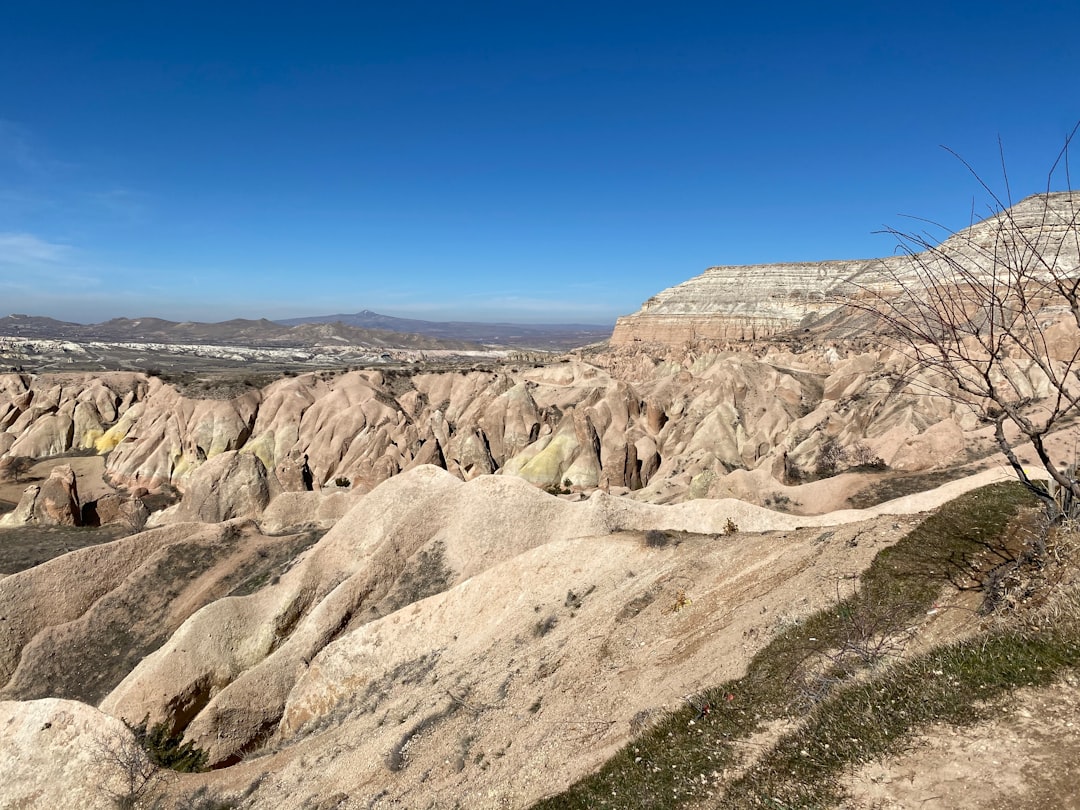
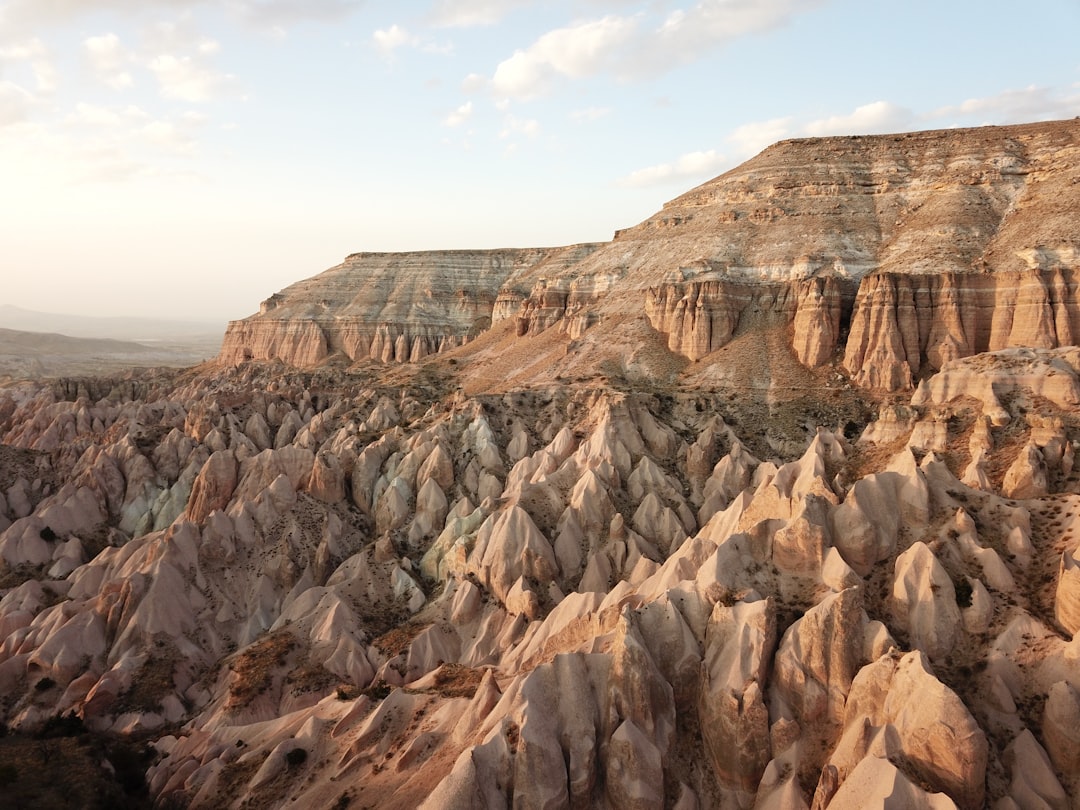
Dawn and dusk are the productive hours. Midday in summer, when temperatures on open tuff exceed 40°C, most animals retreat to shade or underground. The best valleys for birds are Red Valley (Kızılçukur) and Pigeon Valley (Güvercinlik) — both have extensive cliff face habitat, dense valley-floor shrubs, and relatively light foot traffic early in the morning. Devrent Valley, sometimes called Imagination Valley, is the most undisturbed and rewards patient observers with more mammal activity than the busier circuits.
For wildflowers, April and May are the peak months. The hillsides around Çavuşin, the trail from Ortahisar toward Rose Valley, and the upper sections of Pigeon Valley are all exceptional in a good spring. Migratory bird variety peaks in May, when summer visitors have arrived but before the heat suppresses activity. For bats and owls, a quiet evening walk near the cave settlements of Zelve or the outskirts of Uçhisar in late summer is productive.
To reach the more remote valley trailheads — Devrent is not walkable from Göreme — consider arranging transport. To reach remote valleys, consider a private taxi — use the Cappadocia taxi price calculator.
Tips for Wildlife Watching in Cappadocia
- Start at first light: the hour after sunrise is when bee-eaters are most active and foxes are still moving
- Bring binoculars: many of the best birds — rollers, bee-eaters, kestrels — are mid-distance sightings from the valley floor
- Stay on marked paths: tuff is genuinely fragile and erodes fast under foot; the paths protect both the rock and the nesting ledges above them
- No flash photography near cliff nests: bee-eater and roller colonies are sensitive to disturbance during nesting (May–July); observe from a distance
- Move slowly and quietly: wall lizards in particular will tolerate a motionless observer at close range
- Carry water: there are no facilities in most valleys; summer mornings heat up faster than expected at elevation
Frequently Asked Questions
Are there dangerous animals in Cappadocia?
No dangerous animals are known to threaten walkers in Cappadocia's valleys. The snakes present — whip snakes, Montpellier snake, and the rare Central Asian sand boa — are non-venomous or rear-fanged and highly unlikely to bite unless handled. Scorpions exist in the region but are rarely encountered on marked trails. Standard caution applies: watch where you step, don't reach into rock crevices blindly, and you are extremely unlikely to have any negative encounter.
Which valley is best for bird watching?
Red Valley (Kızılçukur) and Pigeon Valley (Güvercinlik) are the top choices for birds. Red Valley has extensive cliff faces ideal for roller and bee-eater sightings, while Pigeon Valley offers dense shrub cover at the valley floor for nightingales and warblers. For undisturbed terrain with a better chance of mammal sightings alongside birds, Devrent Valley is the least visited of the main options.
When do the wildflowers bloom in Cappadocia?
The peak wildflower season runs from mid-April through late May. Thyme is usually at its densest and most fragrant in the first two weeks of May. Caper bushes flower slightly later, from May into July, with individual flowers opening before sunrise. Spring 2024 and 2025 brought particularly good displays in Rose Valley and along the Çavuşin–Ortahisar trail after higher-than-average winter rainfall.